



Regulatory
Latest News
Advertisement
Latest Videos


Shorts
1:03
Biotech’s Education Mandate
a day ago
by
Michael Christel(+2 more)
0:51
The Billions Invested in Domestic Manufacturing
4 months ago
by
Mike Hollan(+1 more)
0:56
Big FDA & EMA Changes for Rare Disease Therapies
4 months ago
by
Mike Hollan(+1 more)
0:46
The First Amendment's Impact on DTC Prescription Drug Ads
5 months ago
by
Mike Hollan(+1 more)
0:43
FDA's Shift: Why Predictability Now Matters More Than Speed
5 months ago
by
Mike Hollan(+1 more)
0:53
FDA Leadership Turnover Explained
5 months ago
by
Mike Hollan(+1 more)

0:44
How the DSCSA is Accelerating Digital Transformation
a year ago
by
Mike Hollan(+1 more)

0:42
Fixing Drug Supply Chains
a year ago
by
Mike Hollan(+1 more)
1:06
Understanding Volatility Over a 16-Quarter Presidency in Biopharma
a year ago
by
Mike Hollan(+1 more)
0:48
The Problems DTC Can Address
a year ago
by
Mike Hollan(+1 more)
Advertisement
More News

The FDA approved Tecentriq plus chemotherapy for stage III dMMR colon cancer, Roche’s 12th US indication for the immunotherapy.

Ultragenyx is selling it's Rare Pediatric Disease Priority Review Voucher earned for Genglycos’s approval for $210 million.

A passing FDA inspection tells pharma senior leadership very little about whether the next significant revenue vulnerability is already taking shape. But continuous, AI-enabled quality management maturity (QMM) has the potential to do so months before the issue reaches the realm of P&L.
Tukysa adds a chemotherapy-free maintenance option for HER2-positive metastatic breast cancer; liver toxicity monitoring remains a key consideration.

What North American and APAC sponsors need to know about EU Joint Clinical Assessment — and why EMA approval doesn't guarantee reimbursement.

Trialbee CEO Matt Walz explores the current impact of AI in delivering practical gains in clinical development and reflects on its future potential, where enrollment predictability may be the biggest prize of all.

FDA Approves Expanded Indication for Camzyos for Symptomatic Obstructive Hypertrophic Cardiomyopathy
FDA has expanded Camzyos's approval to treat symptomatic obstructive hypertrophic cardiomyopathy in pediatric patients as young as 12.

MRD Testing Is Becoming the Most Important Tool in Oncology Drug Development: Q&A with Eric Matthews
MRD testing is transforming oncology trials — compressing timelines, enriching populations, and generating earlier answers.

Life sciences spends billions on compliance — but WhatsApp, iMessage, and SMS conversations between field teams and HCPs remain invisible to oversight.

New U.S. guidance exempts orphan drugs, nuclear medicines, cell and gene therapies, and other specialty products from the 100% pharmaceutical tariff when imported from 19 named countries.

While the FDA weighs a narrow, regulated path for compounded peptides, its enforcement arm is already taking action.

FDA this week cleared three new treatments: Lilly's Olumiant for adolescent alopecia areata, AbbVie's Juvmo for Parkinson's disease, and Mirum and Incyte's Atebrioz for the rare bone disorder FOP.

Compounding pharmacies that set their own safety and accreditation standards now stand the best chance of keeping patient access intact before heavier regulation does it for them.

Two FDA approvals, six platform deals, a European alarm, a Novo listing debate, and a China mega-deal — this week's biggest pharma stories, explained.
FDA approves Merck and Eisai's Welireg-Lenvima combination for advanced kidney cancer, a platform-deal roundup covers Novo Nordisk, Genentech, and Roche's tie-ups with Nanexa, Earendil Labs, and Atavistik Bio, and Ron Lanton examines the fight to regulate pharmacy benefit managers.
FDA has approved Welireg plus Lenvima for previously treated advanced clear cell renal cell carcinoma.
InnoCare Pharma and Eli Lilly ink a multibillion-dollar research collaboration, FDA approves Lilly's once-weekly insulin Onswik for type 2 diabetes, and Jen Lamppa talks fixing clinical trial patient enrollment with real-world data.
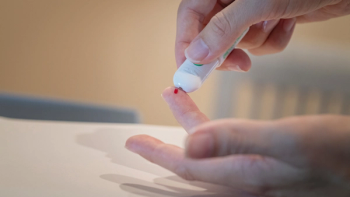
FDA approves Onswik, Eli Lilly's once-weekly basal insulin for adults with type 2 diabetes.

Why self-reported data fails clinical trials — and how RWD and AI fix enrollment accuracy before the first patient is dosed.
FDA approves Ultragenyx's Fayuvi as the first treatment for Sanfilippo syndrome type A, Lisata Therapeutics acquires Marea Therapeutics as mAbxience partners with Sandoz on a hemophilia A biosimilar, and Joe Cunningham argues that executive drug-pricing deals alone won't fix costs.
FDA approved Ultragenyx's Fayuvi (rebisufligene etisparvovec-hopf) as the first treatment for MPS IIIA Sanfilippo syndrome type A.

EVERSANA's Alan Crowther on why MFN's three programs, compounding interactions with IRA and 340B, and leverage gaps make it pharma's most consequential pricing challenge.

FDA has approved Bayer's Kerendia to reduce disease progression risk in adults with chronic kidney disease associated with type 1 diabetes.
Pharma brands with all the right information are still invisible to AI — and why silence is the bigger risk than inaccuracy.

Dr. Elena Christofides on why cortisol dysregulation may be the hidden reason GLP-1s fail — and what to do when patients don't respond.
Advertisement
Advertisement
Trending on PharmExec
1
FDA Approves Enspryng (Satralizumab) for Thyroid Eye Disease
2
AstraZeneca Taps insitro AI for MASH in Deal Worth Up to $1.5 Billion
3
EMA Panel Backs Lilly’s Foundayo for Obesity and Type 2 Diabetes in Europe
4
The Bubble You Don’t Know You’re In: A Three-Part Series on The Medical Benefit Bubble
5