

As growth in the BRICs and other emerging economies begins to stabilize, companies are finally turning their attention to Africa-a hidden trove of potential that is only as good as you make it.

As growth in the BRICs and other emerging economies begins to stabilize, companies are finally turning their attention to Africa-a hidden trove of potential that is only as good as you make it.

The enthusiasm for India and China may be diminishing, writes Eric Langer.
Under the administration of President Juan Manuel Santos, Colombia is focusing on bolstering the commercial sector. Thanks to the ratification of free trade agreements with 14 countries around the world since 2011, including the United States, foreign direct investment reached a record high of COP 29 trillion (USD 16 billion) in 2012. While this is good news for the pharmaceutical industry, there is still a strong debate about how healthcare in Colombia can be improved.

Ireland has been a pharma industry darling since the 1960s, when a then-newly established IDA targeted the sector as a strategic area for development. Today, the numbers are eyecatching. As reported by the IDA, nine out of the top 10 pharma companies in the world have substantial manufacturing operations in Ireland.

While not as bleak as believed, the outlook of European biotech sector is struggling compared with its US counterpart.
Value-based pricing in the United Kingdom is getting closer, but it remains out of focus.

While Austria experienced significant political and economic shake-up throughout the 20th century, the country has remained a key strategic market for the pharmaceutical industry thanks to its steady economic development and inclination for innovation.

Last month's decision by India's Supreme Court to deny a patent for the top-selling oncologic drug Glivec took nearly a decade of litigation to resolve-but the implications in and beyond India are both immediate and lasting.

Legal battles and regulatory missteps undermine access to low-cost generics, at home and abroad, writes Jill Wechsler.
Belgium is a hub for clinical trials, a leader in the biopharmaceutical industry, and a center for pharmaceutical production and distribution.

The European Union's attempt to update its transparency rules sparks new debate.

New guidelines on good distribution practices for biologics will have a significant impact on the Indian pharma sector - for good or ill. Jane Wan reports.
Chinese policies are to pose new opportunities and challenges for Big Pharma companies active in the country.
European Commision blocks the authorization of a life-saving liver drug outside of France.
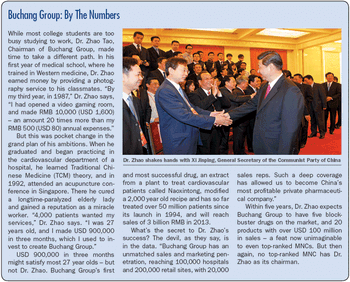
China's pharmaceutical industry is making record gains. Four years ago, China was the world's fifth largest market. Now, it has bypassed France and Germany to become the third largest. By 2015, China will pass Japan to rival only the United States for number one.
In some ways the Australian medicines industry is going through the same restructuring and challenges as the industry is globally: the country is dealing with patent cliffs, companies are cutting back staff, an ageing population forces the government to rethink healthcare expenditures, and big originator companies are reforming.

After a decade of strife, the dialogue between industry and government appears to have entered a positive new phase. Julian Upton reports.
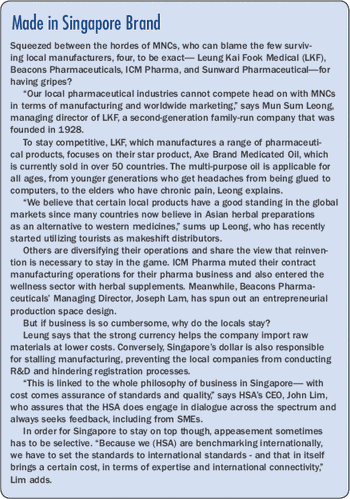
Most executives across the pharmaceutical industry agree-Singapore does not represent any question marks in the future. Furthermore, Singapore's location is ideal for reaching markets east, west, north and south, which form the powerhouse that is Asia-Pacific.
Promoting the merits of private-sector drug innovation is no easy task-just ask the UK's Office of Health Economics, with a record 50 years of engagement around the hard policy questions that ultimately drive success in the pharmaceutical marketplace.

With the shadow cast by Mediator across Europe now receding to a focus on the French law courts, the European Union (EU) said in late November that its pharmacovigilance arrangements offer “one of the most advanced and comprehensive systems in the world”.
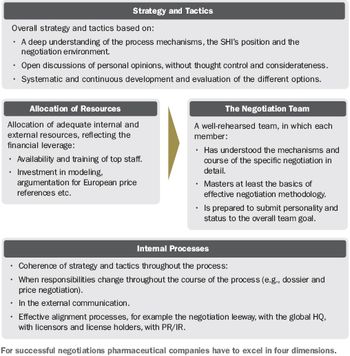
At two years and counting, what's the secret of success in negotiating pricing under the new AMNOG legislation?

Europe's chief regulator charts a strategy from many moving parts. Dr Guido Rasi talks to Pharm Exec's William Looney.
For the second time in recent memory, a top European regulator leaves office abruptly and under a cloud of suspicion.

Spain's leading business school, IESE, organized an expert conference on October 2-3 to address two simple questions. First, how can providers and payers work together to generate more value from existing resources? Second, what must be done to ensure the system continues to create value in the first place?
The '90s was an enthusiastic time. With the fall of communism in 1989 and the emergence of the free economy, the international pharmaceutical industry arrived in the Czech Republic to find a highly receptive market.