

Finance
Latest News
Advertisement
Latest Videos


Shorts
1:18
Pharma 50: The Trends Behind the Numbers
2 months ago
by
Michael Christel
1:21
Market Watch RX: Gilead Joins Top Gainers
4 months ago
by
Nicholas Jacobus
0:51
The Billions Invested in Domestic Manufacturing
4 months ago
by
Mike Hollan(+1 more)

1:03
Measuring the AI Bubble
8 months ago
by
Michael Christel(+2 more)
0:46
#1: Pharma’s Finest
10 months ago
by
Michael Christel
0:53
#3: Pharma 50 Milestone
10 months ago
by
Michael Christel
Advertisement
More News

Thomas Appio has been named interim CEO of Bausch + Lomb, a move coinciding with an expected upward revision to the company’s full-year guidance.

TRexBio and Retension Pharmaceuticals priced IPOs, raising a combined $161.7 million to advance their immunology and hypertension pipelines ahead of their Nasdaq debuts.

Improved financing conditions and accelerating M&A are creating new opportunities, but policy uncertainty, patent expirations and persistent funding pressures continue to shape the outlook for pharma and biotech.

Viatris is acquiring Pacira BioSciences for $1.65 billion in cash, adding non-opioid pain therapies Exparel and Zilretta.

Ultragenyx is selling it's Rare Pediatric Disease Priority Review Voucher earned for Genglycos’s approval for $210 million.

Caribou Biosciences is discontinuing its two allogeneic CAR-T programs and exploring strategic alternatives to maximize shareholder value.
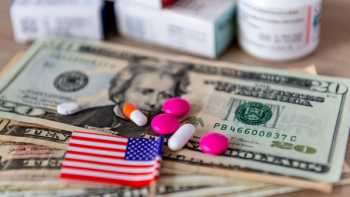
New U.S. guidance exempts orphan drugs, nuclear medicines, cell and gene therapies, and other specialty products from the 100% pharmaceutical tariff when imported from 19 named countries.

Novo licensed Hengrui's once-weekly oral GLP-1/GIP dual agonist HRS-1596 in a deal worth up to $2.6 billion, while AstraZeneca invested $2 billion in Summit Therapeutics to pair ivonescimab with its antibody-drug conjugate portfolio.

Eli Lilly is set to pay InnoCare Pharma up to $3.35 billion to discover and develop compounds against upwards of five undisclosed targets.
EVERSANA's Jen Norton talks about how AI is reshaping market access strategy, a new analysis from MIT and Harvard Business School names clinical data harmonization as the real barrier to enterprise AI adoption in life sciences, and Novo Nordisk's CEO says he's open to a direct NYSE listing.
Novo Nordisk CEO Mike Doustdar says he's open to a direct NYSE listing that would replace the company's ADR structure.
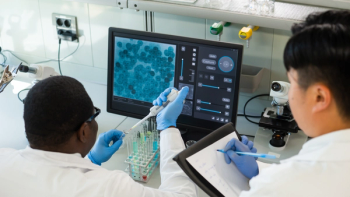
AbbVie partners with Iambic to deploy its AI molecular superintelligence platform, while Telix Pharmaceuticals agrees to acquire radioisotope leader ITM.

Lisata Therapeutics acquires Marea Therapeutics and secures $225 million in concurrent financing, while mAbxience and Sandoz partner to develop and globally commercialize an emicizumab biosimilar.

EVERSANA's Alan Crowther on why MFN's three programs, compounding interactions with IRA and 340B, and leverage gaps make it pharma's most consequential pricing challenge.

Orbis Medicines strikes a partnership with Novo, Dualitas Therapeutics enters collaboration with Roche, and Aethlon Medical has agreed to merge with North Immunology.

Sling Therapeutics closes a $123 million Series C to advance linsitinib, while Circle Pharma raises an oversubscribed $92.5 million Series E to move CID-165, into clinical development for ER-positive breast cancer.

A new benchmarking survey of 33 biotech and medtech leaders reveals a leadership community operating in crisis mode — and what that means for how the industry needs to rethink peer support, advisory and the isolation built intothe CEO role itself.
Novartis investors intensify pressure on the company's M&A strategy after a string of trial failures, Michelle Carnahan argues health care needs an orchestration layer rather than more point solutions, and Nacho Quinones and Aisling O'Loughlin make the case for synthetic advisory boards in biopharma decision-making.

Novartis shareholders share deepened trust issues around the company's dealmaking strategy.

Artisan Partners' David Samra is publicly calling for Novartis to overhaul its board and compensation structure following back-to-back trial failures.

Moonwalk Biosciences has closed a $70 million Series B to advance its adipose-targeted RNAi platform toward first-in-human studies.

CAR-T safety halts, a rare disease trial failure, a China licensing deal, an mRNA flu vaccine advance, and nine new MFN agreements.
Ultragenyx shares plunge more than 40% after apazunersen fails to meet both endpoints in a Phase III trial for Angelman syndrome.

Eli Lilly has agreed to acquire Merida Biosciences for up to $2.875 billion to gain a precision autoantibody degradation platform led by MER511.
A recent study of more than 15,000 adults over 55 with obesity found that sustained Zepbound use was associated with up to 38% lower monthly healthcare costs at 12 months compared with untreated matched controls.
Advertisement
Advertisement
Trending on PharmExec
1
Bristol Myers Squibb Discloses Patient Death in CAR-T Multiple Sclerosis Trial
2
The Importance of Reframing COVID-19 as a Preventable Event
3
FDA Extends Talzenna-Xtandi to Hormone-Sensitive Prostate Cancer
4
FDA Approves Subcutaneous Induction for Skyrizi in Crohn's Disease
5