

Regulatory
Latest News
Advertisement
Latest Videos



Shorts
0:51
The Billions Invested in Domestic Manufacturing
3 months ago
by
Mike Hollan(+1 more)
0:56
Big FDA & EMA Changes for Rare Disease Therapies
3 months ago
by
Mike Hollan(+1 more)
0:46
The First Amendment's Impact on DTC Prescription Drug Ads
4 months ago
by
Mike Hollan(+1 more)
0:43
FDA's Shift: Why Predictability Now Matters More Than Speed
4 months ago
by
Mike Hollan(+1 more)
0:53
FDA Leadership Turnover Explained
5 months ago
by
Mike Hollan(+1 more)

0:44
How the DSCSA is Accelerating Digital Transformation
10 months ago
by
Mike Hollan(+1 more)
0:42
Fixing Drug Supply Chains
a year ago
by
Mike Hollan(+1 more)
1:06
Understanding Volatility Over a 16-Quarter Presidency in Biopharma
a year ago
by
Mike Hollan(+1 more)
0:48
The Problems DTC Can Address
a year ago
by
Mike Hollan(+1 more)
Advertisement
More News

FDA this week cleared three new treatments: Lilly's Olumiant for adolescent alopecia areata, AbbVie's Juvmo for Parkinson's disease, and Mirum and Incyte's Atebrioz for the rare bone disorder FOP.

Compounding pharmacies that set their own safety and accreditation standards now stand the best chance of keeping patient access intact before heavier regulation does it for them.

Two FDA approvals, six platform deals, a European alarm, a Novo listing debate, and a China mega-deal — this week's biggest pharma stories, explained.
FDA approves Merck and Eisai's Welireg-Lenvima combination for advanced kidney cancer, a platform-deal roundup covers Novo Nordisk, Genentech, and Roche's tie-ups with Nanexa, Earendil Labs, and Atavistik Bio, and Ron Lanton examines the fight to regulate pharmacy benefit managers.
FDA has approved Welireg plus Lenvima for previously treated advanced clear cell renal cell carcinoma.
InnoCare Pharma and Eli Lilly ink a multibillion-dollar research collaboration, FDA approves Lilly's once-weekly insulin Onswik for type 2 diabetes, and Jen Lamppa talks fixing clinical trial patient enrollment with real-world data.
FDA approves Onswik, Eli Lilly's once-weekly basal insulin for adults with type 2 diabetes.

Why self-reported data fails clinical trials — and how RWD and AI fix enrollment accuracy before the first patient is dosed.
FDA approves Ultragenyx's Fayuvi as the first treatment for Sanfilippo syndrome type A, Lisata Therapeutics acquires Marea Therapeutics as mAbxience partners with Sandoz on a hemophilia A biosimilar, and Joe Cunningham argues that executive drug-pricing deals alone won't fix costs.
FDA approved Ultragenyx's Fayuvi (rebisufligene etisparvovec-hopf) as the first treatment for MPS IIIA Sanfilippo syndrome type A.

EVERSANA's Alan Crowther on why MFN's three programs, compounding interactions with IRA and 340B, and leverage gaps make it pharma's most consequential pricing challenge.

FDA has approved Bayer's Kerendia to reduce disease progression risk in adults with chronic kidney disease associated with type 1 diabetes.
Pharma brands with all the right information are still invisible to AI — and why silence is the bigger risk than inaccuracy.

Dr. Elena Christofides on why cortisol dysregulation may be the hidden reason GLP-1s fail — and what to do when patients don't respond.

Pharma has digitized nearly everything — but contract management remains fragmented, creating compliance risk and slowing execution across the enterprise.
HHS confirms permanent directors for CDER and CBER and creates FDA's first-ever Deputy Commissioner for Technology and AI.
Carelon Research's Mark Cziraky on why analyzing RWD in place — rather than licensing it out — is reshaping how evidence gets generated.

FDA has approved Ionis Pharmaceuticals' Zanvastro (zilganersen) as the first disease-modifying treatment for Alexander disease.

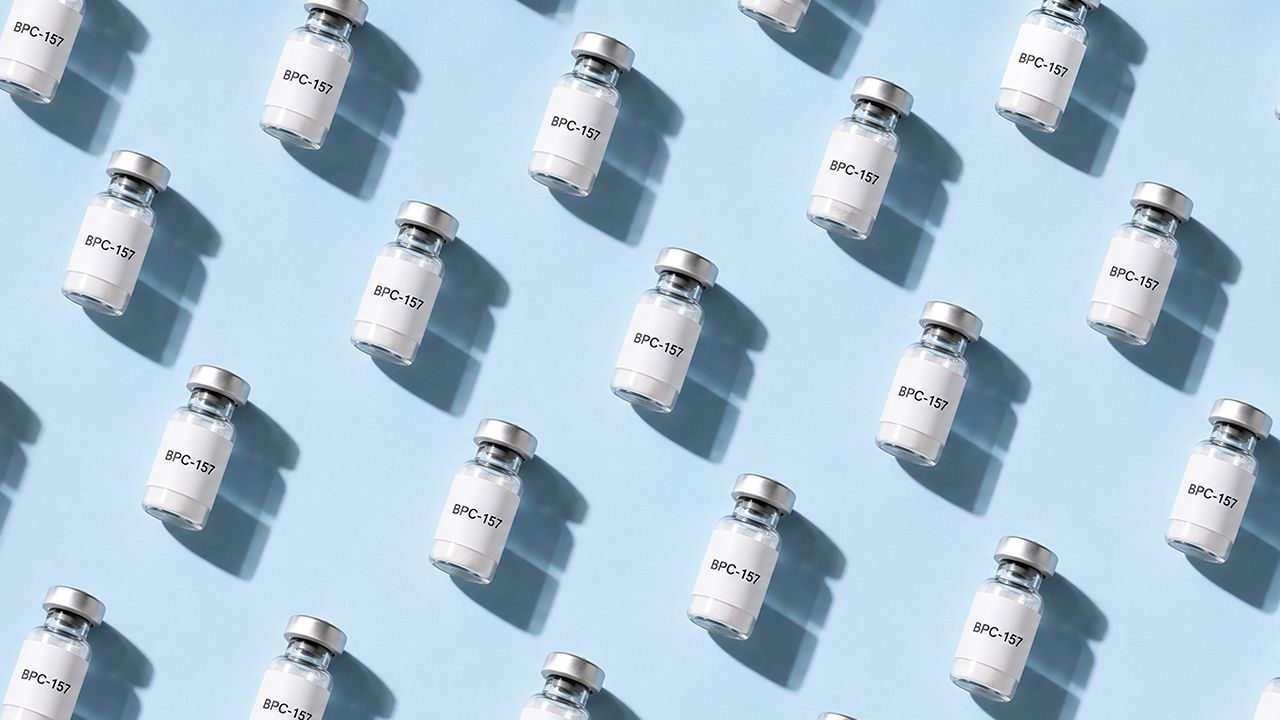
Nate Hill, co-founder & CEO, Strive Pharmacy, breaks down looming questions around the completed FDA PCAC hearing on peptides.
The Trump administration adds nine drugmakers to its Most Favored Nation pricing program, GSK advances its dual-antigen mRNA flu vaccine into Phase III, and Simcere Zaiming licenses its tri-specific antibody Sim0660 to Roche for up to $1.53 billion.

GSK is advancing its mRNA seasonal influenza vaccine candidate FLUm3HA.b-3NA into a Phase III efficacy trial starting in September.

RBQM implementations fail not because the software is wrong — but because the human environment surrounding it was never engineered.

The Trump administration adds nine midsize pharmaceutical companies, including Teva, UCB, Astellas, and BeOne Medicines to its Most-Favored-Nation drug pricing program.
FDA approved Priovant's Lisraya (brepocitinib) as the first targeted therapy for dermatomyositis, Gilead's Bixlenvo as the first once-daily single tablet regimen for virologically suppressed HIV patients, and expanded Mounjaro's label to include cardiovascular risk reduction in high-risk type 2 diabetes patients.

With biopharma batch failures averaging every 40 weeks, predictive maintenance and connected monitoring are becoming critical quality levers.
Advertisement
Advertisement
Trending on PharmExec
1
Pharmaceutical Executive Daily: Foghorn Therapeutics & Eli Lilly Discontinue Development of FHD-909
2
Roundup: Novartis & Abogen Enter Licensing and Option Agreement, AstraZeneca and Daiichi Sankyo Enter Clinical Collaboration with Summit Therapeutics
3
Roundup: Hengrui Pharma and Novo Enter Exclusive License Agreement for HRS-1596, AstraZeneca Enters Collaboartion with Summit Therapeutics
4
Foghorn Therapeutics & Eli Lilly Halt Fhd-909 Development Following Phase I Data
5