
Incubate’s John Stanford on why MFN’s first casualty is the moonshot — and why cancer, Alzheimer’s, and rare disease bear the cost.
Incubate’s John Stanford on why MFN’s first casualty is the moonshot — and why cancer, Alzheimer’s, and rare disease bear the cost.
Incubate’s John Stanford on why MFN reduces pharma’s appetite for biotech acquisitions — and why that cedes ground to China.
Incubate’s John Stanford on why MFN deals are voluntary in name only — and why the leverage looks a lot like the IRA’s 95% excise tax.
Incubate’s John Stanford on why MFN hits mid-sized pharma harder — fewer products to absorb margin hits and less access to cheap capital.
Fox Rothschild's Marc Wagner on why domestic manufacturing reduces drug shortage risk — and why FDA inspection efficiency is as important as supply chain resilience.
Fox Rothschild's Marc Wagner on how 503A pharmacies and 503B outsourcing facilities fill drug supply gaps — from COVID injectables to GLP-1s.
Fox Rothschild's Marc Wagner on why scaling drug production is so slow — overseas API sourcing, supplier qualification, and FDA site approvals that take years.

Waiting for perfect data before deploying AI is a trap — and why 60-70% accuracy is often good enough to start.
Fox Rothschild's Marc Wagner on why the FDA counts 70 drugs in shortage while ASHP counts 188 — and what's driving the gap.
Pharma's chain of custody model is migrating into food and consumer goods — and becoming a cross-industry differentiator.
Pharma logistics are overqualified by design — and how agentic AI can now optimize across thousands of lanes in days, not months.
Pharma AI adoption fails not because of the technology — but because organizations deploy tools before they're ready to use them.

CORXEL’s Dr. Bo Liang on why GLP-1 therapies are a broader chronic disease platform — not just obesity drugs — with benefits across cardiovascular, renal, and metabolic disease.

Why GLP-1s achieving bariatric surgery-level efficacy is the field's most surprising advancement of the past decade.

CORXEL’s Dr. Bo Liang on why small molecule oral therapies will be the long-term winners in a GLP-1 market driven by consumer preference.

CORXEL’s Dr. Bo Liang on why efficacy is no longer obesity medicine's biggest gap — and the four unmet needs that define what comes next.

Numerof's Michael Abrams on why directing employees to the most effective, economical clinicians is digital health's most valuable offering.

Numerof's Michael Abrams on why digital health's cost-savings claims often don't hold up to scrutiny — and why the evidence gap matters.

Numerof's Michael Abrams on why digital health's point-solution era is ending — and why consolidation into broader platforms is the next step.
Numerof's Michael Abrams on why healthcare consolidation is the primary driver of rising employer costs — and why there's no end in sight.

Inovalon's Jen Lamppa on why AI's ability to extract insights from unstructured clinical data is foundational to making RWD usable in trials.
Inovalon's Jen Lamppa on why FDA's acceptance of RWD downstream is a call to action for sponsors to start using it upstream in trial design.
Inovalon's Jen Lamppa on how real-time clinical data feeds validate patient eligibility at enrollment — reducing burden while improving accuracy.
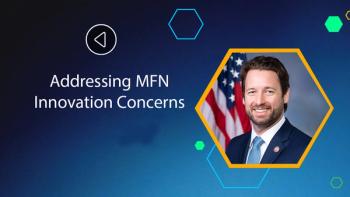
Former U.S. Representative Joe Cunningham (D-SC), spokesperson, Pharmaceutical Reform Alliance. dismisses the pharmaceutical industry's innovation argument against MFN pricing.
Inovalon's Jen Lamppa on why inaccurate self-reported data is clinical trial enrollment's costliest problem — and how RWD fixes it.

Inizio's Elaine Ferguson on why enabling purpose-driven employees to make a meaningful difference is as important as any formal talent strategy.
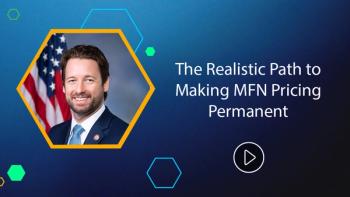
Former U.S. Representative Joe Cunningham (D-SC), spokesperson, Pharmaceutical Reform Alliance, touches on what he sees as the most realistic path to making MFN pricing permanent.
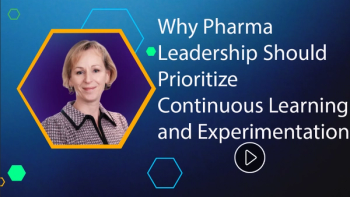
Inizio's Elaine Ferguson on how cross-functional leadership pods tackling real business challenges are turning talent development into operational innovation.

Joe Cunningham argues that the most-favored-nation drug pricing agreements carry no legislative weight and discusses what the program actually locks in.
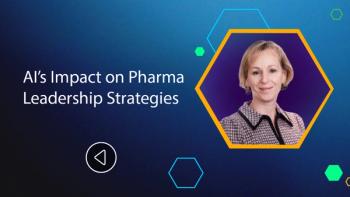
Inizio's Elaine Ferguson on why AI value requires deconstructing workflows task by task — aligning each to the right combination of talent and technology.