





Market Access
Latest News
Advertisement
Latest Videos



Shorts
0:47
Tackling Duplicate Discounts
4 months ago
by
Michael Christel(+1 more)
1:13
Solving the Healthcare Cost Crisis Through Collective Action
4 months ago
by
Mike Hollan(+1 more)

0:40
#5: Market Access Reimagined
9 months ago
by
Michael Christel

0:48
The GLP-1 Shift to Mass Market
10 months ago
by
Mike Hollan(+1 more)
Advertisement
More News

Market access is now too complex for historical analogues — and AI is the only tool that can model what comes next.

EVERSANA's Alan Crowther on why MFN's three programs, compounding interactions with IRA and 340B, and leverage gaps make it pharma's most consequential pricing challenge.

CGT commercial trajectories are set years before approval — and every development decision is an access decision.

Pharma has digitized nearly everything — but contract management remains fragmented, creating compliance risk and slowing execution across the enterprise.

Unmet need is likely a new battlefield impacting prior authorization.

Nate Hill, co-founder & CEO, Strive Pharmacy, breaks down looming questions around the completed FDA PCAC hearing on peptides.
The Trump administration adds nine midsize pharmaceutical companies, including Teva, UCB, Astellas, and BeOne Medicines to its Most-Favored-Nation drug pricing program.

Osivax and GC Biopharma agree to co-develop an influenza vaccine combining Osivax's OVX836 with GC Biopharma's GC FLU.
The Trump administration is expected to announce a new round of voluntary MFN drug-pricing agreements with midsize biotech companies as soon as August 31.

A recent study of more than 15,000 adults over 55 with obesity found that sustained Zepbound use was associated with up to 38% lower monthly healthcare costs at 12 months compared with untreated matched controls.
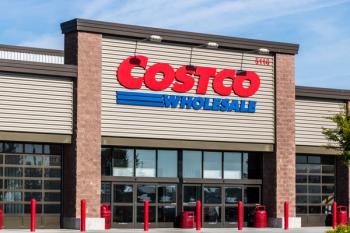
Costco’s partnership with SCAN Group suggests that the next competitive advantage in Medicare may come not only from managing insurance risk, but from controlling a trusted consumer healthcare ecosystem.

McKesson has agreed to acquire Precision Medicine Group for $2.25 billion, while Lundbeck has expanded its partnership with Eversana to scale AI-driven workflows.

FDA approved Imaavy (nipocalimab-aahu) as the first-ever treatment specifically indicated for warm autoimmune hemolytic anemia in patients ages 12 and up.

MedAdvisor Solutions has rebranded as Adheris, restoring a name that has been a fixture in patient engagement for more than three decades.

As trust shifts from a stated value to an operating condition, pharmaceutical leaders face new expectations for how credibility is built, governed and sustained under continuous scrutiny.

FDA has granted accelerated approval to Zenbexus plus daratumumab and Hyaluronidase-fihj and dexamethasone for multiple myeloma after at least one prior line of therapy.

Why pricing pressure, policy volatility and supply-chain risk are pushing drugmakers toward greater cost and portfolio discipline, without losing sight of investment in innovation.

Mereo BioPharma has granted Sentynl Therapeutics an exclusive option to commercialize alvelestat in the U.S. for Alpha-1 Antitrypsin Deficiency-Associated Lung Disease.

Renewal of FDA's Priority Review Voucher program is driving a rebound in U.S. rare disease biotech investment, while the UK continues to lag.

BeOne Medicines and Revolution Medicines enter a two-part deal pairing BeOne's PRMT5 inhibitor and EGFR×MET trispecific antibody with Revolution's four clinical RAS(ON) inhibitors.

Insights into the "differentiation paradox" from a study of 340 drug launches.
Veeva's president of commercial strategy discusses how agentic AI is surfacing the treatment barriers and HCP insights that traditional call reporting was never built to capture.
Eli Lilly posted $23 billion in second-quarter revenue driven by Mounjaro's sales surge to $9.94 billion and Zepbound's $4.93 billion.

Two-thirds of pharmaceutical product launches fail to meet first-year commercial expectations, and the gap between launch strategy and field execution is almost always why, according to this examination of how to identify, diagnose, and correct launch drift before it becomes irreversible.
President Trump Announces Phased Generic Drug Tariff Plan: Report
Published: | Updated:
President Trump announces a zero tariff on imported generic drugs through August 2026 before a phased escalation to 200% by 2029.
Advertisement
Advertisement
Trending on PharmExec
1
New U.S. Guidance Lays Out Exemptions for 100% Tariffs: Report
2
Pharming CEO Fabrice Chouraqui Steps Down Amid Strategic Disagreement with Board
3
Roundup: Hengrui Pharma and Novo Enter Exclusive License Agreement for HRS-1596, AstraZeneca Enters Collaboartion with Summit Therapeutics
4
As Peptide Rulemaking Stalls, FDA Enforcement Moves Forward
5