



Operations
Latest News
Advertisement
Latest Videos



Shorts
1:18
Pharma 50: The Trends Behind the Numbers
a month ago
by
Michael Christel
0:27
The Key to AI Scale-Up
3 months ago
by
Michael Christel(+1 more)
0:38
Europe’s Innovation Edge?
7 months ago
by
Michael Christel(+1 more)
0:46
#1: Pharma’s Finest
9 months ago
by
Michael Christel
0:56
#2: AI’s Ascent
9 months ago
by
Michael Christel
0:53
#3: Pharma 50 Milestone
9 months ago
by
Michael Christel
0:55
#8: State of Industry Survey
9 months ago
by
Michael Christel
Advertisement
More News

Pharming CEO Fabrice Chouraqui has stepped down amid strategic disagreements with the board, with chief commercial officer Leverne Marsh and chief financial officer Kenneth Lynard now serving as interim co-CEOs.

Novo licensed Hengrui's once-weekly oral GLP-1/GIP dual agonist HRS-1596 in a deal worth up to $2.6 billion, while AstraZeneca invested $2 billion in Summit Therapeutics to pair ivonescimab with its antibody-drug conjugate portfolio.
While the FDA weighs a narrow, regulated path for compounded peptides, its enforcement arm is already taking action.

Novo Nordisk reports that CagriSema delivered 12.4% average weight loss in a late-stage diabetes trial, outperforming tirzepatide's 9.1% at comparable doses.

Lisata Therapeutics acquires Marea Therapeutics and secures $225 million in concurrent financing, while mAbxience and Sandoz partner to develop and globally commercialize an emicizumab biosimilar.
Former Rep. Joe Cunningham (D-SC), now spokesperson for the Pharmaceutical Reform Alliance, argues that codifying Most-Favored-Nation pricing into law is the real fix for drug costs.

Orbis Medicines strikes a partnership with Novo, Dualitas Therapeutics enters collaboration with Roche, and Aethlon Medical has agreed to merge with North Immunology.
Novo partners with Anthropic to deploy Claude for targeted drug discovery workflows and AI-driven software development.

Sling Therapeutics closes a $123 million Series C to advance linsitinib, while Circle Pharma raises an oversubscribed $92.5 million Series E to move CID-165, into clinical development for ER-positive breast cancer.
How the shifting tides in information consumption are resetting expectations for pharma in providing and delivering health education.
GSK agrees to acquire a trispecific T cell engager for multiple myeloma from Chimagen Biosciences, while Sanofi is offloading 20 mature medicines and three manufacturing sites to Cheplapharm.

Cellectis is pivoting from allogeneic CAR-T development to become an in vivo gene editing company, discontinuing its lasme-cel and eti-cel programs.
Novo Nordisk rebrands as "Novo" under it's "Lasting health starts now" tagline, pairing both with a new cultural framework called "The Novo Way."

The advantages of synthetic advisory boards in stress-testing hypotheses and iterating across a greater scope of scenarios than live boards allow.

Novartis shareholders share deepened trust issues around the company's dealmaking strategy.

Artisan Partners' David Samra is publicly calling for Novartis to overhaul its board and compensation structure following back-to-back trial failures.

Moonwalk Biosciences has closed a $70 million Series B to advance its adipose-targeted RNAi platform toward first-in-human studies.
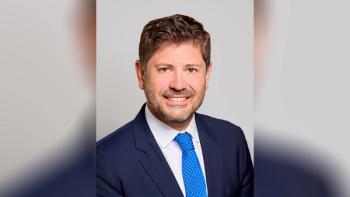
Sebastian Arana, head of process solutions at MilliporeSigma, discusses the operational tradeoffs facilities face as they move toward multi-modality production and the persistent cost and scale-up challenges shaping cell and gene therapy, mRNA, and ADC manufacturing.
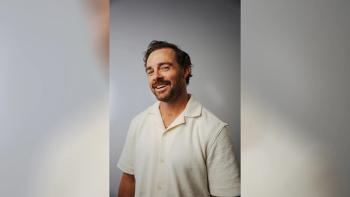
Nate Hill, co-founder & CEO, Strive Pharmacy, breaks down looming questions around the completed FDA PCAC hearing on peptides.

Ultragenyx shares plunge more than 40% after apazunersen fails to meet both endpoints in a Phase III trial for Angelman syndrome.
Novartis suspends eight autoimmune trials of its CAR-T therapy Rap-cel after three cases of fatal outcomes, while Bristol Myers Squibb voluntarily pauses enrollment in its Zola-cel autoimmune studies over transient inflammatory events.

Simcere Zaiming has licensed its first-in-class tri-specific CD79a/CD19/CD3 T-cell engager Sim0660 to Roche for up to $1.53 billion, including a $75 million upfront payment.

GSK is advancing its mRNA seasonal influenza vaccine candidate FLUm3HA.b-3NA into a Phase III efficacy trial starting in September.

Eli Lilly has agreed to acquire Merida Biosciences for up to $2.875 billion to gain a precision autoantibody degradation platform led by MER511.

BioNTech and Genentech elect to end their Phase II trial of autogene Cevumeran after DSMB identified a numerical overall survival imbalance and recommended to terminate.
Advertisement
Advertisement
Trending on PharmExec
1
Pharmaceutical Executive Daily: Foghorn Therapeutics & Eli Lilly Discontinue Development of FHD-909
2
Roundup: Novartis & Abogen Enter Licensing and Option Agreement, AstraZeneca and Daiichi Sankyo Enter Clinical Collaboration with Summit Therapeutics
3
Roundup: Hengrui Pharma and Novo Enter Exclusive License Agreement for HRS-1596, AstraZeneca Enters Collaboartion with Summit Therapeutics
4
Foghorn Therapeutics & Eli Lilly Halt Fhd-909 Development Following Phase I Data
5