

Special Guest Op-Ed: The time is now to elevate manufacturing and supply to a defining pillar of life sciences innovation.
Special Guest Op-Ed: The time is now to elevate manufacturing and supply to a defining pillar of life sciences innovation.

AlzeCure Pharma has licensed Alzheimer's candidate ACD680 to Eli Lilly in a deal worth potentially more than $1 billion, adding an oral gamma-secretase modulator that targets amyloid production upstream to Lilly's Alzheimer's portfolio.
Parabilis Medicines raises $670 million in an above-range IPO, plus $75 million in a concurrent Regeneron private placement, to advance its Helicon peptide platform targeting proteins.
Lisa Bollinger, chief medical officer at Polaryx, discusses signs that regulatory agencies are taking the issues related to rare disease therapy development seriously.
In this episode, Ron Lanton draws on insights from the JP Morgan Healthcare Conference to explain how healthcare investment is shifting from backing novel ideas to funding organizations that can scale, survive regulatory and reimbursement pressure, and embed technology into the operational infrastructure of care delivery.

Over the past decade, PRCCI has helped bring more than 300 clinical trial opportunities to Puerto Rico, supported over 90 clinical research contracts, and collaborated with more than 116 physicians and investigators across the Island.

AI-powered data analytics has evolved from a supporting function into the backbone of modern brand strategy and decision-making.

The framework’s key considerations for pharma brand managers.
In today's Pharmaceutical Executive Daily, a pharma funding roundup covers two RNA-focused biotechs that secured fresh capital, GSK announces a $10.6 billion agreement to acquire Nuvalent in its largest deal in over a decade, , and Pharmaceutical Executive speaks with David Coman, CEO of BGBx, on why the firm's rebranding from BGB reflects a broader shift in how biopharma commercialization now demands integrated consulting, communications, and scientific frameworks.
City Therapeutics closed a $99.5 million Series B to push two RNAi programs into the clinic this year while Eloxx Pharmaceuticals raised $66 million alongside a Nasdaq uplisting to advance its nonsense mutation readthrough platform.

GSK has agreed to acquire Nuvalent in a deal that secures two next-generation NSCLC inhibitors under active FDA review with potential year-end launches.
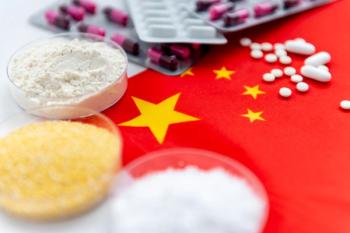
With more than $43 billion committed in five months, the pharma industry isn't just licensing from China, it's restructuring where global drug discovery begins.

David Coman, CEO, BGBx, explains how the firm's rebranding reflects a broader shift in biopharma commercialization, where integrating consulting, communications, and a three-dimensional science framework is increasingly necessary for companies.

State-level access pathways won't cannibalize clinical trials for patients. Instead they could solve biotech's in-human data catch-22, and restore patient trust along the way.
In today's Pharmaceutical Executive Daily, Roche and Nurix Therapeutics announce a global collaboration, a pharma M&A roundup covers three deals announced today, and Pharmaceutical Executive contributors examine how an emerging wave of biologics is signaling a new treatment era in alopecia areata beyond the established JAK inhibitor class.

Incyte, Galmed Pharmaceuticals, and Johnson & Johnson each announced acquisitions this week, with deals spanning a $2 billion bet on a Phase III bleeding disorder antibody, a GI medtech pivot, and a $1 billion move into KRAS-targeting degrader conjugates as dealmaking across therapeutic categories continues.

Roche has struck an exclusive collaboration with Nurix Therapeutics to co-develop BTK degrader bexobrutideg, paying over $700 million upfront in a deal that could top $3 billion in total.

Driven by rising prevalence and awareness of aesthetic appeal and self-image, the Alopecia Areata market is poised for steady growth.
In today's Pharmaceutical Executive Daily, the Supreme Court unanimously rules in favor of Hikma Pharmaceuticals in its patent dispute with Amarin over Vascepa, Pfizer licenses Chai Discovery's generative AI platform, and C.K. Wang argues that high-quality real-world data represents the most promising path forward for closing persistent gaps in ovarian cancer care.

The Supreme Court ruled unanimously in favor of Hikma Pharmaceuticals, finding its generic Vascepa did not infringe Amarin's patents under the skinny-label pathway, a decision that strengthens legal protections for generic manufacturers.
Chai Discovery has licensed its generative AI drug discovery platform to Pfizer, giving the company early access to its next-generation Chai-3 model and a custom model trained on Pfizer's own data.

Amidst this backdrop of challenges, one area of promise for closing gaps and advancing ovarian cancer care is the growing availability of high-quality, research-ready, real-world data.
In today's Pharmaceutical Executive Daily, Eli Lilly escalates its 340B enforcement standoff by notifying covered entities of a five-business-day window to submit required claims data or lose access to 340B pricing, Alnylam Pharmaceuticals and Inceptive Nucleics announce a three-year strategic AI collaboration worth up to $2 billion, and Anne Marie Robertson of Eversana speaks on the trends shaping the future of oncology commercialization following ASCO 2026.

Alnylam Pharmaceuticals has partnered with Inceptive to apply generative AI to siRNA design, pairing Inceptive's biology-trained models with Alnylam's two decades of proprietary RNAi data to accelerate candidate discovery.
Model N Senior Vice President Jesse Mendelsohn explores the hidden costs and realities of PBM-driven drug pricing and the growing challenges manufacturers face in ensuring contract compliance, formulary access and reimbursement accuracy.

Robertson discusses the trends shaping the future of oncology commercialization.
In today's Pharmaceutical Executive Daily, Cam Olig of Prescryptive Health touches on the results of a new market access survey, Eli Lilly and Ascidian Therapeutics announce a global research collaboration worth up to $1.9 billion to develop RNA exon editors for inherited kidney diseases, and the FDA issues new draft guidance to reduce the submission burden for gene therapy developers.

Eli Lilly moves to deny 340B discounts to hospitals refusing to submit claims data under its documentation policy, escalating a months-long standoff with the American Hospital Association and prompting calls for federal intervention.
FDA's CBER details a framework for sponsors to apply existing CMC, nonclinical, and clinical data to genome-editing-based product development and regulatory filings.

Ascidian Therapeutics has entered a global research and licensing deal with Eli Lilly to develop RNA exon-editing therapies for monogenic kidney diseases, a class of genetic conditions with an unmet need for treatment.