

Reputation is one of the factors that influences whether the people who matter most to your business decide whether to move with you.
Reputation is one of the factors that influences whether the people who matter most to your business decide whether to move with you.

Kevin Dondarskit of Deloitte Consulting discusses the risks that drug makers face if they decide to put too much focus on an area where they may lack expertise, such as the emerging GLP-1 market.

In today’s Pharmaceutical Executive Daily, the FDA approves Datroway for certain patients with metastatic triple-negative breast cancer, leadership changes continue at the National Institutes of Health with the departure of a top infectious disease institute director, and industry experts discuss how real-time data is reshaping biotech decision-making and development strategy.

FDA approves AstraZeneca and Daiichi Sankyo’s Datroway for first-line metastatic triple-negative breast cancer, expanding treatment options for patients ineligible for PD-1/PD-L1 inhibitor therapy.

Jeffrey Taubenberger’s departure was announced by Senator Baldwin during a congressional hearing.

MedicNova’s chief business officer details how changes at FDA are causing tension with the industry and investors, who are finding themselves less confident in the regulatory process.
Kevin Dondarskit of Deloitte Consulting discusses how pharma companies are focusing on high-value assets that serve large patient populations.
Harpreet Singh, MD, notes that the FDA’s broader shift toward accepting single pivotal trials reflects an evolution in regulatory thinking, while noting the agency still weighs disease severity, unmet need, trial design, and long-term safety
In today's Pharmaceutical Executive Daily, Reuters reports that lower-priced oral GLP-1 pills from Eli Lilly and Novo Nordisk are drawing patients away from compounded weight loss medications, Gilead Sciences' renews its five-year collaboration with WHO and Johnson and Johnson’s collaboration with the Department of Health Abu Dhabi, finally Partha Anbil argues that truly industrializing machine learning and AI in life sciences requires systems that are scientifically credible, clinically defensible, regulatorily traceable, and operationally sustained.

Life science organizations that will lead the next decade ar those that deploy systems that are scientifically credible, clinically defensible, regulatorily traceable, and operationally sustained.

New partnerships from Gilead Sciences and Johnson & Johnson highlight how healthcare companies are using collaborations to expand global disease initiatives and accelerate development of AI-enabled healthcare infrastructure.

Lower-cost oral obesity drugs from Novo Nordisk and Eli Lilly are drawing patients away from compounded GLP-1 therapies, according to interviews with U.S. doctors from Reuters, signaling shifting market dynamics as branded oral treatments expand access and intensify competition in the obesity space.
Kevin Dondarski from Deloitte Consulting discusses how changes in industry trends are causing pharma companies to explore new market opportunities provided by the rise of GLP-1 medications.
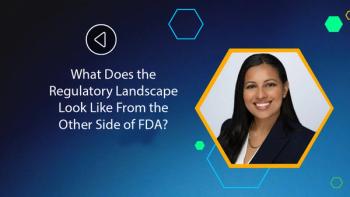
Harpreet Singh, MD, says understanding regulatory precedent, division-level dynamics, and the agency’s data-driven culture is critical for biopharma sponsors navigating today’s oncology approval landscape.
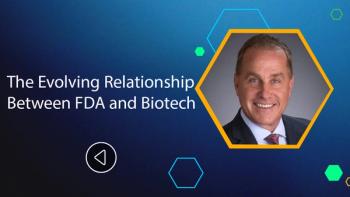
David Crean, chief business officer at MedicNova, highlights bifurcation in regulatory processes at FDA.
In today's Pharmaceutical Executive Daily, Eli Lilly announces a deal worth up to $202 million for Engage Biologics and its preclinical non-viral DNA delivery platform, two significant deals including Bristol Myers Squibb's enterprise-wide agreement to deploy Claude across its global operations and Incyte's expanded molecular AI collaboration with Genesis, and FDA grants two new early-stage breast cancer indications to Enhertu, marking trastuzumab deruxtecan's entry into the curative-intent setting for the first time.

Eli Lilly acquires Engage Biologics in up to $202 million deal to strengthen its genetic medicines portfolio with a non-viral DNA delivery platform designed to improve durability, tolerability, and re-dosing potential.

Toragen CEO Sandra Coufal, MD, discusses why the company is targeting HPV’s overlooked E5 protein, positioning its small-molecule therapy as a potential complement to checkpoint inhibitors like Keytruda across HPV-driven cancers.

Bristol Myers Squibb and Incyte expand AI capabilities through major collaborations aimed at embedding agentic and molecular AI directly into drug discovery, development, and enterprise operations.

Sandra Coufal, MD, CEO of Toragen, says the company is positioning its HPV E5 inhibitor TGN-S15 not as a competitor to Merck’s Keytruda, but as a combination partner designed to enhance checkpoint inhibition.
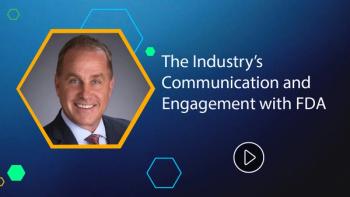
MedicNova’s chief business officer David Crean explains how well-intentioned but poorly executed programs at FDA are causing tension between the agency and the industry.
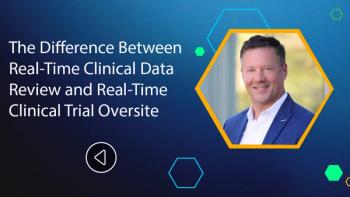
Dr. Richard Graham discusses the distinction between real-time data and real-time oversite and how one option may present better results than the other.
In today’s Pharmaceutical Executive Daily, the Trump administration expands TrumpRx to include more than 600 generic medicines, industry leaders rethink pharma’s traditional go-to-market model, and a biotech funding roundup highlights continued investment in early-stage therapeutics and radiopharmaceutical development.
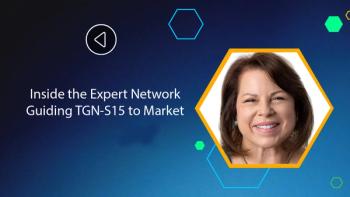
Sandra Coufal, MD, CEO of Toragen, explains how the company’s Scientific Advisory Board was built to provide highly specialized expertise around HPV biology, immuno-oncology, and clinical development as TGN-S15 advances through trials.

The Trump administration has expanded TrumpRx to include more than 600 generic medications and integrated price comparison tools with partners including Amazon Pharmacy, Cost Plus Drugs, and GoodRx, broadening the platform beyond its original focus.
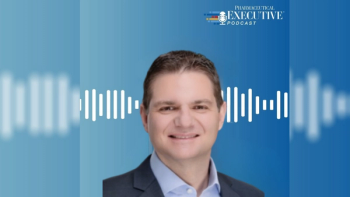
Mike Petroutsas, president and head of U.S. commercial at Astellas, explores the importance of insight-driven commercialization in reshaping how manufacturers engage patients, physicians and the broader healthcare ecosystem.

Seed, Series C, and Series D rounds announced by Violet Therapeutics, Full-Life Technologies, and Accro Bioscience highlight continued appetite for differentiated science tied to high unmet-need indications and platform scalability.
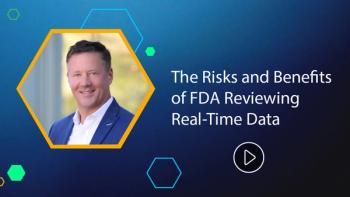
Dr. Richard Graham details how real-time data review may reduce timelines but also allow for bad data or outcomes.
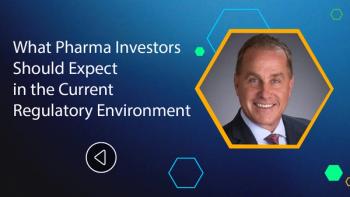
Investors seeking predictability are adjusting their strategies in the current regulatory environment.