

Behavioral and engagement insights are helping biopharma companies design more personalized patient support programs that improve persistence and long-term outcomes.
Behavioral and engagement insights are helping biopharma companies design more personalized patient support programs that improve persistence and long-term outcomes.
Silvia Taylor of Novavax explains how major biotechs like Eli Lilly and Sanofi are developing vaccine strategies for the coming years.

5 Prime Sciences CEO discusses how simply building a massive data set can cause more problems than it solves during clinical trials.

In today's Pharmaceutical Executive Daily, Elicio Therapeutics shares tumble after its Phase II Amplifgy-7P trial of KRAS-targeting immunotherapy ELI-002 7P misses its primary endpoint in adjuvant pancreatic cancer, FDA approves Skinvive by Juvéderm as the first and only hyaluronic acid injectable indicated to reduce neck lines, and Pharmaceutical Executive speaks with Dr. Edward Littler and Dave Watson, the newly paired executive chairman and CEO of Persica Pharmaceuticals, on how they are driving the company's non-opioid pain program PP353 toward Phase III.

FDA has approved Skinvive by Juvéderm as the first hyaluronic acid injectable specifically indicated for neck wrinkles, expanding the Allergan Aesthetics franchise into a new anatomical area.

Elicio Therapeutics' KRAS-targeting immunotherapy ELI-002 7P missed its primary endpoint in a Phase II adjuvant pancreatic cancer trial, sending shares down 47%.

Polaryx’s chief medical officer discusses the regulatory environment for rare, pediatric treatments and how it’s directly impacting clinical trials.

Silvia Taylor of Novavax details how the company leverages its expertise in vaccine development to build partnerships across the industry.

The two executives discuss joining Persica Pharmaceuticals and how they’re driving the company forward with non-opioid pain medication.

Brian Hilberdink, president of U.S. Human Pharma, Boehringer Ingelheim, notes how scale is a starting point, not a finish line, and until clinicians measure what's happening inside the body, obesity treatment will keep falling short of its promise.
In today's Pharmaceutical Executive Daily, Boehringer Ingelheim's Brian Hilberdink argues that obesity innovation must evolve beyond the scale, a pharma regulatory roundup covers two significant FDA approvals, and Pharmaceutical Executive speaks with Raj Indupuri, CEO of eClinical Solutions, on making the ROI case for smarter clinical trials in an era of exploding trial data complexity.

FDA approved two targeted combination regimens this week, clearing AstraZeneca's Truqap as the first biomarker-directed therapy for PTEN-deficient prostate cancer and Merck's Keytruda and Keytruday Qlex plus Welireg.
Silvia Taylor of Novavax discusses the role that regulatory agencies play in vaccine usage, who can receive vaccines, how they’re administered, and under what conditions.

Brian Hilberdink, president of U.S. Human Pharma, Boehringer Ingelheim, argues the field must evolve beyond the scale, measuring success not just in pounds lost, but in visceral fat reduction, liver health, and preserved muscle mass.

Polaryx’ chief medical officer Lisa Bollinger explains the struggles finding ways to reduce patient costs for gene therapies for rare diseases.

With clinical trial data exploding to nearly 6 million datapoints, eClinical Solutions' CEO and Co-founder, Raj Indupuri makes the case for price transparency and a measurable ROI in clinical data technology.
In today's Pharmaceutical Executive Daily, Kardigan sets terms for a $350 million IPO that would value the cardiovascular biotech at approximately $1.3 billion, Pharmaceutical Executive speaks with Rick Winningham on building the next generation of leaders behind the pipeline, and Jazz Pharmaceuticals reports that the Phase III Lagoon trial of Zepzelca failed to meet its primary endpoint of overall survival in second-line small cell lung cancer.

Jazz Pharmaceuticals' Zepzelca failed to improve overall survival in the Phase III Lagoon confirmatory trial for second-line small cell lung cancer, putting its accelerated approval in that setting at risk.

Fresh off the HBA's Honorable Mentor award, Rick Winningham, CEO of Theravance Biopharma, reflects on a career defined by cultivating the cultures driving the science.

Kardigan has filed to raise approximately $350 million in an IPO that would value the cardiovascular biotech at roughly $1.3 billion, expecting that its three late-stage programs can attract investors in a market still riding a biotech IPO wave.
Lisa Bollinger, chief medical officer at Polaryx, explains how treatments for lysosomal disorders struggle due to the fact that these diseases each have a unique mutation.

Silvia Taylor of Novavax discusses how new vaccine technologies are reducing side effects, lowering costs, and enhancing immune response.
In today's Pharmaceutical Executive Daily, Bruce Liu examines China's latest policy guidance establishing premium pricing and priority reimbursement access for truly innovative drugs, Parabilis Medicines surges more than 45 percent on its first day of trading on Nasdaq, and Pharmaceutical Executive speaks with Eli Lilly's Sarah O'Keeffe, Group Vice President of Product Research and Development, on how the company's $4.5 billion Medicine Foundry is designed to transform the discovery-to-production handoff and accelerate speed to patient.
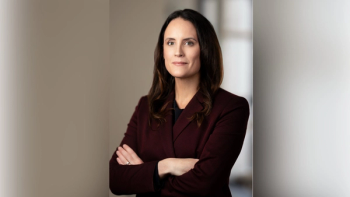
The driving force behind Lilly’s Medicine Foundry on transforming the discovery-to-production handoff.

Parabilis Medicines surged 58% on its first trading day, pushing its market cap to roughly $3.7 billion and cementing its $670 million raise as the largest biotech IPO on record.

China’s latest policy guidance sets new expectations for the pricing and reimbursement of novel drugs, and highlights the growing role of real-world evidence.
Polaryx’s chief medical officer Lisa Bollinger explains how basket-trials are uniquely beneficial to rare disease therapy development.
In today's Pharmaceutical Executive Daily, Parabilis Medicines prices a record-breaking $670 million IPO, Swedish biotech AlzeCure Pharma enters a collaboration and out-licensing agreement with Eli Lilly for its Alzheimer's candidate, and FDA approves an every-eight-week maintenance dosing regimen for Eli Lilly's Ebglyss.

How emerging investment models are rewiring biotech funding structures for efforts in rare disease.

Eli Lilly and Company notes that the approval of an every-8-week maintenance dose of lebrikizumab offers sustained atopic dermatitis control with fewer annual injections.