


Tina Tianning Yu, Chief Executive Officer of Mevion Medical Systems, talks about engaging with China's pharma market and laying the foundations for success in 2020 and beyond.
Tina Tianning Yu, Chief Executive Officer of Mevion Medical Systems, talks about engaging with China's pharma market and laying the foundations for success in 2020 and beyond.

Change in season ushers in a pivotal period for pharma in shaping the direction of EU healthcare.
As well as official European projections of sharply slowing industry growth and geopolitical concerns, pharma executives face additional hazards as they plot their medium-term strategies, writes Reflector.
Leela Barham talks to Sir David Haslam, the outgoing Chair of UK’s National Institute for Health and Care Excellence (NICE), about the highs and lows of his six-year tenure at the organization.
Exploring the EU’s struggles and new efforts in promoting cell and gene drugs.

Matthias Wernicke, General Manager of Merck KGaA’s Biopharma business in Russia, talks about how the country is transitioning from an emerging to a mature pharmaceutical market.

Pharmaceutical Executive
A look at some of the key pharma compliance challenges prevalent in the Asia-Pacific region.

Pharmaceutical Executive
Our 19th annual listing reveals some interesting maneuvering of ranks, as companies focus on diversification, big-brand expansions, and positioning a new wave of products to compete in an advancing but complex future treatment market.
What to make of the simmering public and political angst

See Li Lynn, LEO Pharma’s HR Manager, South Asia, talks about how LEO is managing the compliance challenges in Asia.

Both foreign and domestic pharmas are in a race to bring PD-1/PD-L1 inhibitors into China, writes Jin Zhang.

Chris Round, Head of International Operations & Global Core Franchises at Merck KGaA, Darmstadt, Germany talks to Pharm Exec about how the company's new treatments are positioned to advance the company’s “double mission."

Pharmaceutical Executive
With a new Commission looming, here’s who’s vying for the top spot in shaping EU strategy, including key questions in pharma.
The World Health Assembly's new resolution on transparency in the market for health-related products is weaker than the original draft but still contains measures that could have a substantial impact on market access around the world, writes Neil Grubert.
FDA is examining and updating its programs for overseeing global operations and international affairs.
European industry fights over every inch on comparative drug pricing initiative.

Pharmaceutical Executive
Pair of interviews spotlight the changing dynamics for C-suite business managers in two contrasting life sciences settings-big, established pharma and small, aggressive biotech.
Ed Schoonveld reviews the key topics discussed at the World Health Organization's second Fair Pricing Forum, held in Johannesburg, South Africa last month.
The UK has had in place what amount to two pricing schemes for branded medicines for years. But with major changes to both schemes set out in 2018, it’s now a new tale of two pricing schemes. Leela Barham reports.
Europe slow to action on emerging technologies, but the complex issues clouding EHRs and gene editing, for example, offer pause.
Joanna Huang analyses the use of external innovation tools among small and large pharma in China.

Pharmaceutical Executive
Despite a “temporary fix” at the ready, pharma supply repercussions loom if exit deal isn’t reached this month.
Pharmaceutical Executive
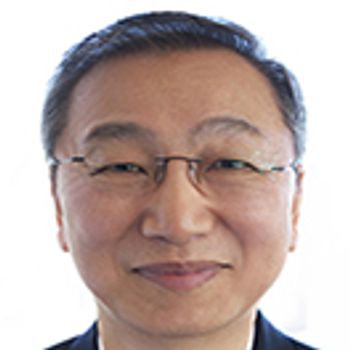
Dr. Lingshi Tan, a director at DIA, and chairman and CEO of Shanghai-based CRO dMed Company Limited, which he founded after establishing R&D operations for Pfizer in China, discusses the nation's regulatory evolution and opportunities for its government to strengthen collaborations with FDA and other leading global agencies.

Pharmaceutical Executive
How innovation growth has upped the pressure on China to compete globally, forcing upgrades in regulatory, quality, and standards.
Pharmaceutical Executive
How the nation’s rapidly changing regulatory climate is creating a new landscape for pharmaceutical service providers