


EU tasked with translating bold declarations into reality.

EU tasked with translating bold declarations into reality.
Must find common ground between digitalization and protection laws.
Must maintain trust in face of customary, non-pandemic challenges.
Universal strategy push elicits range of constituency views.

Orphan drug incentives set to remain in place in Europe.

Christine Phillips looks at how an increase in protectionism across the EU member states with respect to foreign direct investment impacts the life sciences sector.
Budget battle threatens efforts to bolster Europe’s pharma strategy.
Andrew Hood and Cliodhna McDonough look at the key issues necessary to support business and the community in developing a long-term and sustainable response to the challenges highlighted by COVID-19.
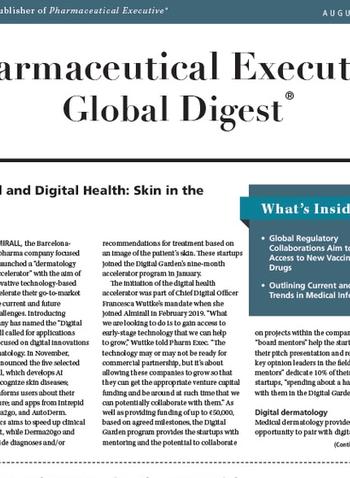
Click here to download the August 2020 edition.
Stephanie Hill looks at the efforts made by patient solutions providers in the UK to build and support services outside the hospital environment during the pandemic.

Pandemic sparks call for European manufacturing renaissance.
Industry prospects at mercy of public discourse, policy shifts.
Pandemic fallout could spell fundamental business and policy shifts.

Ali Mosawi writes about the misconceptions of Iraq's often inhospitable landscape, the essential role of international expertise in driving growth, and how the sector has adapted to meet the challenges of the COVID-19 pandemic.
Pharmaceutical Executive
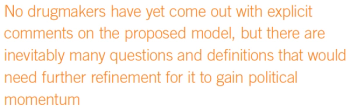
With coronavirus a stark backdrop, European initiative pushes for “fair” drug prices to spur investment in pharma innovation.
Medical devices manufacturers and pharma companies alike should review their compliance strategies as the EU Medical Device Regulation Date of Application approaches.
The collection of source plasma for new therapies igniting debate.

The Medicines and Medical Devices Bill was recently introduced to the UK House of Commons. Does it provide the confidence that the UK is still a leading country for life sciences? Cliodhna McDonough reports.
New OECD study doesn’t shed much light on the effectiveness of managed entry agreements for drug access.
Natalie Douglas talks about her experience in the area of managed and expanded access and her new venture, RareiTi.
ISPOR has published its third issue of the top trends in HEOR. Leela Barham takes a look at how the list has changed over time.
Leela Barham talks to Dr. Brian O’Rourke, outgoing President and Chief Executive Officer of the Canadian Agency for Drugs and Technologies in Health (CADTH), about his 11 in years in the role.

Goals for IDMP in Europe must not be diluted in 2020, if standardized medicinal product data is to be of tangible real-world benefit, says Remco Munnik.

The path for UK life sciences to factor prominently in transition-period maneuvering.
What to make of new momentum in advancing health agenda.