



“You wanna play rough? Just try it!” was the gist of the New-Year message from the European pharma industry to the healthcare authorities circling around drug firms preparing for pricing discussions. Reflector reports.
“You wanna play rough? Just try it!” was the gist of the New-Year message from the European pharma industry to the healthcare authorities circling around drug firms preparing for pricing discussions. Reflector reports.

As we pass the 6-month anniversary of theGeneral Data Protection Regulation's effective date, the number of organizations which boast 100% GDPR compliance has certainly increased. But life sciences companies are still grappling with implementation of the policy and procedure changes, writes Ashley Williams.

James Clark addresses one of the key questions data protection and compliance officers are asking following the implementation of the General Data Protection Regulation -"What role am I playing under the GDPR?"
As the EU prepares for a change of governance, policymakers should take note of recent comments about the "poisoned atmosphere" surrounding healthcare policy debates, writes Reflector.

Whatever the final outcome of Brexit, investing in supporting advocacy communities will be an important element of maintaining trusted relationships with patient groups and stakeholders in the UK and the EU, write Nick Hicks and Tamsin Rose.
Pharmaceutical Executive
This article discusses three key considerations a manufacturer should either understand or seek a consulting partner to guide them through a commercialization plan.
The Commission’s gestures toward enacting formal standards to digitize health records are masking wider policy gaps.

Pharmaceutical Executive
Parliament throws wrench in Commission’s plan to regulate HTA.

Anjum Swaroop, Vice President and Head of IP at Dr. Reddy's, talks to Pharm Exec about her journey with the company and about what the future holds for this major US generics player.

Michael W. Magdycz share some of the lessons he's learned directing alliances spanning a range of countries and products.
Jin Zhang provides an overview of China's major bispecific antibody developers.
Disparities in income levels in China continue to drive far-reaching differences in how poorer and richer cancer patients are treated, with recent data suggesting that the differences in access to treatment lead to different outcomes for poorer patients. Peter De Richter reports.

Pharmaceutical Executive
What will come out of Austria’s shakeup of European pharma rules?

The call to reduce market entry times for life-saving new drug therapies is becoming more urgent. What constitutes best practice in managing translations in today’s regulatory affairs environment? Nancy Pollini reports.
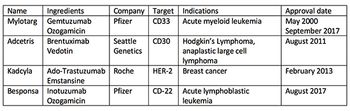
In the face of booming antibody market, China has jumped into the antibody-drug conjugate space. Jin Zhang reports.
Tyrosine-kinase inhibitors (TKIs) are gradually becoming the most popular option for lung cancer treatment in China. Jin Zhang reports.
A recently announced collaboration between EUnetHTA, WHO, and ISPOR brings home the fact that there is still no real agreement on a definition of HTA, writes Reflector.
Maude Schmidt and Giovanni Saldutti look at the intergovernmental initiatives involving joint price negotiations developed across Europe as the Beneluxa Initiative on Pharmaceutical Policy to explore the outcomes and implications from these alliances.

Pharmaceutical Executive
Record capital flows across global public and private markets has opened up new channels of investment in early-stage and novel science.
In an attempt to reduce high drug prices and improve its medical insurance coverage, China has initiated a series of new moves, including the recent zero import tax on a range of anticancer drugs. Jin Zhang reports.

Pharmaceutical Executive
Over the last decade, Spain has seen a significant growth in venture-capital investment in the life sciences. We explore the driving forces.
Research-based companies in Europe look as though they have lost one battle on preserving incentives for innovation – but the bigger war is only now getting underway, writes Reflector.

Artificial intelligence adoption by pharma companies in the UK demands a new, agile governance layer, write Tim Wright and Antony Bott.