



Legal
Latest News
Advertisement
Latest Videos





Advertisement
More News

European regulators are increasing pressure on clinical trial sponsors to report study results on time, rolling out new monitoring, reminders and guidance as patient advocates welcome the progress but question whether stronger oversight and enforcement will follow.
FDA is launching the Rare Disease Framework Initiative, aiming to tailor drug development and review requirements to the realities of small patient populations.
As CROs, labs, and other outside partners gain early access to trial and FDA data that sponsor employees have, experts say closing the gap starts with rewriting confidentiality language.

TRexBio and Retension Pharmaceuticals priced IPOs, raising a combined $161.7 million to advance their immunology and hypertension pipelines ahead of their Nasdaq debuts.

Regeneron and Sanofi are expanding their two-decade antibody alliance to co-develop four new long-acting immunology antibodies in a deal worth up to $8 billion.
New U.S. guidance exempts orphan drugs, nuclear medicines, cell and gene therapies, and other specialty products from the 100% pharmaceutical tariff when imported from 19 named countries.

Compounding pharmacies that set their own safety and accreditation standards now stand the best chance of keeping patient access intact before heavier regulation does it for them.

Chairs of Europe's largest drugmakers urge the EU to boost health spending, speed up clinical trials, and strengthen IP protections before falling further behind the US and China.
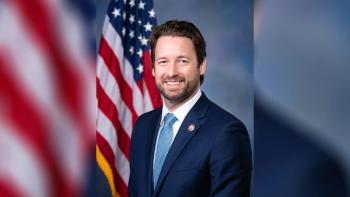
Former Rep. Joe Cunningham (D-SC), now spokesperson for the Pharmaceutical Reform Alliance, argues that codifying Most-Favored-Nation pricing into law is the real fix for drug costs.
Model N's Jesse Mendelsohn examines the growing stakes surrounding the 340B Drug Pricing Program — and how claims data, rebate models and simmering legal challenges are influencing manufacturer response and strategy today.

The Trump administration adds nine drugmakers to its Most Favored Nation pricing program, GSK advances its dual-antigen mRNA flu vaccine into Phase III, and Simcere Zaiming licenses its tri-specific antibody Sim0660 to Roche for up to $1.53 billion.
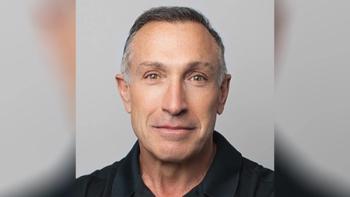
James LaValle, chair of the International Peptide Society, notes how the advisory committee's favorable vote on peptides for the 503A Bulks List was a meaningful step without constituting approval.

Why pricing pressure, policy volatility and supply-chain risk are pushing drugmakers toward greater cost and portfolio discipline, without losing sight of investment in innovation.
In today's Pharmaceutical Executive Daily, a new report finds U.S. rare disease biotech investment rebounding after FDA's Priority Review Voucher program renewal, President Trump signs an executive order narrowing the recommended childhood vaccine schedule, and BeOne Medicines and Revolution Medicines announce a multi-part oncology collaboration.

President Trump signs an executive order shrinking the recommended childhood vaccine schedule from 18 diseases to 11, and calls for the MMR shot to be split into three separate injections.
In today's Pharmaceutical Executive Daily, an antitrust attorney weighs the legal risks of a hypothetical AstraZeneca-Bristol Myers Squibb merger, Eli Lilly beats Wall Street estimates on soaring Mounjaro and Zepbound sales and raises its full-year guidance, and the FDA approves Moderna's first mRNA-based flu vaccine for adults 50 and older.

Ron Lanton, senior partner at Lanton, Lanton & Sosa Law, discusses the legal risks associated with a hypothetical AstraZeneca–Bristol Myers Squibb merger.
In today's Pharmaceutical Executive Daily, a senior source denies reports of merger talks between AstraZeneca and Bristol Myers Squibb, CSPC Pharmaceutical and AstraZeneca form a joint venture for biologics manufacturing in China, and a feature examines how U.S. Patent and Trademark Office policy changes are slowing patent challenges for generic and biosimilar drugmakers.

A senior source claims there are no discussions underway between AstraZeneca and Bristol Myers Squibb over a potential combination.

Inside Pharma's Patent Battleground: The Policy Changes Reshaping Generic and Biosimilar Competition
Recent changes at the U.S. Patent and Trademark Office are making it harder to challenge pharmaceutical patents, raising concerns that slower generic and biosimilar competition could undermine efforts to lower drug costs while strengthening protections for brand-name innovators.
FDA's advisory committee voted 10 to 3 that efficacy data from the Ignyte study is evaluable and clinically meaningful.

An FDA advisory panel voted to recommend six of seven unapproved peptides for compounding access, raising concerns about its newly appointed members.
In this episode, Ron Lanton argues that healthcare's next constraint isn't capital or technology but rather people.
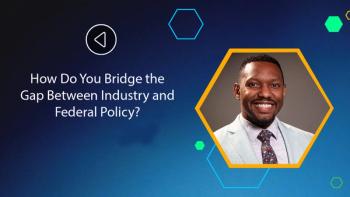
Gerren McHam, vice president of Government and External Affairs, API Innovation Center,argues that closing the gap between federal reshoring policy and manufacturer investment requires more than incentives.
In today's Pharmaceutical Executive Daily, Novo Nordisk sues Eli Lilly over GLP-1 advertising it calls misleading, President Trump announces a phased tariff plan for imported generic drugs, and a new commentary argues pharma's AI investment is missing the areas of drug discovery where it matters most.
Advertisement
Advertisement
Trending on PharmExec
1
Bristol Myers Squibb Discloses Patient Death in CAR-T Multiple Sclerosis Trial
2
The Importance of Reframing COVID-19 as a Preventable Event
3
FDA Extends Talzenna-Xtandi to Hormone-Sensitive Prostate Cancer
4
FDA Approves Subcutaneous Induction for Skyrizi in Crohn's Disease
5