


Technology
Latest News
Advertisement
Latest Videos

Advertisement
More News

Novavax’s EVP of corporate affairs and head of its Sweden division discusses new vaccine technologies, such as its adjuvant matrix technology, are bringing new players into the space.

With clinical trial data exploding to nearly 6 million datapoints, eClinical Solutions' CEO and Co-founder, Raj Indupuri makes the case for price transparency and a measurable ROI in clinical data technology.
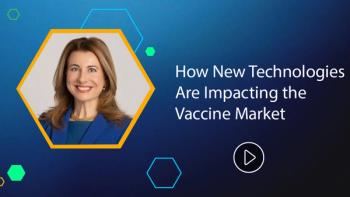
Silvia Taylor of Novavax discusses how new vaccine technologies are reducing side effects, lowering costs, and enhancing immune response.

The driving force behind Lilly’s Medicine Foundry on transforming the discovery-to-production handoff.

Special Guest Op-Ed: The time is now to elevate manufacturing and supply to a defining pillar of life sciences innovation.

AI-powered data analytics has evolved from a supporting function into the backbone of modern brand strategy and decision-making.
Chai Discovery has licensed its generative AI drug discovery platform to Pfizer, giving the company early access to its next-generation Chai-3 model and a custom model trained on Pfizer's own data.

Alnylam Pharmaceuticals has partnered with Inceptive to apply generative AI to siRNA design, pairing Inceptive's biology-trained models with Alnylam's two decades of proprietary RNAi data to accelerate candidate discovery.

Prescryptive Health’s chief commercial officer discusses the results of a market access survey that asked industry executives about DTC models, affordability, and patient access.

Harpreet Singh, former FDA Oncology Division Director and current chief medical officer at Precision for Medicine notes how evolving FDA review standards, expedited approval programs, and emerging AI tools are reshaping the regulatory landscape for biopharma companies.
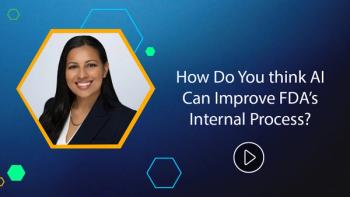
Harpreet Singh, MD, notes that FDA’s internal AI system could improve efficiency in drug review by helping reviewers aggregate and synthesize complex data.

In today's Pharmaceutical Executive Daily, Reuters reports that lower-priced oral GLP-1 pills from Eli Lilly and Novo Nordisk are drawing patients away from compounded weight loss medications, Gilead Sciences' renews its five-year collaboration with WHO and Johnson and Johnson’s collaboration with the Department of Health Abu Dhabi, finally Partha Anbil argues that truly industrializing machine learning and AI in life sciences requires systems that are scientifically credible, clinically defensible, regulatorily traceable, and operationally sustained.

Life science organizations that will lead the next decade ar those that deploy systems that are scientifically credible, clinically defensible, regulatorily traceable, and operationally sustained.

New partnerships from Gilead Sciences and Johnson & Johnson highlight how healthcare companies are using collaborations to expand global disease initiatives and accelerate development of AI-enabled healthcare infrastructure.

Eli Lilly acquires Engage Biologics in up to $202 million deal to strengthen its genetic medicines portfolio with a non-viral DNA delivery platform designed to improve durability, tolerability, and re-dosing potential.
Bristol Myers Squibb and Incyte expand AI capabilities through major collaborations aimed at embedding agentic and molecular AI directly into drug discovery, development, and enterprise operations.

Regeneron and Parabilis Medicines partner to discover and develop antibody-Helicon conjugates, aiming to create a new class of therapies capable of targeting historically “undruggable” intracellular proteins.

Trialynx’s CEO discusses the benefits of using AI for trial design and how to find the AI companies doing the most promising work.

How existing technologies and approaches such as targeted AI deployment can help make prior authorization workflows more efficient.

Agentic AI is reshaping pharma market entry by enabling real-time, data-driven insights that allow companies to ask more complex strategic questions and act faster — with greater precision.

Jamie Singer and Matt Flora discuss how cybersecurity threats in pharma are evolving beyond ransomware to include data extortion, supply chain attacks, and AI-driven risks.

Data-driven decision-making, evolving access models, and accelerating adoption of AI create a complex commercialization landscape.

Inizio launches integrated hub services model to streamline patient access, reimbursement, and adherence, reflecting a broader industry shift toward data-driven, end-to-end patient support strategies.

In the final part of her interview, Plesnarski notes how market access strategies evolve into core launch drivers as IRA timelines, pricing pressures, and digital adherence tools reshape how companies maximize value.

Accurate and reliable data is essential to provide leaders with the right information to power these systems.
Advertisement
Advertisement
Trending on PharmExec
1
HHS Confirms Four Senior FDA Leaders, Including Agency's First-Ever AI Deputy Commissioner
2
Kura Oncology Spins Out Caspian Therapeutics With $50 Million to Test Menin Inhibition as a Disease-Modifying Approach to Diabetes
3
How Elevated Cortisol Levels Can Impact Type II Diabetes Treatments
4
IBD's Most Persistent Gap: Q&A with Christian Thienel
5