


Making early commercial data and analytics decisions for launch cen future-proof their data management.
Making early commercial data and analytics decisions for launch cen future-proof their data management.

Market dynamics boost the need and urgency for more sophisticated benchmarking strategies.
EVERSANA’s chief digital officer discusses recent developments in the pharma industry that are impacting its relationship with patients and new technology.

Heather Gervais, CEO of Osso VR, discusses how technological advancements in VR are solving problems for pharmaceutical sales reps.
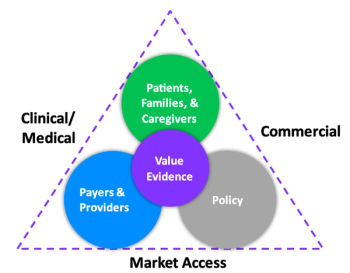
The recent shift in Health Economics and Outcomes Research functions across major pharmaceutical companies highlights a lack of understanding of its value.
In this Pharmaceutical Executive Video Interview, Peter Ax, Founder & CEO of UpScriptHealth, explores ways that digital health platforms can assist pharma companies seeking to maintain accessibility and manage cost pressures.


The CEO discusses his company’s platform that helps reformulate oral solid dose medications to liquid forms.

James Foster, CEO and co-founder of Virax Biolabs, discusses how AI and machine-learning algorithms are changing the ways that companies approach their launch strategies.

The benefits for brand teams in bolstering their rapid-response capability.
The TileDB CEO discusses how the life sciences can overcome these limitations.

The energy component—and cost—associated with artificial intelligence should not be overlooked in all the excitement.

Bill Grambley, CEO of AllazoHealth, delves into the potential of AI to revolutionize patient engagement and adherence.

Paul Howe, chief commercial officer at Protega, discusses efforts to combine high tech solutions with pain-management medications.

Ash Shehata from KPMG discusses how artificial technology has a lot to prove, although investors still see a lot of potential in it.

Guidance marks the regulatory body’s first on artificial intelligence applications in drug and biological product development.

A Q&A with Harvard’s Laura Wegner, serial entrepreneur and Rhodes Scholar-elect.

In the third part of this roundtable discussion, experts discuss the issues with data that AI must overcome.
The Upscript Health CEO discusses trends in telehealth for the coming year.

How alternative direct-to-consumer models are changing the landscape for patient access.

The swell of AI-powered digital platforms puts future decision-making under the spotlight.

A look at the promise and opportunities from this new and advanced type of AI in transforming commercial planning and execution for life sciences companies.
In the second part of this roundtable discussion, experts discuss how the industry is handling AI in the marketing space.
AI provides opportunities to bring people together—not replace them.

Because the AI space is changing rapidly, it’s essential that companies are budgeting correctly and using their investments strategically.