




Technology
Latest News
Advertisement
Latest Videos
Shorts
0:27
The Key to AI Scale-Up
2 months ago
by
Michael Christel(+1 more)
0:46
How Platform Technologies and Partnerships are Shaping CGT Development
5 months ago
by
Mike Hollan(+1 more)
1:03
Measuring the AI Bubble
6 months ago
by
Michael Christel(+2 more)
0:56
#2: AI’s Ascent
8 months ago
by
Michael Christel
0:50
The Power of Automation
9 months ago
by
Nicholas Jacobus(+1 more)
0:51
AI Agents in Pharmacy
9 months ago
by
Nicholas Jacobus(+1 more)
0:31
Why Platform Technologies are Essential for Biotech Investors
10 months ago
by
Mike Hollan(+1 more)
0:54
AI's Recent Advancements in the Pharmaceutical Industry
10 months ago
by
Nicholas Jacobus(+1 more)
Advertisement
More News
In pharma's AI transformation, the technology was never the hard part — fixing the operating model that has to act on what AI surfaces is.

Most pharma companies have promising AI pilots. Few have built the conditions to scale them. Here's what separates the leaders from the rest.

As trust shifts from a stated value to an operating condition, pharmaceutical leaders face new expectations for how credibility is built, governed and sustained under continuous scrutiny.

Q&A with PwC’s Glenn Hunzinger explores why biopharma M&A investment could approach $300 billion in 2026, how drugmakers are balancing risk amid patent cliffs and policy pressures, and the urgent need to transform healthcare as commercial medical costs climb toward 9%.

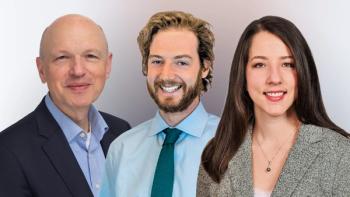
From guiding pursuits in artificial intelligence and R&D to scientific marketing and company building, meet Pharm Exec’s new slate of select rising leaders who are helping to shape the next generation of biopharma innovation.

Abid Rahman, head of AI Agency and innovation at EVERSANA, explains how the pharmaceutical industry is moving from generative to agentic AI.

Overcoming the limits of traditional segmentation through a more connected, responsive and effective approach to health care professional engagement.

Krieger Scientific’s founder and CEO discusses how various factors, such as siloed systems and misuse of AI, may be responsible for the increase of warning letters from FDA.

Such enterprises will be defined not only by breakthrough therapies but also by agile leadership, AI-enabled transformation and patient-centered operating models that accelerate innovation into real-world impact.
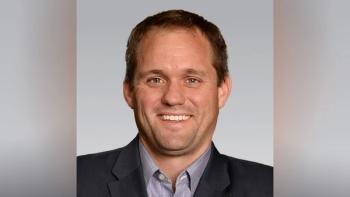
Veeva's president of commercial strategy discusses how agentic AI is surfacing the treatment barriers and HCP insights that traditional call reporting was never built to capture.

Inizio Engage is expanding its Global Medical Information platform with Connected Insights to convert the more than one million scientific interactions its teams handle annually into actionable intelligence.
In this episode, Ron Lanton argues that healthcare's next constraint isn't capital or technology but rather people.
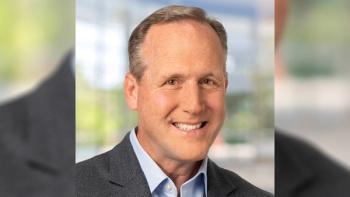
Mike Faddoul, Partner, Audit & Assurance, Crowe, makes the case that gross-to-net accounting deserves the same pre-launch rigor as commercial strategy.

AI adoption in pharma drops sharply in the domains that matter most for discovery.
In today's Pharmaceutical Executive Daily, Invivyd's chief scientific officer discusses a platform designed to predict future viral variants ahead of time, Bristol Myers Squibb expands its AI compute infrastructure with Nvidia to build what it calls the most powerful AI factory in life sciences, and FDA clears Consano Bio's IND for a non-opioid biologic targeting chronic sciatica.

Bristol Myers Squibb is deploying Nvidia's DGX SuperPOD with Vera Rubin NVL72 systems to build what it claims is the most powerful AI computing infrastructure in life sciences.

Robert Allen, Ph.D., Chief Scientific Officer, outlines how the company's Invymab platform uses viral surveillance and predictive modeling to design monoclonal antibodies against likely future variants rather than current strains.

AI can generate words that sound like empathy, but it cannot offer the understanding that a real person can.
Ken Banta and Craig Tooman on why the best leaders win by asking better questions — not just chasing more data — and what that means for drug development, funding and AI in the years ahead.

Insilico Medicine and Bora Pharmaceuticals entered a strategic alliance to pair Insilico's AI drug discovery platform with Bora's development and manufacturing infrastructure.

Insilico Medicine has deepened its partnership with China Medical System Holdings with a second CNS-focused collaboration in three months, pairing Insilico's PandaOmics-identified mechanism with CMS's clinical and commercial infrastructure in a deal worth up to $177 million in milestones.

The two companies will work together to advance the development of small molecule discovery at the research center.
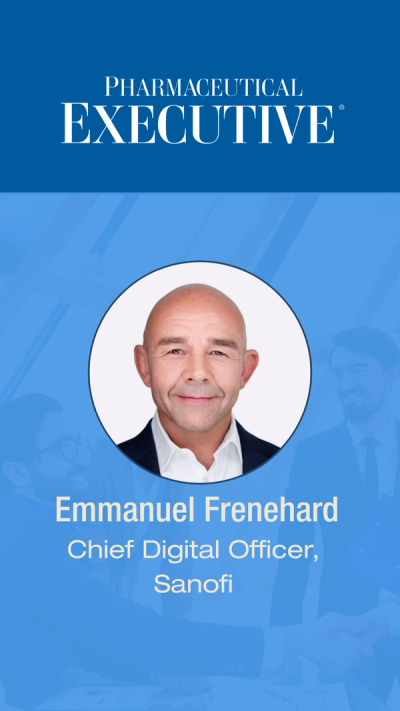
Sanofi Chief Digital Officer Emmanuel Frenehard on scaling AI across a Big Pharma global enterprise and why a strategy of concentrated AI bets — not scattered pilots — can better drive real transformation without losing sight of governance, culture or patients.
Aprecia’s president and COO discusses the impact 3D printing technology is having on drug development, along with the benefits and challenges of being a company that is 100-percent US-based for its manufacturing.
Insilico will use its AI platform for the drug development process, while SK handles the late-stage and commercialization processes.
Advertisement
Advertisement
Trending on PharmExec
1
HHS Confirms Four Senior FDA Leaders, Including Agency's First-Ever AI Deputy Commissioner
2
Kura Oncology Spins Out Caspian Therapeutics With $50 Million to Test Menin Inhibition as a Disease-Modifying Approach to Diabetes
3
How Elevated Cortisol Levels Can Impact Type II Diabetes Treatments
4
IBD's Most Persistent Gap: Q&A with Christian Thienel
5