




Market Access
Latest News

October 21st 2026
Median Drug Launch Prices Hit $257,000 as Access Barriers Persist, ICER and West Health Report Finds
Median net launch prices for new drugs climbed between 2022 and 2025 to $257,000, according to a new ICER and West Health report that also found persistent coverage and access barriers for patients.
Advertisement
Latest Videos



Shorts



Advertisement
More News

CORXEL’s chief medical value discusses how GLP-1s are becoming a chronic disease platform.

As Japan prices take on greater global significance, disciplined launch strategy can help pharma companies capture the full value of innovation.

Why effective RWD linkage starts with a specific research objective — and how tokenization, clean rooms, and AI make it possible.

Digital health's point-solution era is giving way to broader platforms, and the cost-savings claims those platforms make to employers often don't hold up to methodological scrutiny.

Compounding pharmacies that set their own safety and accreditation standards now stand the best chance of keeping patient access intact before heavier regulation does it for them.

FDA has approved Welireg plus Lenvima for previously treated advanced clear cell renal cell carcinoma.

Six years after Rutledge, new court rulings, federal PBM reforms, and state ownership bans are redrawing the limits of pharmacy benefit regulation.
FDA approves Onswik, Eli Lilly's once-weekly basal insulin for adults with type 2 diabetes.

Novo Nordisk CEO Mike Doustdar says he's open to a direct NYSE listing that would replace the company's ADR structure.

Market access is now too complex for historical analogues — and AI is the only tool that can model what comes next.

EVERSANA's Alan Crowther on why MFN's three programs, compounding interactions with IRA and 340B, and leverage gaps make it pharma's most consequential pricing challenge.
CGT commercial trajectories are set years before approval — and every development decision is an access decision.

Pharma has digitized nearly everything — but contract management remains fragmented, creating compliance risk and slowing execution across the enterprise.

Unmet need is likely a new battlefield impacting prior authorization.

Nate Hill, co-founder & CEO, Strive Pharmacy, breaks down looming questions around the completed FDA PCAC hearing on peptides.
The Trump administration adds nine midsize pharmaceutical companies, including Teva, UCB, Astellas, and BeOne Medicines to its Most-Favored-Nation drug pricing program.

Osivax and GC Biopharma agree to co-develop an influenza vaccine combining Osivax's OVX836 with GC Biopharma's GC FLU.
The Trump administration is expected to announce a new round of voluntary MFN drug-pricing agreements with midsize biotech companies as soon as August 31.

A recent study of more than 15,000 adults over 55 with obesity found that sustained Zepbound use was associated with up to 38% lower monthly healthcare costs at 12 months compared with untreated matched controls.
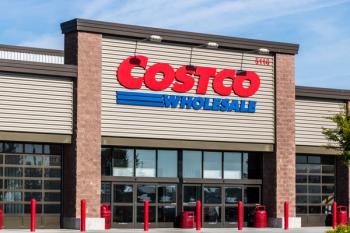
Costco’s partnership with SCAN Group suggests that the next competitive advantage in Medicare may come not only from managing insurance risk, but from controlling a trusted consumer healthcare ecosystem.

McKesson has agreed to acquire Precision Medicine Group for $2.25 billion, while Lundbeck has expanded its partnership with Eversana to scale AI-driven workflows.

FDA approved Imaavy (nipocalimab-aahu) as the first-ever treatment specifically indicated for warm autoimmune hemolytic anemia in patients ages 12 and up.

Rohit Tripathi, VP of Industry Strategy at RELEX, talks about who will actually pay for the phased tariff-driven cost increases.

MedAdvisor Solutions has rebranded as Adheris, restoring a name that has been a fixture in patient engagement for more than three decades.

As trust shifts from a stated value to an operating condition, pharmaceutical leaders face new expectations for how credibility is built, governed and sustained under continuous scrutiny.
Advertisement
Advertisement
Trending on PharmExec
1
Roundup: Gilead Acquires Oral IL-23R Inhibitor From PepStar for $1.275 Billion, Zymeworks Licenses DLL3-Targeting T Cell Engager to Roche
2
Treasury Proposes Rules Adding Biotechnology to Outbound Investment Security Program
3
FDA Approves Hibsago (Bepirovirsen) for Chronic Hepatitis B
4
FDA Grants Ultomiris Accelerated Approval in the U.S. for Adults with Primary Immunoglobulin A Nephropathy
5