


Market Access
Latest News
Advertisement
Latest Videos




Advertisement
More News

McKesson has agreed to acquire Precision Medicine Group for $2.25 billion, while Lundbeck has expanded its partnership with Eversana to scale AI-driven workflows.

FDA approved Imaavy (nipocalimab-aahu) as the first-ever treatment specifically indicated for warm autoimmune hemolytic anemia in patients ages 12 and up.

MedAdvisor Solutions has rebranded as Adheris, restoring a name that has been a fixture in patient engagement for more than three decades.

As trust shifts from a stated value to an operating condition, pharmaceutical leaders face new expectations for how credibility is built, governed and sustained under continuous scrutiny.

FDA has granted accelerated approval to Zenbexus plus daratumumab and Hyaluronidase-fihj and dexamethasone for multiple myeloma after at least one prior line of therapy.

Why pricing pressure, policy volatility and supply-chain risk are pushing drugmakers toward greater cost and portfolio discipline, without losing sight of investment in innovation.

Mereo BioPharma has granted Sentynl Therapeutics an exclusive option to commercialize alvelestat in the U.S. for Alpha-1 Antitrypsin Deficiency-Associated Lung Disease.

Renewal of FDA's Priority Review Voucher program is driving a rebound in U.S. rare disease biotech investment, while the UK continues to lag.

BeOne Medicines and Revolution Medicines enter a two-part deal pairing BeOne's PRMT5 inhibitor and EGFR×MET trispecific antibody with Revolution's four clinical RAS(ON) inhibitors.

Insights into the "differentiation paradox" from a study of 340 drug launches.
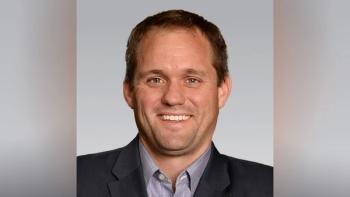
Veeva's president of commercial strategy discusses how agentic AI is surfacing the treatment barriers and HCP insights that traditional call reporting was never built to capture.
Eli Lilly posted $23 billion in second-quarter revenue driven by Mounjaro's sales surge to $9.94 billion and Zepbound's $4.93 billion.

Two-thirds of pharmaceutical product launches fail to meet first-year commercial expectations, and the gap between launch strategy and field execution is almost always why, according to this examination of how to identify, diagnose, and correct launch drift before it becomes irreversible.
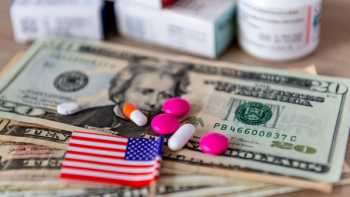
President Trump Announces Phased Generic Drug Tariff Plan: Report
Published: | Updated:
President Trump announces a zero tariff on imported generic drugs through August 2026 before a phased escalation to 200% by 2029.

Krista Pinto, EVERSANA’s president of deployment solutions, shares her perspective on why traditional field team models need to evolve to support future commercial success.

Examining the drivers of 340B drug program growth, the impact of vertical integration and contract pharmacies, the ongoing legal and regulatory disputes, and the strategic considerations life sciences companies must navigate in this evolving landscape.

Consolidation, specialty growth, and integrated networks are multiplying the entities manufacturers must classify, just as the IRA, 340B, and Medicaid rules raise the cost of getting any one of them wrong.

Behavioral and engagement insights are helping biopharma companies design more personalized patient support programs that improve persistence and long-term outcomes.

China’s latest policy guidance sets new expectations for the pricing and reimbursement of novel drugs, and highlights the growing role of real-world evidence.

Eli Lilly and Company notes that the approval of an every-8-week maintenance dose of lebrikizumab offers sustained atopic dermatitis control with fewer annual injections.

The framework’s key considerations for pharma brand managers.
Model N Senior Vice President Jesse Mendelsohn explores the hidden costs and realities of PBM-driven drug pricing and the growing challenges manufacturers face in ensuring contract compliance, formulary access and reimbursement accuracy.

Eli Lilly moves to deny 340B discounts to hospitals refusing to submit claims data under its documentation policy, escalating a months-long standoff with the American Hospital Association and prompting calls for federal intervention.
Prescryptive Health’s chief commercial officer discusses the results of a market access survey that asked industry executives about DTC models, affordability, and patient access.
FDA approves Shionogi’s Xocova as First Oral Post-Exposure Covid-19 Prevention Therapy, marking a major milestone for Covid-19 prevention treatments.
Advertisement
Advertisement
Trending on PharmExec
1
Roundup: Gilead Acquires Oral IL-23R Inhibitor From PepStar for $1.275 Billion, Zymeworks Licenses DLL3-Targeting T Cell Engager to Roche
2
Treasury Proposes Rules Adding Biotechnology to Outbound Investment Security Program
3
FDA Approves Hibsago (Bepirovirsen) for Chronic Hepatitis B
4
FDA Grants Ultomiris Accelerated Approval in the U.S. for Adults with Primary Immunoglobulin A Nephropathy
5