






John Arena, interim president of global pharma services at Cencora, discusses how companies can continue to develop launch strategies while taking potential regulatory changes into consideration.
John Arena, interim president of global pharma services at Cencora, discusses how companies can continue to develop launch strategies while taking potential regulatory changes into consideration.

Meilog marks the first rapid-acting insulin biosimilar to gain FDA approval for the treatment of diabetes.

The latest news for pharma industry insiders.

James Foster, CEO and co-founder of Virax Biolabs, discusses how companies can strategize despite hard-to-predict regulatory headwinds.

Approval of Adcetris provides a new treatment option for patients with relapsed or refractory large b-cell lymphoma who are ineligible for autologous stem cell transplantation.

James Foster, CEO and co-founder of Virax Biolabs, discusses how the industry is preparing for potential regulatory changes to vaccine policy.

Evrysdi is a non-invasive, disease-modifying option that can be swallowed whole or dispersed in water for patients with spinal muscular atrophy.

Pathways to success for this key component of Europe’s new HTA regulation, where thinking beyond the purely technical will be critical.
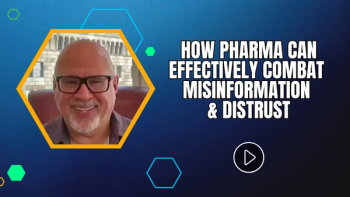
In this part of his Pharmaceutical Executive video interview, Ian Baer, Founder & CEO of Sooth, identifies strategies pharmaceutical companies can use to combat misinformation on social media.

Approval makes Gomekli the first treatment to be approved for both adults and pediatric patients for neurofibromatosis type 1, a genetic disorder that causes noncancerous tumors to grow on nerves throughout the body.

A change in political power is altering how companies are strategizing around the IRA.
The latest news for pharma industry insiders.

Emblaveo marks the first and only fixed-dose intravenous monobactam/β-lactamase inhibitor combination antibiotic to be approved by the FDA for complicated intra-abdominal infections with limited treatment options.

In this Pharmaceutical Executive video interview, Ian Baer, Founder & CEO of Sooth, identifies how uncertainty of where to find information, coupled with distrust, can damage the relationship between pharmaceutical companies and the patients they aim to serve.

Bill Grambley, CEO of AllazoHealth, delves into the potential of AI to revolutionize patient engagement and adherence.

In this part of his Pharmaceutical Executive video interview, Ian Baer, Founder & CEO of Sooth, explores the contributing factors growing distrust and uncertainty surrounding social media.

Approval of Onapgo (apomorphine hydrochloride) marks the first and only subcutaneous apomorphine infusion device for managing motor fluctuations in adults with advanced Parkinson disease.

Susan Cantrell responds to the tariffs on China, Canada, and Mexico.

The FDA has granted Fast Track Designation to Adicet Bio’s ADI-001, an allogeneic gamma delta CAR T-cell therapy, for refractory systemic lupus erythematosus with extrarenal involvement, marking the second such designation in autoimmune diseases.

Roche’s Susvimo, a refillable eye implant for diabetic macular edema, provides continuous delivery of ranibizumab, showing sustained vision improvements with fewer treatments than standard eye injections.

The FDA has approved an expanded label for Roche’s PATHWAY anti-HER2/neu (4B5) Rabbit Monoclonal Primary Antibody test, which identifies patients with HR–positive, HER2-ultralow metastatic breast cancer who may be eligible for treatment with Enhertu.

President Trump’s tariffs will include imported pharmaceuticals, among other items that will impact the industry.

Clinical trials demonstrated that a single dose of Symbravo provides rapid migraine relief, sustains efficacy for up to 48 hours, and reduces the need for rescue medication.

Approval of Journavx for acute pain marks the first new class of acute pain medication approved by the FDA in over 20 years.
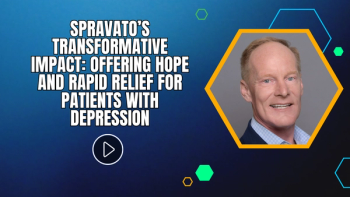
Gregory Mattingly, MD, president, Midwest Research Group, founding partner, St. Charles Psychiatric Associates, discusses the immediate impact Spravato has had on patients with treatment-resistant depression.