Roche licenses Rona Therapeutics’ ALK7-targeting RNAi candidate for obesity, while Pfizer partners with Enodia Therapeutics on Sec61 inhibitor discovery.
Nicholas Jacobus is a content associate for Pharmaceutical Executive and can be reached at njacobus@mjhlifesciences.com.
Roche licenses Rona Therapeutics’ ALK7-targeting RNAi candidate for obesity, while Pfizer partners with Enodia Therapeutics on Sec61 inhibitor discovery.
As CROs, labs, and other outside partners gain early access to trial and FDA data that sponsor employees have, experts say closing the gap starts with rewriting confidentiality language.

Thomas Appio has been named interim CEO of Bausch + Lomb, a move coinciding with an expected upward revision to the company’s full-year guidance.
The FDA approves Roche’s Tecentriq for a subset of colon cancer patients, TRexBio and Retension Pharmaceuticals price new IPOs, and a Pharmaceutical Executive feature examines what it takes to turn precision medicine’s biological gains into deliverable therapies.

TRexBio and Retension Pharmaceuticals priced IPOs, raising a combined $161.7 million to advance their immunology and hypertension pipelines ahead of their Nasdaq debuts.
Ultragenyx sells a rare pediatric disease priority review voucher for $210 million, Viatris acquires Pacira BioSciences for $1.65 billion, and Peter Young surveys a steadying biopharma outlook.

Viatris is acquiring Pacira BioSciences for $1.65 billion in cash, adding non-opioid pain therapies Exparel and Zilretta.

Ultragenyx is selling it's Rare Pediatric Disease Priority Review Voucher earned for Genglycos’s approval for $210 million.
Caribou Biosciences discontinues its two allogeneic CAR-T programs, Kamal Biswas makes the case for continuous quality management maturity, and FDA approves Pfizer’s Tukysa as a first-line maintenance therapy in HER2-positive breast cancer.

Caribou Biosciences is discontinuing its two allogeneic CAR-T programs and exploring strategic alternatives to maximize shareholder value.
Shionogi, Gate Bioscience, and Alector post a trio of new deals, Rajul Jain makes the case for social listening as a medical affairs strategic tool, and Doceree's Vijay Adapala argues that HCP engagement is a systems-design problem, not a communications one.
Shionogi is acquiring IntraBio for $2 billion, Gate Bioscience expands its collaboration with Eli Lilly, and Alector licenses Al050 to Genentech.
Jewel Jones warns that pharma catches patient disengagement too late, CSL and Alentis Therapeutics join Jiangsu Nhwa and Somnivera in a day of new licensing deals, and Corxel's Bo Liang calls GLP-1's leap to bariatric-surgery-level efficacy the biggest surprise in obesity medicine.

CSL partners with Alentis Therapeutics to co-develop lixudebart, while Jiangsu Nhwa licenses a clinical-stage sleep disorder candidate to Somnivera.
Foghorn Therapeutics and Eli Lilly discontinue their SMARCA2 degrader program, Novartis licenses Abogen's autoimmune mRNA therapy while AstraZeneca, Daiichi Sankyo, and Summit Therapeutics team up on a breast cancer combination trial, and Corxel's Bo Liang makes the case for oral GLP-1 therapies.

Foghorn Therapeutics and Eli Lilly are discontinuing their SMARCA2 degrader Fhd-909 after Phase I data fell short on efficacy.

Novartis licenses Abogen's mRNA-encoded CD19xCD3 T-cell engager, while AstraZeneca and Daiichi Sankyo partner with Summit Therapeutics.
Regeneron and Sanofi expand their antibody alliance with four new drug candidates, FDA approves Camzyos for adolescents with obstructive hypertrophic cardiomyopathy, and Michael Abrams questions digital health's savings claims to employers.

FDA has expanded Camzyos's approval to treat symptomatic obstructive hypertrophic cardiomyopathy in pediatric patients as young as 12.

Regeneron and Sanofi are expanding their two-decade antibody alliance to co-develop four new long-acting immunology antibodies in a deal worth up to $8 billion.
Novo Nordisk data show real-world weight loss after switching to its oral semaglutide pill, FDA's peptide rulemaking stalls while its enforcement arm targets compounded peptide sellers, and Avi Pardo flags a compliance blind spot in field teams' text messages with doctors.

Real-world data from Novo's Octane study show patients who switched from injectable GLP-1 therapy to oral semaglutide lost an average of 4.1% of their body weight within three months.
New U.S. guidance carves out tariff exemptions for specialty pharmaceuticals, Pharming's Fabrice Chouraqui steps down as CEO amid a board rift, and a dealmaking roundup covers Hengrui Pharma's licensing agreement with Novo Nordisk and AstraZeneca's investment in Summit Therapeutics.

New U.S. guidance exempts orphan drugs, nuclear medicines, cell and gene therapies, and other specialty products from the 100% pharmaceutical tariff when imported from 19 named countries.
Pharming CEO Fabrice Chouraqui has stepped down amid strategic disagreements with the board, with chief commercial officer Leverne Marsh and chief financial officer Kenneth Lynard now serving as interim co-CEOs.
Novo licensed Hengrui's once-weekly oral GLP-1/GIP dual agonist HRS-1596 in a deal worth up to $2.6 billion, while AstraZeneca invested $2 billion in Summit Therapeutics to pair ivonescimab with its antibody-drug conjugate portfolio.
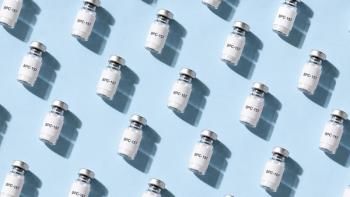
While the FDA weighs a narrow, regulated path for compounded peptides, its enforcement arm is already taking action.
Merck licenses a preclinical KRAS G12D inhibitor from SciBrunch, FDA approves Olumiant, Juvmo, and Atebrioz across three separate indications, and Matthew Montes de Oca makes the case for compounding pharmacies to set their own safety standards.

Merck has acquired exclusive global rights to SciBrunch's preclinical KRAS G12D inhibitor SPR2015.

FDA this week cleared three new treatments: Lilly's Olumiant for adolescent alopecia areata, AbbVie's Juvmo for Parkinson's disease, and Mirum and Incyte's Atebrioz for the rare bone disorder FOP.

December 2nd 2025

September 1st 2026

August 31st 2026