

Pharmaceutical Executive
Instead of leaving the doctor's office well informed, the patient often leaves without enough comprehensible information to comply with the prescribed treatment.

A collaborative approach by Quest Diagnostics and PatientsLikeMe
Our latest white paper explores the power of real-world data at every stage of the trial process.
Connecting the right patients to the right trial

Pharmaceutical Executive
Instead of leaving the doctor's office well informed, the patient often leaves without enough comprehensible information to comply with the prescribed treatment.

Pharmaceutical Executive
SPCs extend a drug's basic patent protection for up to five years, to take into account the time that may have lapsed between the filing of a patent application and the granting of market authorization.
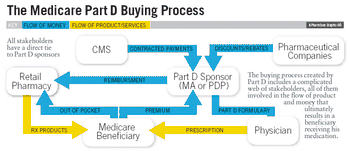
Pharmaceutical Executive
Manufacturers will have to incorporate Part D–specific messaging into all of their current marketing materials. In addition, they should consider publication plans and CME that specifically address the needs of seniors.

Pharmaceutical Executive
As a result of the rapid innovations in drug technology, and the increasing complexities surrounding drugs' safety, cost, and efficacy, the demand for extensive formulary reviews is growing. To keep pace, Pharmacy & Therapeutics (P&T) committees have been ardently reviewing medications to determine which ones deserve inclusion and preferred placements in health plans and formularies. While there are many factors that influence the committees' decisions, with some carrying more weight than others, pharmaceutical execs complain that there is no accurate way to predict which drugs will make the cut.

Pharmaceutical Executive
Elegant positioning strategies often fail when doctors learn that a prescribed product isn't on a patient's managed care formulary.

Pharmaceutical Executive
The cost of healthcare has become so great that it's important to review the evidence to determine whether the drug is a good value for the money. Yet, pharmacoeconomics is rarely included in the decision process.

Pharmaceutical Executive
Garry Barnes says he joined the pharma industry for job security-but don't believe him. During the last 25 years, Barnes has worked for four pharma companies and built five sales forces in therapeutic areas ranging from contraception to organ transplantation.

Pharmaceutical Executive
After the merger, Wyeth had dozens of incentive plans for several thousand employees.
Pharmaceutical Executive
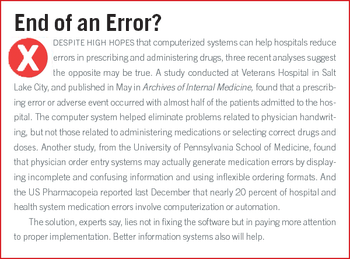
Pharma companies believe that they can compete in an e-prescribing environment if information systems permit full disclosure and allow doctors to create bookmarks that link easily to information they want.

Pharmaceutical Executive
Traders say parallel distribution of drugs generates savings for patients. Industry says it creates more profits for traders, leaving pharma with less R&D funding.

Pharmaceutical Executive
Accept distortions and untruths. Don't try to undo them. The point is not to win an argument; your critics' views are legitimate, irreversible realities. It's time to give the public something new to think about.
Pharmaceutical Executive
Even though data can single out physicians with high marketing upsides, most pharma companies are doing without such high-value data.

Pharmaceutical Executive
Pharma execs and industry analysts say pharma's reputation has improved during the past year. The general public sees things differently. Research says a few select companies are to blame.

Pharmaceutical Executive
A recently released report claims pharma hides bad clinical trial results and over-promotes drugs. Tougher regs are being called for.

Pharmaceutical Executive
Our goal is competency-based training that has a solid business need, sound instructional design based on adult-learning principles, and metrics that can capture, evaluate, and track what we do. We want a blended-learning approach that can be delivered over the Web, on CD-ROM, or on paper.

Pharmaceutical Executive
Some reps take to tablet PCs like ducks to water, while others wait for them to become the gold standard. Good training can put everyone on the same page.
Pharmaceutical Executive
"You're fired!" It's a simple phrase that everyone is using, and it's put Donald Trump back into the spotlight. However, the most important statement you will ever make as a manager is "you're hired." With all the pressures of the job and the limited time you have for interviewing, it is easy to rush through this process to fill a slot. Stop yourself-hiring a good person is one of the most important decisions you will make as a manager.
Pharmaceutical Executive
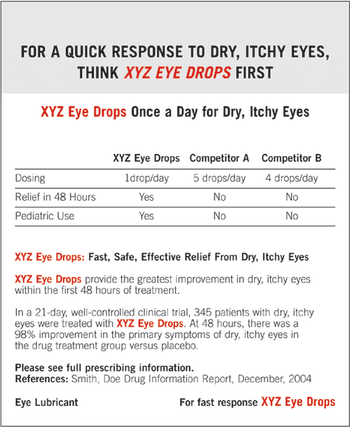
The sales aid or detail piece tells the features and benefits about the product. The important marketing points are in bold print.
Pharmaceutical Executive
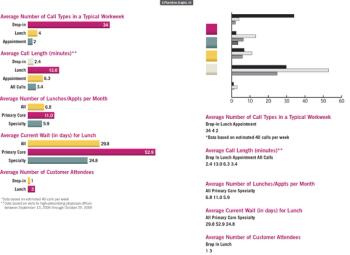
It's twelve o'clock-do you know where your reps are? According to research from Health Strategies Group, lunches provide one of the few opportunities in today's short-call environment for sit-down discussions with doctors. The average length of a lunch is 13 minutes, with an average of three physicians per meeting.

Pharmaceutical Executive
A new TV doctor show features the most loathsome pharmaceutical executive in recent memory. But in another important way, the show is serving pharma's best interests.

Pharmaceutical Executive
If you work for a company that isn't interested in increasing sales across your portfolio, don't read this article. Otherwise, you'll learn that your district managers (DM) are the keys to doing just that. DMs select and hire new sales reps, guide product knowledge, develop selling skills, provide feedback, and take action to turn around or terminate poor performers. The average industry DM is responsible for generating tens of millions of dollars in sales through his or her teams. But, only 45 percent of industry DMs achieve their sales goals. Companies that succeed in raising the overall effectiveness of their DMs will create sustainable competitive advantage.
Pharmaceutical Executive
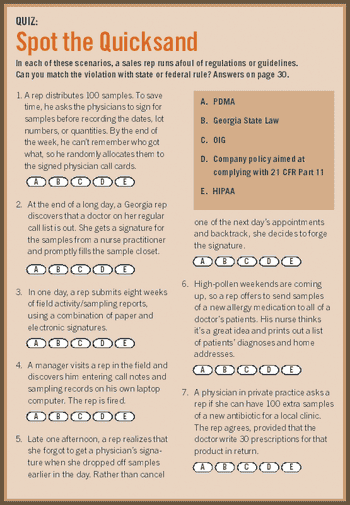
OIG now requires corporate marketing departments and field sales reps to not only document how they promote products, but to also-for the first time-demonstrate the "intent" of marketing activities.

Pharmaceutical Executive
Direct-to-consumer spending increased from $3.2 billion to almost $4.1 billion between 2003 and 2004, the biggest leap since the category began in 1997. While other US industries are just getting their footing back after a prolonged economic slump, DTC advertising, as in previous years, seems unaffected and continues to thrive. Even in the wake of FDA's virtual shutdown of the lucrative COX-2 inhibitor market, both DTC and professional promotional spending have, so far, remained in tact. (See "TV Dominates")

Pharmaceutical Executive
Every quarter, pharmaceutical manufacturers confront a dizzying array of price reporting obligations. Participation in the Medicare, Medicaid, Veterans Administration (VA), and Public Health Service (PHS) programs requires manufacturers to collect, organize, distill and manipulate vast quantities of information, and to generate from that data reportable figures that can have an enormous impact on the company's bottom line. It is critical that these figures be correct, not only to help ensure the integrity of these public programs, but because submission of false data to a federal agency is a prosecutable criminal offense, and the civil penalties and exposure can be staggering.

Pharmaceutical Executive
In a bright airy office above fifth avenue in New York, Lynn O'Connor Vos is talking about topics dear to her heart: trust-and how pharma can regain it-the need to put physicians back in the center of pharmaceutical marketing, and reinvention, a theme in her own life and the core to her approach to business.