





Technology
Latest News
Advertisement
Latest Videos
Shorts
0:27
The Key to AI Scale-Up
3 months ago
by
Michael Christel(+1 more)
0:46
How Platform Technologies and Partnerships are Shaping CGT Development
6 months ago
by
Mike Hollan(+1 more)
1:03
Measuring the AI Bubble
7 months ago
by
Michael Christel(+2 more)
0:56
#2: AI’s Ascent
9 months ago
by
Michael Christel
0:50
The Power of Automation
10 months ago
by
Nicholas Jacobus(+1 more)
0:51
AI Agents in Pharmacy
10 months ago
by
Nicholas Jacobus(+1 more)
0:31
Why Platform Technologies are Essential for Biotech Investors
a year ago
by
Mike Hollan(+1 more)
0:54
AI's Recent Advancements in the Pharmaceutical Industry
a year ago
by
Nicholas Jacobus(+1 more)
Advertisement
More News

Trialbee CEO Matt Walz explores the current impact of AI in delivering practical gains in clinical development and reflects on its future potential, where enrollment predictability may be the biggest prize of all.

The future of engagement won’t be defined by how much information reaches health care professionals, but by how precisely it supports the decision at hand.

Three platform-technology deals paired Nanexa, Earendil Labs, and Atavistik Bio with Novo Nordisk, Genentech, and Roche to advance next-generation metabolic and oncology medicines.

Clinical data harmonization is the real bottleneck standing between life sciences companies and AI's transformative potential.
AbbVie partners with Iambic to deploy its AI molecular superintelligence platform, while Telix Pharmaceuticals agrees to acquire radioisotope leader ITM.
Novo teams up with Anthropic on AI-driven drug discovery, Sling Therapeutics and Circle Pharma close major financing rounds, and IQVIA's Phil Ford makes the case for reimagining medical content as a loop rather than a pipeline.
Novo partners with Anthropic to deploy Claude for targeted drug discovery workflows and AI-driven software development.
How the shifting tides in information consumption are resetting expectations for pharma in providing and delivering health education.
Pharma brands with all the right information are still invisible to AI — and why silence is the bigger risk than inaccuracy.

Pharma has digitized nearly everything — but contract management remains fragmented, creating compliance risk and slowing execution across the enterprise.

The advantages of synthetic advisory boards in stress-testing hypotheses and iterating across a greater scope of scenarios than live boards allow.

As leaders, we must evaluate solutions to fragmentation by asking the right questions.

Aptar Pharma and Aceso Therapeutics have partnered to advance ACT-101, an antisense oligonucleotide targeting the underlying mechanisms of cystic fibrosis.
ACTO’s CEO on AI trust, the future of the sales rep, and why human intelligence plus empathetic agents is the winning formula.
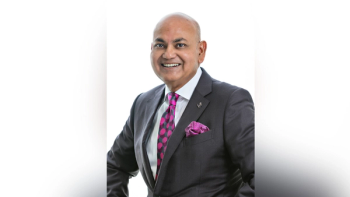
Pharma has more competitive data than ever — and is still getting surprised. Lifescience Dynamics on why intelligence requires human judgment.

McKesson has agreed to acquire Precision Medicine Group for $2.25 billion, while Lundbeck has expanded its partnership with Eversana to scale AI-driven workflows.
Amplitude Therapeutics enters a collaboration with Eli Lilly to develop trans-amplifying RNA vaccines, while Chai Discovery partners with Bristol Myers Squibb to deploy its AI molecular folding and design models across BMS's antibody discovery portfolio.
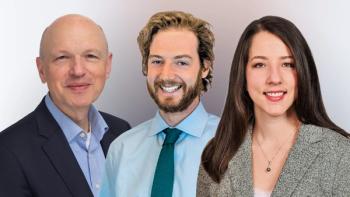
In pharma's AI transformation, the technology was never the hard part — fixing the operating model that has to act on what AI surfaces is.

Most pharma companies have promising AI pilots. Few have built the conditions to scale them. Here's what separates the leaders from the rest.

As trust shifts from a stated value to an operating condition, pharmaceutical leaders face new expectations for how credibility is built, governed and sustained under continuous scrutiny.

Q&A with PwC’s Glenn Hunzinger explores why biopharma M&A investment could approach $300 billion in 2026, how drugmakers are balancing risk amid patent cliffs and policy pressures, and the urgent need to transform healthcare as commercial medical costs climb toward 9%.

From guiding pursuits in artificial intelligence and R&D to scientific marketing and company building, meet Pharm Exec’s new slate of select rising leaders who are helping to shape the next generation of biopharma innovation.
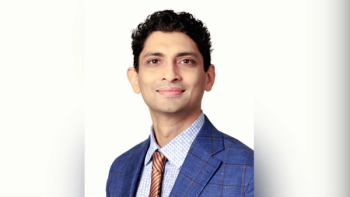
Abid Rahman, head of AI Agency and innovation at EVERSANA, explains how the pharmaceutical industry is moving from generative to agentic AI.

Overcoming the limits of traditional segmentation through a more connected, responsive and effective approach to health care professional engagement.
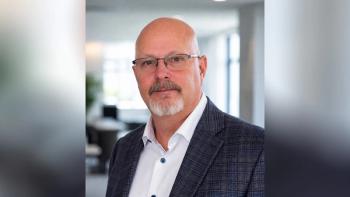
Krieger Scientific’s founder and CEO discusses how various factors, such as siloed systems and misuse of AI, may be responsible for the increase of warning letters from FDA.
Advertisement
Advertisement
Trending on PharmExec
1
FDA Launches Rare Disease Framework Initiative
2
The Impact That the Renewed Focus on Domestic Manufacturing Might Have on the Supply Chain
3
Pharmaceutical Executive Daily: Gilead Enters $1.87 Billion Collaboration and License Agreement with Vir Biotechnology
4
Vir Biotechnology Enters R&D Collaboration with Gilead for Three Novel PRO-XTEN Dual Masked T-Cell Engagers
5