As AI accelerates drug discovery, the industry’s next challenge is building a connected, standards-based data infrastructure capable of supporting it through clinical development.
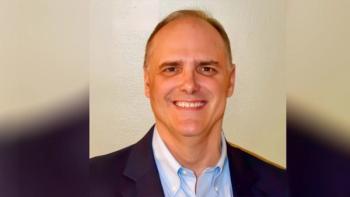
Astellas CEO Naoki Okamura is putting a “patient axis” operating model, a broader portfolio of strategic brands and a new generation of science to work in the company’s bid to return to record growth.
Just a few days after Astellas Pharma formally unveiled its new five-year corporate strategic plan in Tokyo in late May, Naoki Okamura, the global drugmaker’s representative director, president and CEO, was in New York City walking through the architecture and vision behind it. During an interview with Pharmaceutical Executive in midtown Manhattan, Okamura pointed to a screen beside him, where the Astellas revenue outlook appeared as overlapping waves: the mature portfolio — anchored by cornerstone franchise Xtandi (co-marketed with Pfizer) — beginning to recede, five strategic brands already climbing and a developing pipeline expected to take the baton later in the decade.
The image captured both the challenge and the intent of the company’s latest five-year plan. Astellas is approaching the loss of exclusivity for Xtandi, its prostate cancer blockbuster and largest product (totaled $6.3 billion in fiscal 2025 sales; the drug’s substance patents are set to expire in the U.S. in 2027, in Europe in 2028 and Japan in 2029).
But Okamura, during the in-person sit-down, made clear he does not want those looming losses to dominate the organization’s story — or its decision-making. The emphasis, instead, from the 40-year Astellas veteran is on the growth that he says has already begun and the system the Japan-based company has built to extend it.
“People tend to focus on the declining parts of the top line,” Okamura tells Pharm Exec. “But we are trying to emphasize that the growth has already started with the strategic brands, well before the decline of Xtandi.”
Those products the CEO refers to — Padcev, Izervay, Vyloy, Veozah and Xospata — generated roughly ¥480 billion ($3.02 billion) in fiscal 2025. Astellas aims to double that total by fiscal 2030, supported by geographic expansion, new indications and continued market development. The mix matters as much as the targeted sales projections, says Okamura. The strategic brands are fully owned or internally developed, he notes, giving them a more favorable profit profile than Xtandi, for which Astellas pays Pfizer a share of U.S. revenue under the companies’ collaboration.
“So we generate the cash, and then we reinvest that in the future-growth pipeline,” Okamura explains. “This is self-funded by the strategic brands’ growth and self-funded pipeline-led growth for the longer term.”
To that end, Astellas’ corporate strategic plan (CSP) 2026 is targeting a wider ambition: 10 or more phase 3 or pivotal clinical trial starts by fiscal 2030, with at least five by fiscal 2027. Other CSP2026 aspirations include achieving more than ¥4.3 trillion ($28 billion) in cumulative core operating profit before R&D expenses; ¥200 billion ($1.3 billion) in recurring cost optimization; and pipeline revenue potential of about ¥1 trillion ($6.5 billion) in the mid-2030s. The projected inflection point occurs in fiscal 2029, Okamura points out, when pipeline assets are expected to begin contributing new growth and ultimately help restore Astellas to record-high revenue.
This is self-funded by the strategic brands’ growth and self-funded pipeline-led growth for the longer term.
For the longtime business development leader, who helped design the company’s previous CSPs before becoming CEO in 2023, Astellas’ latest plan launch is characterized as less a reset than the next stage of a long transition.
“CSP2021 was the five-year plan to prove to ourselves that we could sustainably grow beyond Xtandi’s loss of exclusivity,” Okamura says.
Executing on the growth, in Okamura’s formulation, begins with a deceptively simple test: Does the work create greater value, faster, for patients? If yes, move with confidence, the CEO says. If the connection is doubtful, stop and reassess.
Astellas measures value, Okamura explains, as outcomes “that truly matter to patients” divided by the cost to the entire health care system of delivering those outcomes. Applying that logic, he believes, expands beyond the usual industry focus on improving drug response rates. If a therapy benefits 30% of a patient population, for example, a biomarker or other precision tool that reliably identifies those patients before treatment could preserve the outcome while sharply reducing waste across the system.
“Usually, a pharmaceutical company thinks, if a medicine is effective for 30% of patients, how can we change it so it is effective for 60%?” Okamura tells Pharm Exec. “But if you can identify that same 30% of the patient population in advance of treatment, you keep the same outcomes with one-third of the cost to the health care system.”
Making that calculation part of daily work requires a patient-centered mindset and mantra, Okamura says. Since April 2025, Astellas has been reorganizing around what it calls the “patient axis,” an end-to-end model designed to replace the boundaries built into traditional regional and functional structures.
Okamura describes the evolution in three management axes. A region-led model can produce powerful country operations but limited sharing across markets. A function-led organization creates global depth in areas such as research, development, manufacturing, medical affairs, commercial, finance and human resources, but it can also create handoffs and silos. Work, Okamura notes, moves like a waterfall from one function to the next.
Astellas’ patient axis design instead organizes small, dedicated, cross-functional teams around a brand, project, technology or therapeutic area. Each “asset maximization team,” as the company terms them, carries responsibility and accountability from drug discovery and R&D through the end of a product’s life cycle, Okamura says. He adds that more than 70 global and local teams across the organization now operate in that framework.
“It is one collaboration rather than thinking about your own function or your own region,” Okamura explains.
He is candid that implementation of the model, and its concept, remains a work in progress. The goal, he says, is to accelerate adoption and comfort by sharing practical insights, giving teams authority and keeping them accountable for outcomes. The organizational bet is that decisions made closer to an asset — and informed from the outset by converging perspectives (i.e., scientific, clinical, regulatory, access, manufacturing, commercial) — will move with greater speed and fewer costly relays.
That same end-to-end logic underpins what Astellas officially calls its “focus area approach” to R&D. Rather than declaring itself an oncology or ophthalmology company, for example, and working backward from a disease category, Astellas, Okamura says, would rather focus its identity around the biology itself with very strong disease linkage. From there, the goal is to identify the best modality or technology to address the biology, and determine which patients and indications are most likely to benefit.
“Usually, pharmaceutical companies start with the disease,” he says. “We start with the biology. That can sometimes give an impression that we are not very focused, because the disease comes at the end. You do not know the indication or therapeutic area until the program reaches that stage.”
However, the payoff from this R&D approach, Okamura argues, becomes clearer as programs mature into clusters and then franchises. For example, in prostate cancer, Xtandi is joined by hopeful candidates ASP5541 and VIR-5500, the latter a potential best-in-class, prostate-specific membrane antigen-targeting dual-masked T-cell engager being co-developed globally with Vir Biotechnology. In retinal disease, the marketed geographic atrophy therapy Izervay is showcased with ASP7317, an investigational cell therapy intended to replace dysfunctional retinal pigment epithelial cells.
Across upper gastrointestinal and pancreatic cancers, Astellas is assembling a family of Claudin 18.2-targeted approaches. Vyloy, the first approved Claudin 18.2-targeted therapy, emerged from Astellas’ 2016 acquisition of Germany-based Ganymed Pharmaceuticals. Its use is tied to tumors with high Claudin 18.2 expression. ASP2138, a bispecific T-cell engager currently in phase 3 studies, is designed to reach across a broader expression spectrum, potentially bringing more patients into the treatment pool. ASP546C, an antibody-drug conjugate (ADC) licensed from China’s Evopoint Biosciences, adds another mechanism in targeting the Claudin 18.2 protein and the possibility, if development succeeds, of reducing dependence on chemotherapy.
“Vyloy itself is a very good medicine, but it is limited to patients who have high expression of Claudin 18.2,” Okamura explains. “By making it a bispecific T-cell engager, we can cover the entire spectrum of Claudin 18.2 expression. On top of that, if the ADC succeeds, we may even go chemo-free.”
Pancreatic cancer represents a pivotal proving ground in Astellas’ development efforts. Pacing pursuits is setidegrasib, formerly ASP3082, one of the company’s flagship targeted protein degradation programs. The molecule is designed to degrade KRAS G12D, a historically difficult driver found in pancreatic and other solid tumors. Setidegrasib is being evaluated in phase 3 as a first-line treatment in pancreatic ductal adenocarcinoma, and Astellas is also studying the agent in non-small cell lung cancer (NSCLC).
The company’s cell and gene therapy ambitions follow a similar medicinal chemistry premise of going beyond treating symptoms and addressing the underlying biological defect. Seeking such hopes, for example, is AT845, an investigational gene-replacement therapy for Pompe disease, which is currently in a phase 1/2 clinical trial.
“If a disease is caused by dysfunctional cells or a defect in the genes, there are some asymptomatic treatments,” Okamura tells Pharm Exec. “But fundamentally, replacing the dysfunctional cells with healthier cells, or putting in a functioning transgene to replace the defect, is transformative therapy. We believe we can do it.”
Meanwhile, Astellas’ growth plan still asks more of assets already on the market. The ADC Padcev, partnered with Pfizer, notably has altered the standard of care in advanced urothelial cancer, and in July, the FDA approved the drug, plus Keytruda (pembrolizumab) or Keytruda Qlex, as a perioperative treatment for adult muscle-invasive bladder cancer. Okamura also points in particular to an ongoing bladder-sparing study exploring whether longer treatment before cystectomy might allow some patients to avoid removal of the bladder altogether.
“Hopefully, patients can get out of the surgery path and keep their own bladder,” he says. “If that comes true, it is real hope for the patient.”
The organization Okamura is trying to foster — cross-functional, accountable and empowered — reflects perhaps the most consequential shift in his own leadership path.
He joined Yamanouchi Pharmaceutical, one of the two Japanese companies that merged in 2005 to form Astellas, in April 1986. A molecular biologist by training, Okamura had little interest in becoming a bench scientist. In fact, his first choice was public relations, a plan his father opposed strongly enough to steer him back toward the pharmaceutical industry.
When a recruiter asked what he wanted to do, Okamura answered plainly: place him as far from the research bench as possible. He ended up starting his career in the back office of the Japan commercial division as, in his words, “a number cruncher.” Over the next four decades, he moved across project and portfolio management, licensing and alliances, corporate planning, strategy, finance and business development before taking the top job.
“I never imagined that I would spend 40 years in this company, moving around different functions, living in New York, and creating these strategic plans,” he tells Pharm Exec, recounting a stretch of years with stops and roles based in Tokyo, New York, London and the Chicago area, the latter the site of Astellas’ U.S. headquarters.
The pivotal leadership lesson for Okamura arrived through a deal. In 2010, Okamura helped lead Astellas’ unsolicited acquisition of New York-based OSI Pharmaceuticals, whose cancer drug Tarceva (erlotinib) strengthened Astellas’ global oncology position. The targeted therapy was approved for NSCLC and pancreatic cancer. With little meaningful dialogue between the management teams due to the deal’s unsolicited path, he was sent to New York to oversee post-merger integration.
Until then, Okamura says, he had been intensely hands-on in such dealings — reviewing documents, validating details and often trusting his own involvement more than delegation. New York was his first time living outside Japan, and the integration confronted him with an obvious limit: He was not an expert in every discipline required to combine two organizations. The experts, he figured out, were already in the room.
“I thought, ‘How can I do that?’” Okamura recalls. “In front of me were experts from OSI and Astellas in research and development, manufacturing, commercial, legal, HR and finance. Let them do their jobs. That was an epoch-making experience for me. We can do much more if I trust the team.”
His role became clearing the path — securing decisions from Tokyo when necessary, supporting the people closest to the work, delegating substantial authority and holding the team accountable. It remains his leadership model today and helps explain the operating philosophy behind the aforementioned asset maximization teams created within Astellas.
After New York, Okamura moved to London for two and a half years in European strategy. The experience offered a different lesson in global leadership. Europe’s distinct mix of national cultures, languages and business norms showed him that respect does not mean avoiding disagreement. Productive diversity, he believes, depends on listening closely and still saying what needs to be said.
“Diversity is the true source of innovation,” Okamura adds. “If there is a group of people who behave the same and think the same, it does not create innovation. We have many different cultures, locations, functions and philosophies. They have to respect each other, but most importantly, challenge each other.”
Diversity is the true source of innovation. If there is a group of people who behave the same and think the same, it does not create innovation.
That balance is especially important for a Japan-based company that has transformed considerably during Okamura’s 40-year tenure as an employee. When he joined Yamanouchi, he recalls, annual revenue was likely less than $1 billion, nearly all of it generated in Japan and the company employed roughly 3,000 people. Today, Astellas operates in more than 70 countries, employs about 14,000 people and, according to Okamura, generates more than 85% of its revenue (totaled approximately $13.45 billion in fiscal 2025) outside Japan; roughly 70% of its workforce is based abroad, the CEO adds.
“What I have been witnessing is a small, local Japanese company becoming truly global and innovation-driven, helping change the lives of patients and their families,” he says. “It’s a great experience for me. I am so lucky to be here.”
Okamura acknowledges the importance of pharma manufacturers in keeping up with the continued pace of globalization while staying agile and responsive to increasing regional market and policy dynamics. While grounded in its Japanese culture, the CEO says, Astellas shapes its vision, values and behaviors to form the fixed center; how they are expressed can vary by country and circumstance. Local teams are expected to adapt without drifting from the company’s fundamentals, he adds.
Okamura says he tries to make those behaviors visible. For example, each month, he holds separate hour-long “Ask Me Anything” sessions in Japanese and English. There is usually no set agenda, according to Okamura. Employees submit questions, vote on those they find most relevant and watch him answer in priority order with a facilitator. The questions remain visible on the screen.
“Sometimes they are asking very tough questions, but I don’t avoid those questions,” he says. “I am not artificially selecting the questions. I think it is creating a very flat organization. People no longer feel afraid of asking questions, speaking up or challenging me.”
Younger-generation employees, especially, Okamura notes, now sometimes send him an email or office chat directly. The CEO says he responds immediately, often to their surprise. For a workforce spanning cultures that differ markedly in hierarchy and willingness to challenge authority, the practice is a small but concrete signal: Access to the CEO is not merely ceremonial, and “there is no question that shouldn’t be asked,” the leader stresses.
The same pragmatism shapes Okamura’s view of artificial intelligence (AI) when asked about its evolution in the life sciences. Astellas’ plan, he says, includes embedding AI and data-driven insight across R&D while tapping the company’s digital capabilities to improve productivity and clinical-trial execution. Okamura sees applications throughout the value chain, from drug discovery to customer engagement.
He envisions potential scenarios such as leveraging specialized AI agents in pharmacology; ADMET (absorption, distribution, metabolism, excretion and toxicity); regulatory affairs; clinical development; medical affairs; and manufacturing. This entails, for example, using AI to debate the best trial protocol design after rapidly reviewing relevant documents, experiments and study results. A human team would examine the findings to make a final judgment, Okamura notes.
Astellas’ CSP2026 arrives amid a policy and geopolitical climate that offers no shortage of variables for a global drug manufacturer. When we spoke in early June, Okamura pointed out the continuing uncertainty in predicting how various pricing policies, health care reforms and tariff scenarios would evolve. Pharma is highly regulated, he reminded; many of the rules are set elsewhere. The company’s job, he says, is to control what it can and build the capacity to absorb what it cannot.
“I am asking the organization to think about how we can be flexible, adaptable and resilient,” Okamura tells Pharm Exec. “If a negative impact happens in one part of the organization, different parts have to create more value to offset it.”
That principle extends to the supply chain. Astellas is working to avoid dependence on a single country, location or source of material where disruption could prevent a product from being manufactured. The aim, Okamura says, is optionality — a supply network capable of shifting as conditions change.
Adapting to U.S. policy shifts, in late August, Astellas was one of nine pharma companies to announce voluntary agreements tied to the Trump administration’s most-favored-nation pricing initiative. The agreement is an example of the delicate balance Okamura describes: affordability and access on one side, continued investment in innovation on the other. For Astellas, in managing both, as its latest strategic blueprint lays out, the hope is a return to record revenues in the mid-2030s.
“With CSP2021, we made this organization ready,” says Okamura on life following Xtandi’s loss of exclusivity. “Now we have the plan to execute.”
14 days ago
AI Gut Check