




Patient Advocacy
Latest News
Advertisement
Latest Videos







Shorts
1:04
Beyond the Midterms: States Driving Pharma Policy Debate
13 days ago
by
Michael Christel(+1 more)
Solving the ADHD Medication 'Crash' Problem
6 months ago
by
Mike Hollan(+1 more)

0:32
Why Patient Care is the Heart of Pharma Business
6 months ago
by
Mike Hollan(+1 more)
0:40
The Relationship Between Muscle Building and GLP-1s
7 months ago
by
Mike Hollan(+1 more)

0:30
Can't Afford Your Meds? Watch This
8 months ago
by
Nicholas Jacobus(+1 more)
Advertisement
More News

Bristol Myers Squibb discloses results from it's Phase I Breakfree-2 trial of CAR-T therapy zola-cel for multiple sclerosis.
Shionogi, Gate Bioscience, and Alector post a trio of new deals, Rajul Jain makes the case for social listening as a medical affairs strategic tool, and Doceree's Vijay Adapala argues that HCP engagement is a systems-design problem, not a communications one.

Real-world data from Novo's Octane study show patients who switched from injectable GLP-1 therapy to oral semaglutide lost an average of 4.1% of their body weight within three months.

Novo Nordisk reports that CagriSema delivered 12.4% average weight loss in a late-stage diabetes trial, outperforming tirzepatide's 9.1% at comparable doses.

GSK agrees to acquire a trispecific T cell engager for multiple myeloma from Chimagen Biosciences, while Sanofi is offloading 20 mature medicines and three manufacturing sites to Cheplapharm.

Why clinical out-of-home marketing has finally become responsive after decades of running static, scheduled messages.

A “maturity curve” can help organizations move engagement beyond performative gestures to a strategic asset.

Aptar Pharma and Aceso Therapeutics have partnered to advance ACT-101, an antisense oligonucleotide targeting the underlying mechanisms of cystic fibrosis.

FDA has approved Ionis Pharmaceuticals' Zanvastro (zilganersen) as the first disease-modifying treatment for Alexander disease.
Melanie Whittington, managing director and head of the Leerink Center for Pharmacoeconomics, joins Ron Lanton to argue that biopharmaceutical policy only makes sense when traced back to its purpose.

Novartis suspends eight autoimmune trials of its CAR-T therapy Rap-cel after three cases of fatal outcomes, while Bristol Myers Squibb voluntarily pauses enrollment in its Zola-cel autoimmune studies over transient inflammatory events.
BioNTech and Genentech elect to end their Phase II trial of autogene Cevumeran after DSMB identified a numerical overall survival imbalance and recommended to terminate.

A recent study of more than 15,000 adults over 55 with obesity found that sustained Zepbound use was associated with up to 38% lower monthly healthcare costs at 12 months compared with untreated matched controls.
FDA approved Imaavy (nipocalimab-aahu) as the first-ever treatment specifically indicated for warm autoimmune hemolytic anemia in patients ages 12 and up.
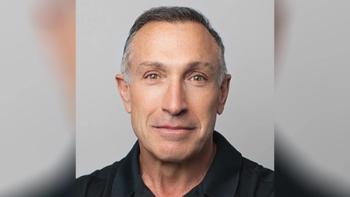
James LaValle, chair of the International Peptide Society, notes how the advisory committee's favorable vote on peptides for the 503A Bulks List was a meaningful step without constituting approval.
Advertisement
Advertisement
Trending on PharmExec
1
Eli Lilly Breaks Ground on $3.5 billion Pennsylvania Manufacturing Site
2
Pharmaceutical Executive Daily: FDA Shelves CNPV Program
3
FDA Pauses Commissioner’s National Priority Voucher Program: Report
4
When Small Protocol Decisions Become Enrollment or Retention Barriers
5