




Clinical Data
Latest News

Advertisement
Latest Videos








Shorts


Advertisement
More News

As leaders, we must evaluate solutions to fragmentation by asking the right questions.

Abid Rahman, head of AI Agency and innovation at EVERSANA, explains how the pharmaceutical industry is moving from generative to agentic AI.

Clinical trials now generate 5.9 million datapoints per Phase III protocol — and most sponsors are still managing them manually.

Dr. Stoehr, neuroscience researcher at AbbVie discusses how biomarkers are opening a new window into Parkinson’s disease.
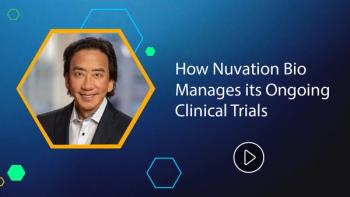
David Hung, CEO of Nuvation Bio, details the company’s ongoing trials for new drugs and new indications for existing molecules.

Eli Lilly and Company notes that the approval of an every-8-week maintenance dose of lebrikizumab offers sustained atopic dermatitis control with fewer annual injections.

This disconnect between clinical efficacy and real-world utilization remains one of the most persistent challenges in lipid management.
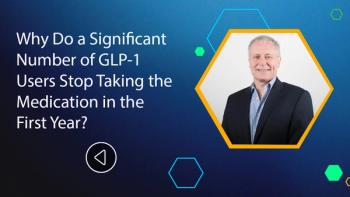
Phenomix CEO Mark Bagnall discusses the reasons for GLP-1 failure and why it’s common for patients to stop taking the medication.
In Part 2 of our podcast video episode with ZS CEO Pratap Khedkar, he breaks down pharma's need to move beyond AI pilots to scalable impact—and how companies can "go from informing to solving" while navigating trust, regulation, and a rapidly shifting patient dynamic.

Testing reveals that compounded tirzepatide products mixed with vitamin B12 contain a chemical impurity of unknown toxicity.

Special Guest Op-Ed: What a decade of collaboration and shared effort reveals about the future of drug development.

Regulatory approval is no longer simply representative of the finish line—but instead can serve as a key launching point to evidence-driven insights that create more timely and broader product access.

When researchers excluded studies that did not use proper methods to collect data, the results showed no connection between the medication and genetic disorder.

Lilly’s first Phase III results for retatrutide show unprecedented weight loss and marked reductions in osteoarthritis pain, underscoring the potential of its triple-agonist therapy to reshape treatment for obesity and related metabolic conditions.

The Lifescience Dynamics analyst discusses how GLP-1s appear to provide kidney protection in a specific, well-defined population.
Dr. Bruce Leuchter, CEO of Neurvati Neurosciences, explains why psychedelics continues to be an area of interest.

Dr. Jaspal Singh explains some of the barriers that prevent cancer patients from getting biomarker testing early in their treatment journey.
Avak Kahvejian, PhD, a general partner with biotech incubator Flagship Pioneering, discusses how AI is rearchitecting methods—and mindsets—in drug discovery and development.

Strategies for biopharma in integrating agentic AI—to achieve incremental gains in efficiency, while delivering meaningful progress in how data insights inform commercial decision-making.

Health plans face challenges in risk arrangements for orphan drugs, but increasing competition may open doors for innovative pricing strategies.

Following the discontinuation of ALLO-647 due to a treatment-related death, Allogene will move forward with a streamlined outpatient regimen aimed at accelerating enrollment and regulatory review in the Phase II ALPHA3 trial (NCT06500273).

Organizations commonly navigate outdated systems that make collaboration harder and breakthroughs slower, causing delays, missed insights, and costly rework.

A global survey of scientists and informaticians reveals growing AI investment across the biopharma value chain, but highlights gaps in data integration, standardization, and infrastructure that threaten to stall progress.

Cancer patients’ journeys are complex and the benefit of a drug goes well beyond survival, even in cases of incurable and/or metastatic cancer.
Advertisement
Advertisement
Trending on PharmExec
1
Bristol Myers Squibb Discloses Patient Death in CAR-T Multiple Sclerosis Trial
2
The Importance of Reframing COVID-19 as a Preventable Event
3
FDA Extends Talzenna-Xtandi to Hormone-Sensitive Prostate Cancer
4
FDA Approves Subcutaneous Induction for Skyrizi in Crohn's Disease
5