Developing Better Drugs, Not Just More Drugs: Q&A with David Hung
Key Takeaways
- Mission emphasis prioritizes differentiated efficacy/tolerability over crowded “me-too” portfolios, leveraging a Medivation/Xtandi-experienced team to accelerate development and commercialization.
- Ibtrozi achieved FDA approval in ROS1+ locally advanced/metastatic NSCLC with 90% ORR and 50‑month DoR, and is being evaluated in the adjuvant setting.
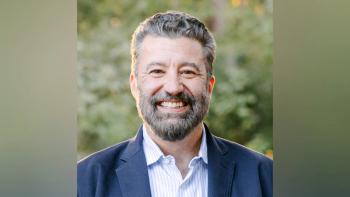
Nuvation Bio’s president, CEO, and founder discusses the company’s mission, approach to developing a global strategy, and how it manages its increasing pipeline.
Pharmaceutical Executive recently spoke with Nuvation Bio’s president, CEO, and founder David Hung. The growing biotech is focused on oncology treatments is building a strong reputation in the space following a string of regulatory wins.
In June of 2025,
During his conversation with Pharmaceutical Executive, Hung discussed the company’s relationship with the market, it’s current pipeline and upcoming goals, along with his approach to leadership and building a team that’s able to produce strong results.
Click
Pharmaceutical Executive: What makes Nuvation Bio one of the most compelling biotech companies to watch right now?
David Hung: We're in an exciting position. I've tried to create this company with a little bit of a different mission: we feel that patients don't need more drugs, they need better drugs.
In fact, I think that when you have a lot of drugs that are very similar and spend a lot of marketing dollars trying to tout really nonexistent differences between them, that's not doing patients a service. Patients need drugs that are more effective and tolerable, and that's an important part of our mission.
We're trying to develop what we believe are best in class drugs. We have two molecules right now in late stage. We have a drug called Ibtrozi for ROS1-positive non-small cell lung cancer, and that drug was approved by FDA about nine months ago. We're really excited about that drug, because Ibtrozi demonstrated a 90% response rate and 50 month duration of response, which is really the highest combined response rate and duration of response ever seen for any drug in any cancer.
We think that's going to really help a lot of patients.
We have a second drug that we're developing for brain tumors that targets a mutation called IDH1, and this is a really terrible disease. Brain tumors are divided into high-grade and low-grade tumors, and there really is very little for glioma patients. In fact, there's only one drug approved for gliomas in low-grade disease, but nothing at all in high grade.
I think there's a lot of room for improvement across the entire spectrum of glioma. We have a drug called safusidenib, which we're now developing in a number of pivotal studies for both high- and low-grade glioma. What we're excited about is that we've shown a 44% response rate in low grade glioma so far in our early trials, and a progression rate at two years of only 12% and we have longer term follow up later this year.
We think that's exciting for patients, but perhaps even more unique is that in the high-grade setting, where no drug has shown responses, we've shown some pretty striking responses. We have one patient with a glioblastoma multiforme, the worst of the worst brain tumors. These are tumors that sometimes can kill patients in just months. We have one patient who has now had a complete response, which means a tumor has been gone for about three and a half years so far, and another patient with another high-grade glioma, whose tumor has now disappeared for about two years.
We have a third program at Nuvation Bio around what we call the drug-drug conjugate program (DDC), and this is a platform that differs from antibody drug conjugates (ADC), where a small molecule warhead, like a chemotherapy agent, is coupled to an antibody, and hopefully the antibody takes that small molecule more specifically to the tumor cell and allows it to kill that tumor more effectively with less toxicity.
The problem is that antibodies are very large molecules, and they often can't traverse the cell membrane, and in some cases, they can't cross the cell membrane to get to the target. In those cases, they must release their payload, and once you release that warhead, and it's floating free and not targeted, it can cause significant peripheral toxicity.
We've developed the DDC program, where we fuse two small molecules together. These can be warheads, targeting agents, or a combination of any or all of them. And we've shown that these are many, many times smaller than an ADC. Because of that, it can traverse a cell membrane much more easily.
We're going to be announcing our first program later this year, so we're excited about that. I think we're in a strong position financially. We have over $535 million in the bank, which is really on the high side of most biotech companies. We have additional cash coming in from a partnership we struck just a few months ago, so.
We're well capitalized, which allows us to do what we need to do to develop these drugs as quickly as possible and bring them to patients as quickly as we can. On top of all that, I would say my team is just extraordinary.
This is not my first rodeo. I was the founder of Medivation, where we developed what is today the world's largest prostate cancer drug, Xtandi. Since Medivation, we've all learned so much more. Even though Nuvation Bio today has many employees that were formerly at Medivation, I think the team that I've built at Nuvation Bio is by far the best team I've ever seen, or I've ever had the privilege to work with.
With our experience, cash, and pipeline, we're well positioned to make significant, meaningful contributions to patients.
PE: Can you discuss the origins of the deal with Daichii Sankyo for the rights to safusidenib in Japan?
Hung: We acquired a company called AnHeart Therapeutics from China a little over two years ago, and we were looking at lots of different business development opportunities. We found this one particularly compelling because they had two drugs that we thought were underappreciated.
One was the lung cancer drug and the other was the brain tumor drug. Both of these assets came from Daiichi Sankyo, and it turns out that a number of years ago, when Daiichi generated really compelling data on their antibody drug conjugate platform, they divested their small molecule program, which is why Anheart was able to acquire those two assets.
Anheart was a private company in China, and they had a difficulty raising capital. We noticed the assets were really underappreciated, and we made a bid to acquire them, which we closed about two years ago.
PE: How has Nuvation developed its global strategy?
Hung: We're still a relatively small company. We are developing and commercializing drugs in the United States. Outside of the US, we have number of partners.
This includes Innovent Biologics in China, Nippon Kayaku in Japan, and we just announced a deal with Eisai to cover Europe and other parts of the world. For our first program, while we're still a relatively small company, we're going to focus our commercial efforts in the United States, where it's a little less expensive than for us to try to do all of commercialization.
It's very expensive and logistically difficult to do that once we're a bigger company. We may consider trying to commercialize our other assets in the rest of the world, but for now we're really focused on the US, and we'll let our partners commercialize the other parts of the world.
PE: What is the status of Nuvation’s pipeline?
Hung: Ibtrozi is our lung cancer drug. We're in our third quarter of launch right now, so that's been very successful, and we continue to develop that drug in earlier stages of lung cancer.
We're doing an adjuvant study in ROS1 patients, and we're actually the only ROS1 tyrosine kinase inhibitor being developed in the adjuvant setting, which speaks not only to the efficacy of the drug that we've observed so far, but also its tolerability. To give a drug that early in the treatment course, the drug must be really tolerable, and we've had an excellent tolerability profile so far with Ibtrozi, so we're developing that upstream.
We're also trying to get safusidenib through a number of pivotal studies. Brain tumors are divided into high- and low-grade tumors. Right now, there's only one drug approved in gliomas in the low grade setting, and our drug has shown significant responses in both the low- and high-grade setting. In fact, we have some data showing a number of patients with extremely aggressive high-grade glioma with some really promising responses.
We've had one patient with a glioblastoma, the worst of the worst, an aggressive tumor, and that patient has been in a complete response, which is, which means the tumor has been gone for about three and a half years.
We have another high-grade glioma where that tumor has actually now been gone for about two years. We believe that those types of high-grade responses really compel the development of the drug in a high-grade indication, but we're also developing in low-grade, because we've shown some very promising low grade responses. We just announced in a recent publication that a 44% response rate in the low-grade setting, and as of our most recent five year follow up, almost half of those patients are still on Safusidenib.
We think that's a testament to both its efficacy and tolerability.
PE: Nuvation has multiple clinical trials running, can you discuss the status of these trials?
Hung: We're approved for every line right now in ROS1 lung cancer, but we're trying to move the drug upstream, so that's why we're doing the adjuvant study for Ibtrozi.
Safusidenib is in pivotal studies, and we're trying to target both high- and low-grade glioma, so we have two studies already ongoing, and a third study that we're about to start to try to target all four pieces of the glioma opportunity.
They're both high- and low-grade gliomas, but those are further subdivided into high and low risk. We've shown activity that's very promising in all four of those types of glioma, both high- and low-grade, and both high and low risk. We're trying to develop this drug as thoroughly as possible for all the patients that could potentially benefit from this drug.
We're also developing a new platform of drugs, which we call our Drug-Drug Conjugate (DDC) program. This is very novel. I've talked a little bit about ADCs, where an antibody is used to target a small molecule warhead to a target to try to improve efficacy and also reduce toxicity, because it's a little bit more specific.
The problem with ADCs is that they're very large and they can't always go where they need to go. In fact, sometimes they even have a hard time even crossing the cell membrane. This is why some of the ADCs, in order to work, must release their warhead when it's no longer targeted. That can cause additional toxicity.
We've managed to develop a platform that has figured out a way to conjugate two small molecules to each other, and these two small molecules that we call drug-drug conjugates can target a specific cell target or a mechanism as a warhead (or two warheads or two targets, we can mix and match these molecules any way we want).
Our first program is going to be announced later this year, and we're pretty excited about that technology.
Source
- Can Nuvation Bio Inc (NUVB) Stock Soar 150% From Current Level. Yahoo Finance. July 13, 2026.
https://finance.yahoo.com/markets/stocks/articles/nuvation-bio-inc-nuvb-stock-092851856.html
Related to this article