
“What remains scarce is the ability to frame the right problem, communicate clearly under pressure, and influence people who do not already agree with you. And the potential differentiator is your communications expertise, such as knowing what the right questions are and how to ask them.”
Commentary|Articles|July 28, 2026
How MBA Graduates Can Break into Competitive Industries in 2026: 4 Practical Steps
Author(s)Michael Wong
Listen
0:00 / 0:00
A career Q&A with Professor Patrick T. Harker, B.S., M.S., Ph.D., of the Wharton School of the University of Pennsylvania.
Advertisement
Patrick T. Harker, B.S., M.S., Ph.D., serves as the Rowan Distinguished Professor, Professor of Operations, Information and Decisions at the Wharton School of the University of Pennsylvania and as Director of Academic Engagement for Penn Washington, where he helps connect the University’s thought leadership with national policy discussions in the nation’s capital.
From 2015 to 2025, Dr. Harker was the 11th President and CEO of the Federal Reserve Bank of Philadelphia, where he played a pivotal role in shaping U.S. monetary policy as a member of the Federal Open Market Committee. Prior to his tenure at the Federal Reserve, Dr. Harker served for nearly a decade as President of the University of Delaware, where he led a successful campus-wide strategic transformation, significantly expanded interdisciplinary research, and forged new partnerships with industry and government.
Earlier, as Dean of the Wharton School at the University of Pennsylvania, Dr. Harker transformed one of the world’s top business schools by enhancing global engagement, launching innovative research centers, expanding executive education, and investing in technology to support cutting-edge teaching and learning. Early in his career, Dr. Harker served as a White House Fellow and Special Assistant to the Director of the Federal Bureau of Investigation, gaining insight into the intersection of public policy, national security, and institutional leadership.
Dr. Harker holds a B.S., M.S., and Ph.D. in Engineering and a Master of Arts in Economics, all from the University of Pennsylvania.
Q. Among the fifteen largest firms by market cap, the share of entry-level hires relative to total new hires has fallen by 50% since 2019.1 As several of these firms are represented at finance, consulting, technology, and healthcare (often the four most popular post-graduation verticals at the Harvard Business School, MIT Sloan, and Wharton),2-4 what advice, from your C-Suite roles and 100+ scholarly articles, would you share with the readership?
A. Harker. While these verticals continue to be a major draw at M7 business schools, students need to recognize that AI and other emerging technologies are not only reshaping these fields, but also compressing the advantage once provided by pedigree and repetitive analytical work. Within your prior big pharma employers, AI is now a core competitive capability as it has shortened target identification and optimized molecule design.
As building world-class AI drug-discovery platforms is capital and talent intensive, big pharma has increasingly acquired AI-native biotechs or struck large platform deals rather than trying to build everything internally. So, it is not surprising that a “buy versus build” dynamic has fueled M&A.5
As for the finance vertical, generative AI tools enable individuals to quickly upload annual reports and generate cash flow statements, balance sheets, and risk summaries; laborious tasks that previously required expensive research terminals and/or analyst teams. AI can also scan earnings-call transcripts and regulatory filings to help uncover developing innovations, demand shifts, and potential risks, giving sophisticated screening capabilities to non-institutional investors.
In other words, the entry-level value proposition is shifting from producing first drafts to interpreting ambiguity, asking sharper questions, and making better judgments. With such forces altering traditional career paths, my students have been asking me what to do.
And so my advice for your readership is to pursue jobs that will push you to not only embrace these emerging technologies but also to build your ability to take on unfamiliar and oftentimes uncomfortable assignments. For example, one of my most successful business school students took a series of post-graduation career steps that are atypical to Wharton grads.
Instead of jumping on the familiar finance/consulting track where coffee chats, alumni socials and the global Wharton network provide a proven career playbook that is easy to follow and navigate, she elected to enter manufacturing verticals, including autos and appliances. While she might have missed out on the short-term, post-graduation cachet of being part of elite professional services firms, her long-term career trajectory has surpassed most of her classmates.
Candidly, she is the go-to person that several top PE firms want to hire when they need to parachute in a proven leader to help turn around one of their struggling companies. That kind of career path is increasingly valuable because it builds operational credibility, not just brand-name signaling.
And an interesting observation is that if your career aspiration is to eventually join a premier PE firm, perhaps there is an alternative path versus the traditional professional services toll gates of investment banking et al.6
Q. Via the Fed Communities platform in 2025,7 you shared your thoughts on today’s evolving labor market, where technological disruptions, shifting worker priorities, and the need for cross-sector collaboration are reshaping how we think about skills, opportunities, and economic resilience. Given these findings, what are four steps that current business school students and alumni should take today to support their career aspirations?
A. Harker. First, elevate your communication skills to differentiate your capabilities to create value for your employers. With easy access to LLMs, your perceived prowess as a business advisor is becoming less important as these tools have leveled the playing field for such skills as creating spreadsheets and slide decks.
What remains scarce is the ability to frame the right problem, communicate clearly under pressure, and influence people who do not already agree with you. And the potential differentiator is your communications expertise, such as knowing what the right questions are and how to ask them.
Moreover, if your aspirations are C-Suite roles, you must get comfortable with public speaking. Even as The Economist pointed out, people fear public speaking almost as much as dying.8
But even if you feel that communications are not your forte, take the pain and sign up for those communication classes at your school and/or other support services that your career services center might offer.
Second, ask for the unvarnished truth from your advocates. If you are the typical graduate from an elite school (top 10% of your class, varsity sports, etc.), people have been singing your praises for years.
Moreover, if steady promotions have been part of your post-graduation timeline, this constant praise can lead one to lose that openness to criticism and coachability. But the inevitable danger that I have observed while working on boards is that such executives eventually trip up because of a competency gap that their advocates did not candidly address with them.
Coachability is not a soft trait; it is a risk-management skill. If you are coachable, this trait can support your professional aspirations. As I know some of your readers are scholar-athletes, let me share my days on the Penn college football team.
I was neither the fastest nor the strongest player on the field, but I wanted to play and so asked my coaches for the unvarnished truth on what I should be doing to improve. When you are not the fastest or strongest, technique became the area they focused on with me.
And like most people, there were days that I bit my tongue when I disagreed with some of their suggestions, but I remembered to take a pause when receiving such unfiltered feedback since I wanted to be on that team. It has been an experience that I have relied upon and valued throughout my career and it was especially helpful when I was appointed as the President of The University of Delaware.
During my first days on the job, I met with my leadership team and asked for their unvarnished truth and these insights were invaluable to help shape my leadership approach for the school’s eventual transformation.
Third, elevate your relationship building by understanding what matters to your colleagues and figuring out how to effectively engage with them.
In particular, while I can appreciate how Type A personalities are often striving to be “Number 1” in everything they do, collaboration is key for trusted long-term partnerships. And remember the golden rule from Colin Powell, “There is no end to the good you can do if you don’t care who gets the credit.”
Finally, carve out slivers of time to learn about innovative developments that are outside of your current industry. While I recognize the 80- to 100-hour workweeks of some of your readership, even these individuals can tap into agentic news platforms (source monitoring, deduplication and clustering, relevance scoring, summarization and enrichment, and delivery) to receive curated content that might help uncover new business opportunities between one’s vertical and adjacent ones.
The goal is not to become an expert in everything; it is to build enough outside awareness to spot change before it becomes obvious to everyone else.
About the Author
Michael Wong is a Part-Time Lecturer for the Wharton Communication Program at the University of Pennsylvania. As an Emeritus Co-President and board member of the Harvard Business School Healthcare Alumni Association and a Contributing Writer for the MIT Sloan Career Development Office, Michael’s ideas have been shared in the Harvard Business Review and MIT Sloan Management Review.
References
- AI is taking entry-level jobs from graduates. Wall Street Journal. Accessed July 27, 2026.
https://www.wsj.com/lifestyle/careers/ai-entry-level-jobs-graduates-b224d624 - Harvard Business School. Employment data. Harvard Business School. Accessed July 27, 2026.
https://www.hbs.edu/recruiting/employment-data/Pages/default.aspx - Brennan S. 2025–2026 MBA Employment Report. MIT Sloan School of Management; 2025. Accessed July 27, 2026.
https://mitsloan.mit.edu/sites/default/files/2025-12/2025-2026-MBA-Employment-Report.pdf - Wharton MBA Career Management. MBA Careers 2024: Class of 2024 Full-Time, Class of 2025 Internships. The Wharton School, University of Pennsylvania; December 2024. Accessed July 27, 2026.
https://statistics.mbacareers.wharton.upenn.edu/wp-content/uploads/2024/12/2024-Career-Report-FINAL.pdf - Borrelli L, Sander J. M&A trends in AI for drug discovery. PwC Switzerland. December 7, 2023. Accessed July 27, 2026.
https://www.pwc.ch/en/insights/health-industries/mergers-acquisitions-trends-in-ai-drug-discovery.html - Paoli N. Loyalty oaths to prevent junior bankers from fleeing to private-equity firms could backfire, experts say. Fortune. July 15, 2025. Accessed July 27, 2026.
https://fortune.com/2025/07/15/loyalty-oaths-jamie-dimon-junior-bankers-banking-business-hiring-private-equity-firms/ - Fed Communities Staff. Workforce development as an investment: Philadelphia Fed's Patrick Harker reflects on building a more inclusive workforce. Fed Communities. May 13, 2025. Accessed July 27, 2026.
https://fedcommunities.org/workforce-investment-harker-reflects/ - The secrets of public speaking. The Economist. May 19, 2025. Accessed July 27, 2026.
https://www.economist.com/business/2025/05/19/the-secrets-of-public-speaking
Advertisement
Related to this article

AI does not end uncertainty in pharma strategy. Its value depends on how well leaders blend it with experience and evidence while keeping judgment human.

Thomas Appio has been named interim CEO of Bausch + Lomb, a move coinciding with an expected upward revision to the company’s full-year guidance.
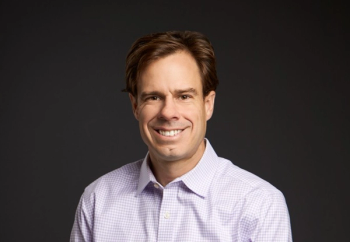
A conversation with Geoffrey T. Sanzenbacher, a research fellow at the Center for Retirement Research.

Astellas CEO Naoki Okamura is putting a “patient axis” operating model, a broader portfolio of strategic brands and a new generation of science to work in the company’s bid to return to record growth.

Merck KGaA, Darmstadt, Germany, acquires Silence Therapeutics for $1.3 billion, Hansoh Pharma and Roche expand their ADC partnership in a deal worth over $15 billion, and an EMA panel backs Lilly’s Foundayo for obesity and type 2 diabetes in Europe.

Merck KGaA, Darmstadt, Germany, agrees to acquire Silence Therapeutics for roughly $1.3 billion, gaining a siRNA asset, divesiran.

Hansoh Pharma enters a collaboration and license agreement with Roche covering a broad portfolio of antibody-drug conjugate programs.

Foundayo’s EU backing, Enspryng for TED, Gilead’s masked TCE deal, FDA’s rare disease reset, and Bausch + Lomb’s new interim CEO — explained.
Advertisement
Advertisement
Trending on PharmExec
1
The Bubble You Don’t Know You’re In: A Three-Part Series on The Medical Benefit Bubble
2
Is Participation in MFN Voluntary?
3
FDA Approves Enspryng (Satralizumab) for Thyroid Eye Disease
4
Merck KGaA, Darmstadt, Germany, Acquires Silence Therapeutics for $1.3 Billion
5