Deborah Waterhouse is leaving ViiV Healthcare to become CEO and managing director of CSL.
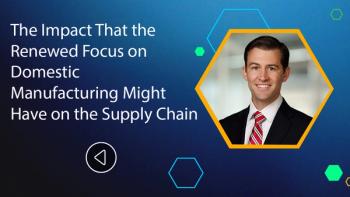
Rohit Tripathi, VP of Industry Strategy at RELEX, lays out the five signals that he believes can measure if the tariff policy is producing structural change.
Rohit Tripathi, VP of Industry Strategy, Manufacturing & CPG at RELEX, identifies the metrics that should be used to measure reshoring progress. In his discussion, he states plainly that press releases are the metric not to watch for, and that counting them does not mean anything, setting up a contrast between announcements and measurable change. From there, he lays out five specific things he would watch instead.
First, Tripathi points to actual U.S. facility investments that move beyond announcements, emphasizing that the meaningful signal is capital that is actually deployed and facilities that are actually built, not statements of intent. Second, he looks for whether there are more investments in building active pharmaceutical ingredient and key starting material capacity, and not just finished-product capacity, arguing that true resilience depends on strengthening the earlier, upstream stages of the supply chain rather than only the final manufacturing step.
Third, Tripathi identifies FDA approvals, site transfers, and pre-check type activities as evidence that regulatory friction is actually being reduced. For him, movement through the regulatory process is a concrete indicator that reshoring efforts are translating into real production capacity, since facilities cannot manufacture and distribute product domestically without clearing these regulatory milestones. Fourth, he looks for supplier qualification and dual sourcing activity for critical products, noting that seeing an increase in qualified, diversified suppliers is a sign that dependency on single sources is being reduced.
Finally, Tripathi says it is necessary to start monitoring shortages, discontinuations, and allocation signals, treating these real-world outcomes as the ultimate test of whether the tariff policy is working. If shortages, discontinuations, and allocation problems persist or worsen, that would indicate the underlying structural issues have not actually been resolved, regardless of how much has been announced.