What’s Trending in Oncology? A Discussion Following ASCO 2026 with Anne Marie Robertson from EVERSANA
Key Takeaways
- Plenary data on daraxonrasib targeting a pancreatic cancer driver mutation affecting >90% of cases suggested potential near-term standard-of-care disruption and renewed confidence in progress for a historically intractable malignancy.
- Updated CROWN results in ALK+ NSCLC reinforced that biomarker-defined precision strategies are translating into durable survival gains and are increasingly dictating competitive positioning and sequencing decisions.
Robertson discusses the trends shaping the future of oncology commercialization.
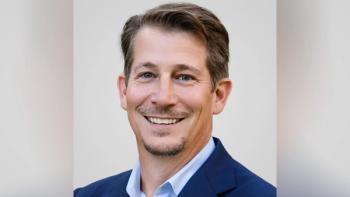
Following a week of groundbreaking data, emerging treatment paradigms and shifting conversations around access at the 2026 ASCO Annual Meeting, Pharmaceutical Executive sat down with Anne Marie Robertson, EVP of EVERSANA Oncology Commercialization™, to reflect on her experiences at the largest oncology event in the North America and trends in the industry. From the accelerating pace of innovation in precision medicine to the growing complexity of bringing novel therapies to market, Robertson shared her perspective on the trends shaping the future of oncology commercialization and what biopharma leaders should take away as they plan for what comes next.
Pharmaceutical Executive: You were onsite at ASCO 2026 last week. What were the most meaningful shifts you observed in oncology innovation compared to even a year ago?
Anne Marie Robertson: ASCO is always a reminder of why we do this work, bringing hope to patients and advancing the fight against cancer. But as a general comment, 2025 was a year that had data from trials that were long, which showed changes in care patterns over years.In 2026, there was a lot more data from biotech manufacturers on bispecific antibodies and new small molecules showing dramatic increases in patient outcomes with new therapies. It’s important work.
PE: What were two or three big moments that stood out to you and your team while you were onsite?
Robertson: You can’t talk about ASCO 2026 without mentioning the plenary session. There hasn’t been a standing ovation in years. But this year was different.
On Sunday, Dr. Brian Wolpin of the Dana-Farber Cancer Institute presented data on pancreatic cancer that is moving the field forward. He received a double standing ovation as he highlighted daraxonrasib, a therapy targeting a mutation driving more than 90% of pancreatic cancer cases, and its potential to become a new standard of care.
But what stood out wasn’t just the science. To me, it was the recognition that we may finally be seeing meaningful progress in one of the most difficult-to-treat cancers.
We saw a similar moment on Friday with Dr. Tony Mok presenting updated CROWN data in ALK+ non-small cell lung cancer, showing improved survival outcomes. Again, the takeaway was clear that precision medicine is delivering real, measurable benefits for defined patient populations.
But beyond the clinical data, another pivotal moment was ASCO’s announcement around AI.
Dr. Clifford Hudis, the CEO of the American Society of Clinical Oncology (ASCO), announced that ASCO will be providing access to Google’s Gemini platform to all members. This commitment by the organization shows just how technology and AI is becoming embedded across research, clinical care, and decision-making. And it points to a future where innovation isn’t just driven by molecules, but by the integration of data, tools, and insights at scale.
PE: What discussions onsite about the role of AI in oncology drug development and commercialization and how has the technology changed how companies work?
Robertson: We’re already seeing AI impact day-to-day workflows for physicians. It is helping reducing administrative burden, supporting clinical decision-making, and enabling more time with patients. That alone is meaningful.
But more broadly, AI is beginning to reshape the care paradigm. It’s improving diagnosis, accelerating insights from clinical data, and helping identify the right patients earlier.
What’s different now is the shift from experimentation to real-world applications. A few years ago, AI in healthcare felt more theoretical. At ASCO this year, it was clear that companies are operationalizing it, embedding it into clinical, commercial, and data strategies, and making it impactful today. This is especially true in reading patient scans and measuring disease progression.
Speed, personalization, and data-driven decision-making are no longer differentiators. They are becoming requirements.
PE: There’s continued momentum behind highly targeted therapies and precision medicine. Did ASCO reinforce the operational complexity of commercializing these treatments?
Robertson: Absolutely. Two themes really stood out to me - diagnosis and care delivery.
First, patient identification continues to be a major hurdle. We saw significant variability globally in how patients are screened and diagnosed. For example, more widespread CT screening in parts of Asia compared to the U.S. That inconsistency creates challenges in finding eligible patients for highly targeted therapies.
Second, the complexity doesn’t stop at diagnosis. Post-infusion care, particularly for bispecifics, requires new infrastructure, coordination, and patient support models. So, while the science is quickly advancing, the system around it is not always keeping pace. That gap is where both commercialization challenges and opportunities exist today.
PE: EVERSANA is in the commercialization space, and you have created models that help both small and emerging pharma and biotech. How did conversations at ASCO validate or challenge the role of partnership-based approaches like EVERSANA’s?
Robertson: One of the biggest takeaways from ASCO is the variability inherent in oncology development. Trial data can exceed expectations or fall short. And when they do, those shifts directly change timelines, investment decisions, and go-to-market strategies.
For emerging biotech companies especially, that uncertainty creates real pressure.
What we heard consistently at ASCO is that companies are looking for more flexible, integrated models that can adapt as conditions change.
That’s where partnership-based approaches become critical. The ability to align strategy, access, patient services, and commercialization execution without adding complexity or cost helps companies navigate that variability more effectively.
Success in oncology today isn’t just about having a strong asset. It’s about having the right model to bring that asset to patients efficiently and successfully.
PE: Looking ahead, what are the one or two developments from ASCO 2026 that biopharma leaders should be acting on now and not just watching?
Robertson: As I leave ASCO today, I’m thinking about how our teams can best stay on top of the market when there is so much innovation, especially in small molecule and bispecific therapies.It’s moving so quickly, and the talent in Chicago this weekend is simply the best in the world.
What stood out to me is that pipeline activity is no longer just something you review periodically. It’s actively reshaping treatment paradigms as data emerges.
Pharma leaders need to elevate how they monitor the pipeline, not just in terms of awareness, but in terms of action. That means building more dynamic capabilities to track trial readouts, understand where standards of care may shift, and anticipate how new agents will impact positioning, access, and patient pathways.
The second development is tied to that speed of change. As innovation accelerates, the window between clinical data and commercial decision-making is shrinking.
Companies can’t afford to wait for certainty. They must plan sooner, aligning commercial strategy, access, and patient support models while the science is still evolving.
Ultimately, ASCO reinforced to me that success in oncology will increasingly come down to agility and how quickly companies can interpret what’s happening, adapt strategy, and move. Those who build that capability now will be in a much stronger position as the next wave of therapies comes forward, and that will ultimately help more patients and their families.
Related to this article