FDA approved an at-home induction option for risankizumab-rzaa in adults with moderate-to-severe Crohn's disease, based on the phase 3 AFFIRM trial.
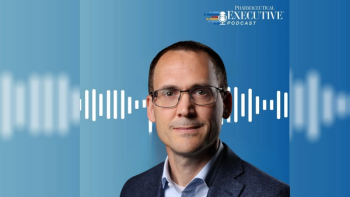
Tris Pharma’s founder and CEO discusses his company’s history and how’s he’s adjusted his strategies over the decades.
Tris Pharmaceutical’s founder and CEO Ketan Mehta spoke with Pharmaceutical Executive about the company’s history and how it’s adapted over the decades. While the company initially focused on oral technology, it eventually broadened its scope and is working in areas such as pain management and addiction.
Mehta also discussed the ways that he ensures his company maximizes a drug’s impact and he experiences with a variety of regulatory environments.
Click
Pharmaceutical Executive: How has your strategy at Tris Pharma changed over the past 25 years?
Ketan Mehta: I started Tris about 25 years ago. We actually started the company more on the technology side with a platform technology.
It was an oral technology, and then we evolved from there. We still continue to focus on our technology where the opportunity arises, but we have become focused on neurology and neuroscience.
We have a commercial portfolio of ADHD products and a pipeline that includes treatments for narcolepsy, spasticity, pain, and addiction. We also have a technology-based pipeline we continue to focus on.
Pharmaceutical Executive: What methods do you use to maximize drug impact?
Ketan Mehta: What we have seen is that often times, drugs are there. For example, in the ADHD space, there are often times drugs that are very effective, but there are certain issues.
You can have a sudden crash when the drug levels go down. That impacts the patient’s quality of life. You may need a booster dose if it doesn’t last long enough.
What we’ve done is double up the delivery system and focus on tiny particles that give continuous relief. This also takes the body’s natural mechanism to draw drugs out of particles and has sustained effect for the full duration of the drug’s release.
This offers symptom control throughout the day, or whenever the patient wants.
Other drugs are provided in liquid form. You calibrate based on the need given how the patient wants to take a drug. At the start of a therapy, you may want small doses because you don’t know the optimal dose yet. When you reach your right dose, you can continue on that.
Pharmaceutical Executive: What has been your experience developing new therapies across multiple regulatory environments?
Ketan Mehta: As you evolve, you see opportunities. For example, our pain molecule, it was serendipity that we stumbled upon it. Once we got into the science and the biology of pain, we realized that this drug has an opportunity and is a new molecule.
This is not based on our in-house technology platform, but it is a first-in-class and uses a very unique mechanism. This pain drug has the potential to transform how pain is treated.
We think this will replace opioids because has efficacy is comparable, if not better, than Class 2 opioids. The addiction profile is very low and we think it could be a Schedule Class 5 drug. You could have no dependency or very minimal dependence.