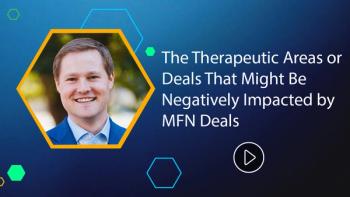
Incubate’s John Stanford on why MFN’s first casualty is the moonshot — and why cancer, Alzheimer’s, and rare disease bear the cost.
Jessica Lovett, VP of commercial strategy and innovation at Innomar, discusses the importance of meeting the needs of everyone at the table.
As a variety of issues continue to impact the global supply chain, pharmaceutical and biotech companies must plan for uncertainty. As Pharmaceutical Executive previously reported, conflict in the middle east and unresolved US tariff deals are putting a variety of drugs and supplies at risk.
In order to maintain supplies across markets, manufacturers and suppliers must prepare for disruptions and have plans in place to deal with them. Also, as the tariff and MFN situations evolve, pharmaceutical companies are adjusting global launch and pricing strategies.
Pharmaceutical Executive spoke with Jessica Lovett, VP of commercial strategy and innovation at Innomar, at the Asembia ASX26 Summit in Las Vegas. During the conversation, she discusses how Innomar is adjusting its strategies to adapt to these uncertainties.
Click
Pharmaceutical Executive: What is your strategy for building relationships with pharma manufacturers?
Jessica Lovett: We are celebrating 25 years in the Canadian market this year. And our name, Innomar, comes from innovative market access. And so, Innomar was really founded on strategically thinking about how to gain access for patients that may not be able to in this really complex specialty pharmaceutical and biologic space.
Foundationally, it really is building out not only what we've done in the past but looking to the future of what that means in relation to the people that are sitting down at the table. We have regulatory market access, pharmacovigilance, patient service, and government relations teams. We have individuals that are sitting down and thinking differently about how we need to truly partner.
Partnership comes with trust, and so as I lived a large portion of my life on the other side of the fence, from a pharmaceutical manufacturer standpoint, trust comes with the insights that are generated and being able to provide at the table themselves. It all comes down to the patient, as is at the heart of everything that we do, and at the pharmaceutical manufacturer's perspective.
This is a business, but it also foundationally about being united in our responsibility to create those healthier futures. And how do we show up for patient care? So, thinking differently about how we are tapping into our global partners and bringing that to the table.
It’s learning to think differently about what that means within the Canadian landscape, and really truly investing in the ability to say we are invested in the patient to the same degree you are. This only works if those cross functional stakeholder team comes together, not only on our side, but at the pharmaceutical manufacturer side as well.
Sometimes, that isn’t what happens. So being able to make commercial decisions also takes into account our trade and supply chain, along with the people at the table. You need your medical team at the table. You need your access people at the table.
We can all really co create what the future holds, as long as you are foundationally building for tomorrow.