
Feature|Articles|December 12, 2025
- Pharmaceutical Executive: December 2025
- Volume 45
- Issue 9
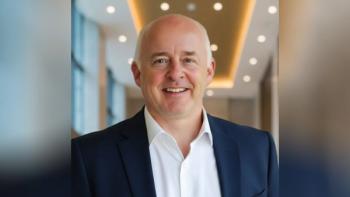
Brent Saunders: Eyeing New Horizons
Author(s)Michael Christel
Listen
0:00 / 0:00
Key Takeaways
- Brent Saunders returned to Bausch + Lomb in 2023 to help address unmet needs in eye care, focusing on innovation and operational excellence.
- The company has prioritized growth acceleration, leading to more than 20 new product launches and over 60 pipeline programs.
Inside Brent Saunders’ return run as CEO of Bausch + Lomb—and setting the storied eye care pharma on a bold path of reinvention.
Advertisement
In a bit of recent irony, Brent Saunders, CEO of Bausch + Lomb, and a longtime leader in eye health, recounts his own dealings of late with problems of the eye. For him, it was a nasty bout this summer battling a viral eye infection, the first of his life, he says, that left him extremely sensitive to light and unable to see out of his right eye for six weeks.
“I couldn’t read the phone, I couldn’t go outside in the sun. It was a stark reminder for me of how important your sight is,” Saunders told Pharmaceutical Executive during an interview last month at Bausch + Lomb’s Bridgewater, NJ, headquarters, to discuss Saunders’ now almost three-year return as the company’s CEO (he also served in that role from 2010-2013). Saunders and his staff were preparing for the organization’s first formal investor day in more than a decade happening just two days later—as the legacy eye care giant, building off a Saunders-led recalibration, embarks on an ambitious next chapter.
“Thank God it was only six weeks,” he continues on his particular brush. “But to live like that has a real profound impact on the quality of your life.”
Saunders noted the episode for context when discussing the prevalence of more serious, in comparison, eye conditions and the still “massive” and perhaps underappreciated unmet medical need associated with common eye diseases. Around 30% of glaucoma patients, for instance, will experience irreversible blindness. For patients with age-related macular degeneration (AMD), current standard of care can slow progression but not halt it. There are no restorative therapies for geographic atrophy. Those are just a few examples.
It was addressing this gap—between what modern science can deliver and what patients need—that compelled Saunders to retake the helm of the then-170-year-old global company in March 2023. During the time in between, following Bausch + Lomb’s acquisition by Valeant Pharmaceuticals in 2013 (which later rebranded as Bausch Health Companies), Saunders notably served as chairman, president, and CEO of Allergan, leading its ophthalmology expansion, until the biotech was acquired by AbbVie for $63 billion in 2020 (for specifics on his path to Allergan, see bio highlights at bottom).
After that, with the COVID-19 pandemic in full grip, Saunders decided to take a break and focus on his board work (serving for the likes of Cisco, BridgeBio, and ARS Pharmaceuticals) and involvement in startup opportunities. Early in his career, he was a partner at PwC, heading the compliance business advisory practice, focusing on healthcare, and is known for his past orchestrations of major M&As in pharma.
The calls, however, would soon start coming in gauging Saunders’ interest in returning to the pharma C-suite, including from the Bausch + Lomb board of directors.
“It was the first one where I said, ‘you know, maybe,’ because my passion has always been eye health,” the Arizona native, who was raised in Pennsylvania’s Lehigh Valley region, tells Pharm Exec. He notes his time in and around the field, including his introduction to the CEO role during his first Bausch + Lomb run. “I just absolutely love the eye health community, the doctors, the people who work in this space, even the competitors. It’s a great community of really smart people.”
Calling the existence of a 170-year-old company (at the time) exclusively focused on eye health a “rare gem” and opportunity, Saunders started to interview with his former organization, since 2022 a separate, publicly traded entity, and do his own homework.
“I became more convinced that this company had just a massive potential if it could really reinvent itself,” he says.
A renewed vision
When Saunders returned to Bausch + Lomb in early 2023, where he was also named chairman, he didn’t walk into a turnaround-type scenario, but more so a company primed for a recharge. Years spent inside larger corporate structures had stalled investment in innovation. COVID-era supply chain shocks had stressed manufacturing, resulting in a high number of out-of-stocks and back orders, according to Saunders.
“It was kind of stuck in neutral,” he says on the first thing he noticed about the company. “It was put in a place where it wasn’t being invested in the way it needed to be.”
Saunders, hence, in jumping in, decided to refocus the company around three main priorities and tenets.
“One was selling excellence to really make sure that we could make the most of the portfolio of products we had, whether it be pharmaceuticals or surgical or contact lenses or consumer products,” he tells Pharm Exec. “We needed to be able to prove we had the capability to meet our customers where they wanted to be met.”
The second component centered on operations and stabilizing Bausch + Lomb’s significant global manufacturing network (the company’s commercial revenue distribution is a roughly 50/50 split, US and ex-US).
Third, was a renewed emphasis and commitment to aggressively retool the company’s innovation engine.
“Innovation is not a quick fix, given the clinical profile of drugs or devices, and even most of our [over-the-counter] products are clinical-based products,” Saunders notes. “So we really started investing in the R&D organization itself, going out and recruiting the best eye care scientists, and starting to invest in early research and development programs.”
Saunders reports progress across all three dimensions, and according to the CEO, Bausch+ Lomb has been the fastest growing eye care company for almost the last two years going, buoyed by more than 20 new product launches. Its supply chain, Saunders adds, is running at minimal back orders, and there are more than 60 R&D projects in the pipeline, many focused, the organization says, on "disruptive innovation,” including new capabilities in disease biology and advanced formulation.
This growth prompted Saunders and his team to add a fourth dimension to showcase at the aforementioned investor meeting last month in New York City, what he labels as “financial excellence.” It involves pursuits in maintaining sales momentum and improving margin and profitability.
In third-quarter 2025 earnings unveiled a couple weeks earlier, Bausch + Lomb reported revenue of $1.28 billion, an increase of 7% from the previous year period. Sales associated with its pharmaceutical segment grew by 8%. Operating income jumped 120.9%.
During the investor day event, the company projected double-digit adjusted annual earnings per share growth from 2026-2028 and about 50% adjusted cash flow from operations to adjusted EBITDA conversion in 2028.
R&D revived
Amid the foundational reset since Saunders’ return, the executive team’s goal is to align Bausch + Lomb’s long history and legacy with a new, innovation-centered ambition. To that end, the company is projecting peak sales for its product pipeline of about $7 billion, post-2028, across its four business units, if projects are successful.
“Very few of the programs are incremental programs,” says Saunders. “Their breakthrough, change the standard of care of how we treat eye care or eye disease across the board.”
In pharmaceuticals, the CEO points to three particularly promising candidates in development. One is a first-in-class dual-action drop combining ingredients from Bausch + Lomb drugs Miebo and Xiidra for dry eye disease (DED)—one targeting evaporative dysfunction, the other inflammation. Addressing the multifactoral nature of DED in one product, Saunders says, can help patients overcome a common access barrier in this setting, when, for most, insurance won’t cover two separate prescriptions. According to findings cited by Bausch + Lomb, only 7% of diagnosed patients with DED receive an Rx treatment. Meanwhile, the global DED market is forecast to nearly double by 2030.
The challenge, though, in the case of Bausch + Lomb’s hopeful one-drop solution, Saunders notes, is that the Miebo and Xiidra ingredients “don’t want to live together in a formula.”
“And so our scientists for the last two years have been trying to crack the code on how to formulate these two drugs to work synergistically,” he explains. If all goes well for the dual-action agent, currently in clinical trials, the company is anticipating launch around 2029.
Another drug in mid-stage development holds promise as potentially the first therapy for glaucoma to improve visual function through neuroprotection. The condition has traditionally been treated as an ocular pressure disease, with drugs designed to reduce intraocular pressure (IOP). Yet, as mentioned earlier, around 30% of patients will still start losing functional vision, even when their pressure is controlled.
“The reality is, with glaucoma, it’s really a neuropathic disease. It’s not a pressure disease,” Saunders tells Pharm Exec. “Pressure is just an identifiable symptom that we can manage. We have the first drug that’s demonstrated neuroprotective effect in the clinic while maintaining or lowering IOP.”
"The reality is, with glaucoma, it’s really a neuropathic disease. It’s not a pressure disease."
In a Phase II study, the drug demonstrated meaningful function gains (improvement of 15 letters or more on a standard eye chart). “It’s kind of the holy grail for glaucoma patients,” Saunders believes.
A third potential “first” the CEO highlighted is a neurosensory agent currently in Phase I designed to address ocular surface pain. Though still in the early clinical stages, the company projects a possible launch of the drug around 2030 and potential peak sales of $1.4 billion.
“There are no approved treatments specifically for ocular pain,” Saunders notes, adding that it’s one of the most commonly presented conditions at the ophthalmologist or optometrist office.
Bausch + Lomb is planning to advance multiple projects into the clinic next year aimed at complex, degenerative retinal conditions, particularly those targeting geographic atrophy and intermediate AMD.
The company is also tapping opportunities in precision medicine and AI-enabled drug discovery to bolster its early development efforts, including on the collaboration front. The company is partnering with genetics specialist Character Biosciences, a relationship established in 2024, on targeted therapy pursuits initially focused on AMD. Bausch + Lomb is able to leverage Character’s integrated patient data platform and analytics—“a really deep AI database of around 10,000 patients with almost seven years of complete history, including genetic optical coherence tomography imaging and longitudinal medical records,” says Saunders.
“There is no good animal model for AMD,” he adds. “And so AMD drug development has been very expensive because you have to test your hypothesis in humans to really get a predictable outcome. Now we’re actually doing the modeling instead of in animals, we’re doing it using AI. And we’ve identified some really unique targets.”
In the discovery space, Bausch + Lomb is also collaborating with City Therapeutics, a startup spun out last year by RNAi pioneer John Maraganore, PhD, the founding CEO of Alnylam Pharmaceuticals. Bausch + Lomb, Saunders says, approached City early on in its launch to be its exclusive eye care partner. The biotech focuses on next-generation engineering of small interfering RNAs to silence genes.
“We’re getting really close to identifying a target using siRNA for AMD and/or geographic atrophy,” Saunders notes on his company’s pact with City. “My view is we’re experts in the eye and in drug development for the eye, so let’s find science or technology experts and platforms that aren’t focused on the eye and figure out how can we add our expertise in the eye to create solutions for patients.”
siRNA, the CEO points out, mediates gene silencing, but not permanently. So such treatments (only six siRNA agents have been cleared by the FDA to date) can offer alternatives to traditional gene therapy without the risks associated with permanent gene alteration.
The potential of gene therapy in the eye care setting, nevertheless, has attracted rising interest from Big Pharma, including the likes of Eli Lilly, which struck a recent partnership with MeiraGTx around a program for rare blindness (Leber congenital amaurosis type 4).
Notable R&D projects advancing in Bausch + Lomb’s consumer segment include a new PreserVision formulation for AMD, designed to address all stages of the disease, and a next-generation formulation of Lumify, the company’s popular redness reliever, combining brimonidine and hyaluronic acid (projected launches for the two programs are the first halves of 2026 and 2027, respectively).
Bausch + Lomb’s origins, of course, are rooted in the lens. It started as an optical shop in 1853, eventually creating what would be considered the modern-day US spectacle of that time. The company introduced the first soft contact lenses in 1971, and in 1999, ushered in the silicone hydrogel lens.
A new breakthrough could be on the horizon, with Bausch + Lomb unveiling last month a potential first-of-its kind bioactive lens material. Currently in clinical trials with a hopeful launch in 2028, Saunders explains that the lens platform removes silicone entirely and instead uses a biomimetic material designed to imitate the ocular surface itself.
Rather then drying out by the end of the day—a top reason patients stop wearing lenses—it aims to remain hydrated and result in healthier and more comfortable outcomes the longer a person wears it.
Culture and grit
During his first go-around with Bausch + Lomb, Saunders changed its mission statement to “see better, live better.” While that credo still exists today in official communications, Saunders, upon his return, felt a refreshing of others since was in order, as part of—much like its portfolio—an overall cultural reset.
Working closely with the communications and HR teams, he and the group spoke with more than 700 colleagues and held focus groups to come up with a new value and mission statement.
“‘We lead with grit, innovate with purpose, and always put patients and customers first,’” Saunders relays on what resulted, its second part reading: “Through talent, teamwork, and accountability, we turn bold ideas into better outcomes.”
“I love the word grit; we want people who really want to be gritty,” Saunders tells Pharm Exec. “We want people who have an endless desire to learn and grow. We want people with real curiosity and who push the boundaries. It’s easy to say in a little tagline, but really build that into your performance management, build it into how we recruit and promote people. Those are the qualities we look at to reward colleagues for a job well done.”
While “not a big business book person,” says Saunders, tending to prefer history books or biographies, the concept of “grit” and harnessing it to help shape company culture resonated with the CEO. He read Grit: The Power of Passion and Perseverance, a New York Times bestseller by Angela Duckworth, PhD, and was taken with the lessons shared from her “grit scale” study that she conducted at West Point during its version of hell week ("Beast Barracks").
Saunders would invite the psychologist and Wharton professor to speak to his leadership team earlier this year.
“Grit is really an innate quality of this idea that you’ll overcome obstacles, that you’ll always want to be better at what you do,” he says.
For Saunders, it marked another lesson in a career of many across 25 years in the healthcare space. One of the most valuable learnings he draws from as a leader today, he says, is “it’s all about the people.”
“Cultures don’t change overnight, but the only investment that you can make as a CEO that has unlimited compounding potential is talent,” Saunders tells Pharm Exec. “Through M&A, I can maybe get one or two times compounding. But there’s a limit. If I buy (license) a product, maybe I can compound that investment three times. If I develop an R&D program, maybe it’s eight times. But talent’s got unlimited potential for compounding.”
"The only investment that you can make as a CEO that has unlimited compounding potential is talent."
Cultivating those types of principles is important for global pharma companies today amid the industry’s well-documented broader challenges—from policy, to pricing, to access, and beyond. Acknowledging “a lot of friction in the system,” Bausch + Lomb, for its part, is well positioned, according to Saunders, particularly its pharmaceutical business (he notes, for example, in the context of tariffs, “virtually all” of its pharmaceuticals sold in the US are made at its plant in Tampa, Fla.).
He does point to the US health coverage system, and rebate gross-to-net costs specifically, as a continuing major roadblock to patient access. But one, too, he adds, that only strengthens his company’s resolve in that area, as the organization plots its strategy and vision for future growth.
“We have a great team and three years later, I have zero regrets,” Saunders reflects on his second tenure. “We’ve had a really good 172 years, but I think our best few years are right in front of us.”
Brent Saunders: At a Glance
Articles in this issue
10 months ago
A Year of Change10 months ago
The GLP-1 Gold Rush10 months ago
A Defining Period for M&A10 months ago
Is Manufacturing Coming Home?10 months ago
DTC Models and Momentum10 months ago
The Cost of Fixing PharmaAdvertisement
Related to this article

Astellas CEO Naoki Okamura is putting a “patient axis” operating model, a broader portfolio of strategic brands and a new generation of science to work in the company’s bid to return to record growth.

A passing FDA inspection tells pharma senior leadership very little about whether the next significant revenue vulnerability is already taking shape. But continuous, AI-enabled quality management maturity (QMM) has the potential to do so months before the issue reaches the realm of P&L.

As established gains in personalized and targeted therapy have enabled increasingly precise approaches to disease, novel technologies are expanding what is possible while creating new challenges for drug developers.

Improved financing conditions and accelerating M&A are creating new opportunities, but policy uncertainty, patent expirations and persistent funding pressures continue to shape the outlook for pharma and biotech.

Exploring the emergence of agentic ecosystems in transforming data accessibility and ensuring reliable answers reach the people making decisions while there is still a choice to make.
Why hub vendor transitions fail — and the four questions every manufacturer should answer before signing with a new patient support program vendor.

ESC 2026 marked a turning point — GLP-1s earn their first formal heart failure guideline recommendation and become a cardiometabolic platform.

How the proposed lateral network can change the traditional mindset around communications and pharma’s role in today’s new flow of health information.
Advertisement
Advertisement
Trending on PharmExec
1
Roundup: TRexBio & Retension Pharmaceuticals Announce IPO Pricing
2
FDA Approves Tecentriq for Stage III dMMR Colon Cancer
3
The Most Important Lessons Learned from Building CGT Supply Chains: LogiPharma 2026
4
Viatris Acquires Pacira BioSciences for $1.65 Billion
5