Pharma AI adoption fails not because of the technology — but because organizations deploy tools before they're ready to use them.
Pharma logistics are overqualified by design — and how agentic AI can now optimize across thousands of lanes in days, not months.
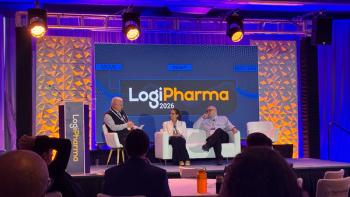
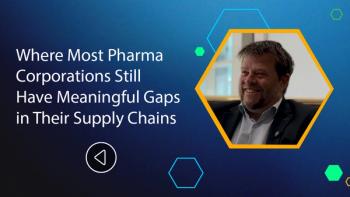
Pharmaceutical Executive spoke with Mark Talens, CCO of PAXAFE at LogiPharma 2026 in Boston. During the conversation., the executive discussed a variety of issues and updates on modern supply chains and the most important issues impacting them in today’s world.
Talens discussed how many companies haven’t properly organized their data in order to work best with modern technology. He also discussed broader organizational gaps in supply chains, citing many companies’ lack of cross-functional generalists as a significant issue.
Talens also detailed another major issue: the balancing of business-minded SOPs with real-world operations. While many companies think ahead to build in redundancies, they aren’t as prepared as they should be for certain real-world situations.
Pharmaceutical Executive: How should pharma companies think about the trade off between cost and supply chain resilience?
Mark Talens: Pharma is pharma — compliance and quality are non-negotiable, and nothing I say should suggest otherwise. That said, there is what I call the gap between the book of the business and the real world.
The pharmaceutical industry is traditionally very conservative. If you look at how lanes and logistics are qualified and how backups are structured, I know from experience that in many cases they are 80 to 90 percent overqualified. The reason is straightforward: companies want to be sure. The result is a relatively static set of SOPs and procedures that is never fully overlaid against the dynamic reality of actual operations. That gap represents significant cost — but more than cost, it represents an opportunity to become more flexible and more resilient in the supply chain.
If you are only qualified on a single lane for a given product and something disrupts that lane, you may be in trouble. But with modern toolsets, setting up an alternative lane no longer takes four months — it takes days to weeks. That is a meaningful shift.
We are also seeing movement in certain product categories toward more direct distribution models. That does not mean these are consumer products — the underlying compounds remain highly complex biomolecules, immunotherapies, and vein-to-vein cell therapies. But the logistics model is evolving.
Think about what this means at scale for an average pharma company. Sixty product families, two to three hundred SKUs, thousands of lanes, multiple manufacturing sites — that is an extraordinarily complex network. With agentic AI, you can now overlay real-time optimization across that entire network: lane optimization, backup routing, logistics alternatives, noise cancellation. All of it simultaneously, and none of it at the expense of product quality.
There is a significant opportunity here for productivity gains and faster delivery to the patient — and I think that is where it all starts to matter.