The Full Path of Drug Development, and Why So Few Drugs Make It: Q&A with Dr. Ying Huang
Key Takeaways
- Licensing commitments with Chinese companies reached ~$51.9B in 2024, representing ~90% growth versus 2023, with continued increases projected through 2026.
- Expanded public investment in basic science across Asia is translating from publications into industrial R&D productivity and biotech-originated therapeutic innovation.
K2 Therapeutics CEO discusses China's biotech rise, the case for global asset acquisition, and what defines a successful biotech.
Earlier this year, Pharmaceutical Executive
According to the report, these deals hit a record high in 2024 at about $51.9 billion, which was a 90% jump from 2023’s numbers. This number then increased again in 2025 and is expected to increase again by the end of 2026.
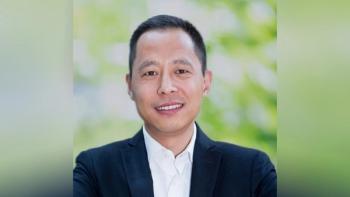
Pharmaceutical Executive spoke with K2 Therapeutics’ CEO Dr. Ying Huang about the growing shift towards globally sourced innovation and the increased focus on foreign partnerships. The push has become so strong that it’s even impacted how investors analyze pharma and biotech companies.
Click
Pharmaceutical Executive: What's driving the shift towards globally sourced innovation?
Dr. Ying Huang: What I believe is driving this is the science itself. Historically, the source of innovation in our industry came from academic labs in the United States and Europe. But over the last one to two decades, we've seen more and more scientific breakthroughs coming from Asia, and from China in particular.
A few factors are driving that shift. First, just as the NIH and NSF fund basic science here in the United States, governments and funding agencies in Asia and China have also been investing heavily in fundamental research. You first see that investment show up in journal articles and papers. Over time, some of those discoveries move into industrial R&D, and eventually into the innovations we see from the biotech industry.
Second, over the last two decades or so, we've seen a significant wave of what are often called returnees — scientists and executives who came to the United States for graduate school, PhD training, or postdoctoral fellowships, and who also spent time working in the pharma and biotech industry here. Many of them eventually decided to go back and start their own companies. There are now approximately three to four thousand biotech companies in China, and that entrepreneurial ecosystem is another major driver of the innovation we're seeing today.
Pharmaceutical Executive: What have you learned focusing on asset acquisition over building a single platform technology?
Dr. Ying Huang: Drug discovery is a lengthy and capital-intensive process. On average, it takes eight to ten years and between one and two billion dollars in total investment to bring a drug from discovery in the lab to FDA approval. To accelerate that timeline and reduce those costs, one approach is to in-license clinical or preclinical stage assets from other countries — assets that already have preliminary data from human patients — and then advance them further in the United States. That strategy can meaningfully compress both the cost and the timeline of drug development by building on work that has already been done rather than starting from scratch.
Pharmaceutical Executive: What is the current path from discovery to global commercialization?
Dr. Ying Huang: The process typically begins when a scientist at an academic institution identifies a novel biological target for a particular disease through basic research. From there, a biotech startup — often based in Boston or the San Francisco Bay Area — is funded by a venture capital firm and spends several years identifying a lead compound, optimizing it, and advancing it to what's called a Phase 1 drug candidate ready for human testing.
In Phase 1, only about 40% of candidates succeed and move forward into Phase 2, where the drug is tested in patients to reconfirm safety and begin assessing efficacy. Unfortunately, roughly half of drugs fail at the Phase 2 stage. Those that advance move into Phase 3 — the registration stage — where again only about 50 to 60% succeed. Phase 3 trials typically run in parallel across two studies, enrolling hundreds or sometimes thousands of patients depending on the indication.
If Phase 3 results are positive, the company submits a New Drug Application to the FDA, which reviews the data and, if satisfied, grants approval. From start to finish, the entire process typically takes eight to ten years.
Pharmaceutical Executive: What are executives and investors looking for in the next generation of biotech companies?
Dr. Ying Huang: The first priority should always be addressing an unmet medical need. There are certain cancers for which no good treatment options exist, let alone a cure. There are diseases like Alzheimer's and Parkinson's where we can only slow the progression of symptoms. You always want to focus on conditions where the unmet need is significant — because just as with any product, you need to be offering something the market genuinely needs.
The second consideration is accessibility — cost and pricing have become increasingly prominent in public discourse, across presidential elections and beyond. As an industry, can we reduce the time it takes to develop drugs, and can we reduce the costs associated with discovery and development? Those have become critical questions.
Third, can we create shareholder value in the process? That means satisfying a significant unmet medical need with a drug that is reasonably priced and accessible to the patients who need it — while recognizing that drug development is a lengthy, capital-intensive, and inherently risky undertaking. Achieving all three of those things at once is what defines a truly successful biotech company.
Related to this article