Dave Maraldo, Ph.D., president of manufacturing at Merck, explains how flexible capacity, earlier input from manufacturing in R&D, and digital tools are helping the organization keep up with a faster, more varied portfolio.
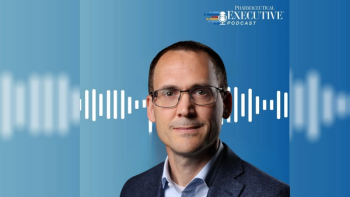
K2 Therapeutics CEO Ying Huang discusses why government investment and US-trained returnees have made China's biotech innovation surge irreversible.
Earlier this year, Pharmaceutical Executive
According to the report, these deals hit a record high in 2024 at about $51.9 billion, which was a 90% jump from 2023’s numbers. This number then increased again in 2025 and is expected to increase again by the end of 2026.
Pharmaceutical Executive spoke with K2 Therapeutics’ CEO Dr. Ying Huang about the growing shift towards globally sourced innovation and the increased focus on foreign partnerships. The push has become so strong that it’s even impacted how investors analyze pharma and biotech companies.
Pharmaceutical Executive: What's driving the shift towards globally sourced innovation?
Dr. Ying Huang: What I believe is driving this is the science itself. Historically, the source of innovation in our industry came from academic labs in the United States and Europe. But over the last one to two decades, we've seen more and more scientific breakthroughs coming from Asia, and from China in particular.
A few factors are driving that shift. First, just as the NIH and NSF fund basic science here in the United States, governments and funding agencies in Asia and China have also been investing heavily in fundamental research. You first see that investment show up in journal articles and papers. Over time, some of those discoveries move into industrial R&D, and eventually into the innovations we see from the biotech industry.
Second, over the last two decades or so, we've seen a significant wave of what are often called returnees — scientists and executives who came to the United States for graduate school, PhD training, or postdoctoral fellowships, and who also spent time working in the pharma and biotech industry here. Many of them eventually decided to go back and start their own companies. There are now approximately three to four thousand biotech companies in China, and that entrepreneurial ecosystem is another major driver of the innovation we're seeing today.