CORXEL’s Dr. Bo Liang on why GLP-1 therapies are a broader chronic disease platform — not just obesity drugs — with benefits across cardiovascular, renal, and metabolic disease.
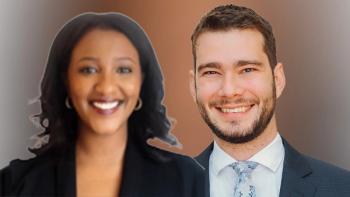
Kim Boericke, CEO, Veristat, discusses how Veristat is adapting clinical trials by using data, AI, and operational planning to optimize site selection, manage complex cell and gene therapy logistics, and streamline analytics.
Kim Boericke, CEO, Veristat, discussed her new role and the company's focus on data analytics, automation, and early-stage strategic consulting. In a conversation with Pharmaceutical Executive,she highlighted the importance of strategic consulting in clinical trials, emphasizing the need for early engagement to define patient populations and streamline data collection. Veristat's specialization in oncology, neurology, and rare diseases involves leveraging data, AI, and logistics to optimize trial execution. Boericke also addressed barriers for women in STEM leadership, stressing the need for advocates, mentors, and visibility.
A transcript of Boericke’s conversation with Pharmaceutical Executive can be found below.
Pharmaceutical Executive: How is Veristat adapting its approach to clinical trials to meet the unique challenges of these complex therapeutic areas?
Kim Boericke: There's a couple points around that, I'll try to unpack them. The first one comes down to logistics. So, once you've done a good job of actually getting a proper protocol together, you have the logistics of where in the world is the best place to run the trial. So, leveraging a lot of data and AI to help inform us on where is the best place in the world to actually conduct the trial. The second part of that is making sure that the site that you choose in that country actually have the right patient population, and a lot of insights are now being used to explore the EMRs of those systems, to be able to find the patient populations that you need.
The other aspect around, around the logistics, is really being able to move the drug in and out of the environment you're in. A lot of the complexity we work in is in cell and gene therapy, and a lot of times that means you're taking cells out of the body. You're taking it someplace to be processed, supercharged, so to speak. Then it goes back to the site, and then has to go back into the patient, that logistical timeline of being able to get the patient in, take your sample, create your supercharged gene therapy and get it back to the site, and get it back into a patient before it breaks down or is damaged is kind of a piece of a puzzle that needs to very carefully put together. The logistical part of it becomes very complicated, and that's something that you have to take into consideration make sure that the sites you're identifying have the patients and are close enough to the facility that's actually going to manufacture that precision drug for the patient.
These are areas that we've really spent a lot of time focusing on and figuring out how we can be very efficient in being able to operationalize that as we start to execute the actual trial. The other initiatives we're starting on, really is, how can we support our brains, so supporting the bio stat unit, and really being able to take some of the heavy lifting of programming off of their plate, and leveraging AI to be able to support them in the programming of the tables, listings and figures. So, we still have very much a scientific, first human approach to using AI, but basically using AI in the best intended purposes to help us create those insights and analytics so that we can quickly assess how we're doing on the trial, and that's another area that that we're looking to really approach and launch this year.