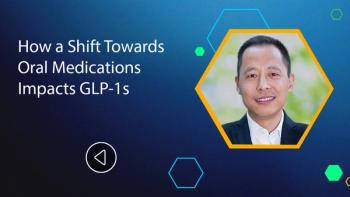
CORXEL’s Dr. Bo Liang on why small molecule oral therapies will be the long-term winners in a GLP-1 market driven by consumer preference.
Hayley Burgess SVP, Inovalon, touches on integrated care mentioning to the industry's priority of shared real-time data across payers, providers, and pharmacies, can lead to it becoming reality.
Haley Burgess, SVP of provider surveillance and safety at Inovalon, discussed the operational challenges in specialty pharmacies, including high costs, complex prior authorization processes, and medication adherence issues. Burgess highlighted the role of Inovalon’s platforms, Script Med and Vigilance, in streamlining workflows, improving patient care, and enhancing pharmacist productivity by 50%. Burgess emphasized the importance of data integration, AI-driven tools, and precision medicine in evolving the role of specialty pharmacists. A transcript of her conversation with Pharmaceutical Executive can be found below.
Pharmaceutical Executive: From your perspective, what practical steps can the industry take to make integrated care a reality rather than an aspiration?
Haley Burgess: Yeah, as when I think about that intersection of payer, provider, patient, it is a very important one. I will always go back to the data on this of having robust data sets from all of these disparate systems in one place where we're communicating in the same way. The majority of time, when you find an error or event, it is due to lack of communication, and that's where I see this intersection. And the ability of Inovalon in particular, to assist in this way is to bring in all of these pieces of data, and we do that today. You know, we have a huge payer customer base, obviously, and using our robust data and information, right, we're pushing in where they have risk or issues with their patient population, but furthermore, the tools on the other side are ambulatory surveillance right in real time can work with the providers to say this person is in the clinic today, and this is the vaccination they haven't received. This is the mammogram that wasn't done in the last year. Here are the pieces and parts for preventative care that can affect this patient. I believe it can be a reality today, and part of it is knowledge, right? For the industry to understand how fast we're moving with software and technology to bridge those gaps. We don't need a waiting period. It's time for us to invest in patient safety globally and use these types of tools to assure that we can close the gaps. And it's here. We don't have to wait, I think, more of the knowledge and going, you know, we go to a lot of thought leadership roundtables and have these conversations, and I think you're going to see more and more, the time is now. The technology is here. AI is moving so fast in the way that we can communicate and summarize and push data and information to the right person at the right time. I think it's an exciting time to be in healthcare. Yes, we have some issues and burdens yet with documentation and the complexity of the care, but a couple years from now, we're going to be having very different conversations, and the challenges will be there, but I think they'll be different. The communication is going to be so much better.