Pharmatizing AI Is the Key to Faster, Smarter Drug Commercialization
Key Takeaways
- Combining payer connectivity with patient-services infrastructure enables real-time linkage among manufacturers, payers, and patients, replacing fragmented vendor stacks with an accountable, integrated commercial execution model.
- Market expectations now prioritize measurable outcomes, pushing commercial teams to unify data, access strategy, technology, and field execution rather than managing disconnected agencies with diffuse responsibility.
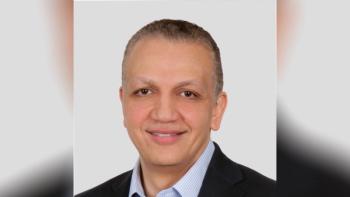
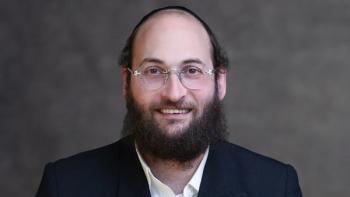
EVERSANA CEO Mark Thierer discusses the importance of connecting pharma, payers, and patients in real time.
Pharmaceutical Executive: What has been your biggest 'aha' moment in your first year as CEO at EVERSANA since you joined together with Waltz Health?
Mark Thierer: We’ve certainly had a few, but what hit me from day one was just how much untapped potential there is when you connect dots the industry historically kept apart. Traditionally, pharma, payers, and patient services ran in separate silos. Nobody talked to each other. By bringing Waltz and EVERSANA together, we bridged that divide. We can now connect pharma directly to payers and patients in real time, creating a commercial model that reflects how healthcare works today.
Pharmaceutical Executive: How has the market shifted in the past 12 months?
Mark Thierer: The market moved from just talking about transformation to demanding it. Leaders are tired of managing a dozen disconnected vendors with zero collective accountability. They want strategic partners who can connect data, access, technology, and commercial execution, all tied directly to measurable patient outcomes. That’s the exact thesis we built our model around, and it's resonating across the board.
Pharmaceutical Executive: Lots of talk about data, AI and direct to patient models shaping the future of care, is this what you're seeing too?
Mark Thierer: Without question. But the real breakthrough isn't just "AI" in a vacuum. It’s about pairing AI-driven intelligence with direct-to-patient engagement. Our entire focus is taking friction out of the system.
If it takes weeks or months to navigate prior authorizations or get a therapy into a patient's hands, the system is failing. The winners in this next chapter will be the manufacturers that treat data, access, and direct patient engagement as a single, connected pipeline rather than separate initiatives.
Pharmaceutical Executive: Recently you added the HEOR firm from the UK Estima Scientific. What added capabilities does this company bring to EVERSANA and how does it connect to your broader focus on ‘pharmatizing AI’?
Mark Thierer: Estima is a fantastic addition to our portfolio of services at EVERSANA. They pair world-class HEOR expertise with purpose-built AI that accelerates heavy-lift tasks like health economic modeling and systematic literature reviews. Payers today demand real-world evidence before they open up formularies, and Estima helps our clients prove that clinical and economic value much earlier.
Their offerings and what they’ve built over the past 10 years fit into what we call "pharmatizing AI,” which is taking raw technology and embedding it directly into commercial life sciences workflows where it drives measurable ROI. Tim Reason and his team are true innovators. Integrating their proprietary toolset with our existing HEOR bench gives our clients an enormous competitive edge.
Pharmaceutical Executive: What are the top challenges you're hearing that biotechs are facing as they work to commercialize a product in today's environment?
Mark Thierer: Emerging biotechs are under immense pressure. They must prove clinical and economic value earlier, navigate an aggressive payer landscape, and execute flawless launches, often with very lean teams. The instinct and traditional approach has been to hire six different niche agencies and vendors, but that just creates friction and chaos.
Modern commercialization means building an integrated engine from day one. I look at it through three simple imperatives: securing better access, accelerating physician adoption, and driving long-term adherence. If you align your strategy around those three pillars, you cut launch risk dramatically.
Pharmaceutical Executive: What role do you see AI playing in connecting systems and strategies moving forward?
Mark Thierer: AI is the connective tissue across everything we do. It turns fragmented data and workflows into rapid, high-confidence decisions. At EVERSANA, AI isn't an experiment sitting on a shelf. We’ve built and empowered our entire workforce to become active AI practitioners.
We established a global AI Center of Excellence to standardize and scale adoption across the entire organization. Our agency team led the charge, and the results have been remarkable. Our philosophy is simple: you can't advise clients on AI transformation unless you’ve proven it inside your own four walls first. Clients recognize that authenticity, and it’s why we see such strong market demand for our AI Agency platform.
Pharmaceutical Executive: What trends do you see on the horizon as we turn the calendar to 2027?
Mark Thierer: 2027 will be defined by seamless integration. The novelty phase of AI is over; now it’s about deep operational adoption. I think we will see data act as the engine connecting everyday commercial workflows, alongside much broader adoption of direct-to-patient models that cut out middle layers, improve transparency, and get therapies to people faster.
Pharmaceutical Executive: What's your one piece of advice for commercial leaders who are working to bring therapies to market in the next two years?
Mark Thierer: Stop organizing commercialization around internal silos and start building around outcomes. Work backward from the patient, and start asking you and your team this question: What stands between them and getting on therapy?
Push hard for answer here, and be relentless in connecting the exact data, access, and operational pieces required to clear that hurdle. Then embrace and use AI to make the patient journey faster, simpler and more measurable. It’s not easy, but now more than ever, it’s doable and critical. If you keep the patient at the center of all you do, the business results will follow.
Related to this article