With rising healthcare costs, practices are embracing flexible payment models and upfront pricing transparency to keep care accessible.
Front desk staff aren’t being replaced by AI — they’re evolving into marketers, patient experience leads, and AI agent managers as automation absorbs hours of daily administrative work.
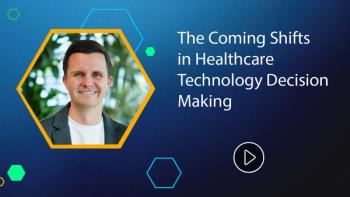
Pharmaceutical Executive spoke with Austin Strong, head of strategy at Weave, about what he expects the biggest trends in 2027 to be. The conversation focused on healthcare providers and how they engage both with patients and the pharmaceutical industry. How these trends play out will directly impact how the pharma and biotech industries must adapt their strategies to ensure their drugs make it to the patients that need them.
According to Strong, the next year will be focused on both affordability and improving the usage of new technologies, such as AI. While he discussed areas where he expects this technology to expand, he also discussed how decision-making in this area is likely to change as well.
Pharmaceutical Executive: How are public-facing AI services impacting staffing duties at healthcare practices?
Austin Strong: There are really two camps. The public tends to love it because AI is available, it’s getting increasingly accurate, they don’t have to wait on hold, and they’re not beholden to another person’s schedule. From their perspective, it’s working very well.
The second camp worth addressing is the job displacement concern. How is front desk staff thinking about this? Is AI going to take their jobs? What we’re finding is that practices running at a high level are actually seeing a shift — front office staff aren’t losing their jobs, but their role is evolving from an administrative function into a growth engine for the practice.
If you look at the data, practice staff can spend one to four hours a day on manual tasks alone: insurance verification, invoicing, claim submission, data entry. As AI increasingly takes over those functions, front desk staff are moving in three directions.
The first is marketing and patient acquisition. Staff are managing social channels, doing community outreach, and focusing on bringing in net-new patients — which is especially critical for practices like physical therapy, where the goal is for a patient to complete four to six weeks of treatment and move on. Unlike a dental office where patients return twice a year, PT practices are constantly building a new patient base. That work now falls to the front desk.
The second shift is toward what we call the hotel concierge experience. As practices become increasingly comparable in their clinical offerings, the differentiator is patient experience. Practices are now competing the way restaurants and hotels do — on how welcomed a patient feels, whether the red carpet has been rolled out. In the most tech-forward offices, front desk staff greet you when you walk in, offer you a glass of water, walk you to your seat, and make sure you feel like a VIP. Those practices are drawing more patients as a result.
The third evolution is AI agent management. AI agents are effective, but they need a human directing their workflows and priorities. Front desk staff are becoming the managers of those agents — prompting them, assigning tasks, and effectively extending a robotic team underneath each person. That increases overall office capacity, which matters because front desk staffing is genuinely in crisis. It’s a difficult role to fill and there aren’t enough people to go around. AI is alleviating that pressure while fundamentally reshaping what those roles look like.