With rising healthcare costs, practices are embracing flexible payment models and upfront pricing transparency to keep care accessible.
With rising healthcare costs, practices are embracing flexible payment models and upfront pricing transparency to keep care accessible.
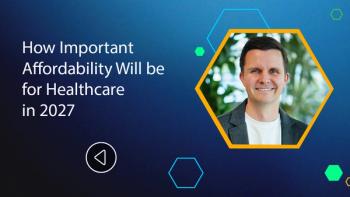
Pharmaceutical Executive spoke with Austin Strong, head of strategy at Weave, about what he expects the biggest trends in 2027 to be. The conversation focused on healthcare providers and how they engage both with patients and the pharmaceutical industry. How these trends play out will directly impact how the pharma and biotech industries must adapt their strategies to ensure their drugs make it to the patients that need them.
According to Strong, the next year will be focused on both affordability and improving the usage of new technologies, such as AI. While he discussed areas where he expects this technology to expand, he also discussed how decision-making in this area is likely to change as well.
Pharmaceutical Executive: What shifts in healthcare technology related decision making are expected?
Austin Strong: One of the interesting dynamics within small healthcare practices is the division that exists within the practice itself. The person who actually signs the contract with a vendor like Weave is usually the practice owner. In some cases that’s a large corporate group — a DSO in the dental world, or an MSO in the medical space — but more often it’s an individual dentist, veterinarian, or physical therapist. They’re the business owner, but they’re not the person using the technology day to day, because they have a staff that handles that. So you end up with very disparate experiences.
When we interview practice owners, 95% say they’re thrilled with how their patient communication technology is working. But when you talk to the team actually using it every day, that satisfaction rating can drop to 50 or 60%. That’s a very large disparity.
What the best practices are doing now is bringing front desk staff — specifically the office manager — into vendor selection and contract decisions. The office manager’s perspective is: my team is the one actually going to be using this, so we’re going to ask the detailed, nuanced questions. How does it integrate with our practice management system or EHR? Does it support two-way texting? Can it respond to reviews? These are questions that, frankly, the practice owner is generally not equipped to speak to. The result is a much more collaborative contract-signing environment, and the best practices are expanding that decision-making process well beyond the practice owner alone.