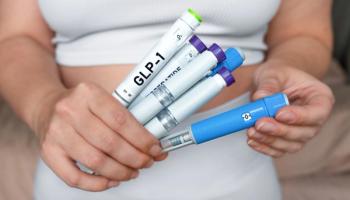
As GLP-1 competition shifts from molecules to prescriptions, manufacturers, pharmacies, providers, and payers are racing to own the patient journey.
By pumping the science behind a brand, pharmaceutical companies can garner early loyalists—before a drug even hits the market.
Feeling excited about some late Phase II clinical trial data? Then it’s time to switch into promotional medical education mode. How to get started? The best way is through a scientific platform.
Here’s what it is: a hub of all communications tools—both educational and promotional—necessary for priming the market and your intended audience for a new drug. The goal? To identify the key communication tools that will create interest among key opinion leaders and, ultimately, the prescribing community as a whole.
A promotional medical education program built around a scientific platform spotlights the following: how a drug works, how it might alter patients’ lives, how it changes the treatment regime, and in some cases, how doctors could modify their management of patients with the disease. It also helps to ensure brand and market convergence at the time of product launch, which is essential to changing the way the medical community views a disease, treats it, or utilizes new ways of monitoring disease and treatment effects.
Without this convergence, interest in the brand could be limited because awareness of certain market, disease, or therapeutic concepts may be out of sync or lag behind the most recent developments.
The scientific platform takes such gaps into consideration and closes them through effective communication of the brand’s therapeutic concepts.
The ability to incorporate material assembled in the scientific platform into educational programs will determine the level of success in enlightening physicians on new and emerging concepts for the treatment of a disease and/or a drug’s ability to impact management of the disease. The following generalized case history provides an illustration of the process.
Type II diabetes is a devastating and growing condition. The pharma industry has spent many years launching new products to assist healthcare providers in controlling the symptoms of patients living with diabetes.
During this time, the industry developed educational programs based on what has been the medical profession’s standard for treating the disease: by curbing patients’ resistance to insulin. Now that new drugs are being developed that affect more than insulin resistance, additional education is needed to prepare healthcare providers to think differently, based on emerging scientific information.
As an example, over the last several years, pharma companies have begun to convey scientific information supporting the idea that diabetes is a disease with multiple pathophysiologies (islet cell dysfunction, including the role of alpha cells and beta cells, glucagon as well as insulin, hepatic glucose overproduction, and insulin resistance). For years the healthcare industry worked under the assumption that the primary pathophysiology and means of managing diabetes was by addressing insulin resistance.
But by the time patients are diagnosed with type II diabetes, they have already lost one-half of their beta cell function. This understanding has changed the approach to the disease and elevated the need to educate doctors about the implications of treating diabetes in the future.
Broadly speaking, therefore, diabetes is still predominantly about glucose regulation. However, we now know that incretin hormones (GLP-1 and GIP) regulate both insulin from the beta cells and glucagon from alpha cells.
To coincide with this learning, several new drug classes are under development. Some, which have an effect on these incretin hormones released from the proximal and distal gastrointestinal tract, have recently been approved.
The emerging scientific knowledge about incretins and the known effects of drugs in development on incretin hormones could become core components of a scientific platform, and therefore a part of educational programs created to educate the target audience (physicians and other healthcare professionals). Crafting a scientific platform to create awareness of a new disease management protocol of this magnitude may take as much as six months or more (and several years to implement in the market), and requires the participation of professionals with medical and scientific experience.
The scientific platform approach can serve as a new model for preparing a brand for the market and reconciling the product’s mechanism of action with today’s disease management. While exhaustive directions for constructing such a platform are beyond the scope of this article, the framework can be encapsulated in a set of essential, substantive steps.
The best time to establish a scientific platform is in late Phase II clinical trials. At this point, a medical education agency, working closely with a pharma company, will conduct a comprehensive review of the clinical study data and other scientific literature on the compound and undertake an in-depth analysis of: how it may impact management of the targeted disease; the clinical utility of today’s therapeutic options; the potential gaps between today’s treatment approach and how the new drug might influence the current approach at some time in the future. Then, the information gets synthesized into the scientific platform.
With the completed scientific platform serving as the reference point, medical education agencies can then undertake planning for the promotional med ed campaign, often in concert with the pharma client’s advertising agency, basing their strategies and tactics on the particular factors of each case. The platform should be used to develop key messages that will be reflected in all medical education communications and presentations, including client sales-force training materials.
In the example above, the scientific platform information can be used to develop slide lecture programs for use in symposia, dinner meetings, grand rounds, sales meetings, sales force training, speaker training meetings, and more. This information may also help develop Web-based programs (such as e-learning programs, Epocrates educational initiatives, podcasts, and more); form content for advisory board guidance from advisory members (related to future trends in disease management or how guidelines may need to evolve); and will assist in organizing symposia (freestanding and congress-related).
Furthermore, many pharma companies may choose to share the scientific platform directly with their respective advertising agency to help jump start their thoughts around potential ad concepts for a new product, thus streamlining the learning curve and ensuring that the ads are consistent with the messages included in the scientific platform.
Before regulators release the drug, physicians must fully understand the value of the product, how to use it, and how it is different from anything else on the market.
Promotion developed from the scientific platform provides drug companies with the tools that enable their brand teams to properly communicate how the scientific, therapeutic, and disease-state concepts work, and translate the key messages into communication tactics such as PR, publication pieces, and advertising material. The goal is to ensure that before the regulators release the drug, physicians and other healthcare professionals fully understand the value of the product, how to use it, and how it may be different from anything else on the market.
If your product is not supported by a well thought out scientific platform, it’s not too late. The concept is not limited to new drugs. The same principles can be used to shift the way physicians and consumers think about an existing drug or disease.
In summary, the scientific platform accomplishes three primary goals:
The medical education company’s role is critical in the development of the scientific platform and the educational promotion flowing from it, because most pharmaceutical firms are not well integrated across these functions.
Agencies capable of skillfully integrating their expertise with the disciplines of marketing strategy and creative style, and leading the development of a scientific platform along with their strategically oriented pharma partners, will generate effective and consistent brand messages that fulfill the pharma industry’s need to educate healthcare professionals about their products. The scientific platform provides a solid foundation for producing these results.
Larry Iaquinto is president and COO of Interlink Healthcare Communications. He can be reached at liaquinto@IHCco.com.
Steven Palmisano is managing director of Inexel Medical Strategy & Communication. He can be reached at steve.palmisano@inexelmsc.com.