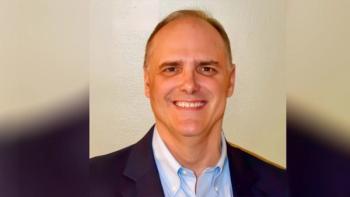
Three Levels of Digital Clone Use Cases: Q&A with Hamish Brocklebank
Brox.AI's co-founder and CEO on why telling an AI to pretend to be a doctor isn’t the same as cloning one — and why that distinction matters for pharma.
One of the most discussed use cases in pharma and biotech for AI is the creation of digital twins. By using massive amounts and data, the technology can create a digital recreation of a real person, which can then be used for various research purposes.
Pharmaceutical Executive spoke with Hamish Brocklebank, founder of Brox.AI, about some of the ways that digital twins are being used within the industry, and where the technology could potentially head in the coming years.
According to him, these twins have a variety of uses. One of the more commonly discussed use cases is for pure research. In this instance, a researcher creates a digital twin and then uses AI to simulate the effect of various molecules and conditions. However, Brocklebank explains that there are other use cases which may provide just as much, if not more, value.
Click
Pharmaceutical Executive: How quickly are AI digital twins growing in the pharma industry?
Hamish Brocklebank: The short answer is that everyone is trying to use AI to speed up research and development cycles and accelerate broader business operations. What is interesting — and I will try not to turn this into too much of a pitch — is that there are multiple different approaches to this, and the term “digital twin” means very different things depending on who is using it.
We have actually retired the term digital twin in favor of “digital clones,” because the underlying approaches vary significantly. They fall into roughly three categories. The first is traditional research, which does not really involve digital twins at all. The second is what most people in the industry mean when they say digital twin — essentially pure synthetic data, where you are asking an AI to simulate how a doctor or patient might behave. In a simplified sense, you are telling the model to pretend to be a specific type of person and asking how they would respond. That is the approach most of our competitors take, and there are multiple variations of it. The third category — and our approach — is building one-to-one clones of actual individuals, because we are prioritizing high accuracy over convenience.
That said, the entire space is growing very rapidly, because the pace of business is accelerating across every sector. The need to make more informed decisions faster is real, and traditional research simply cannot keep up with that velocity.
PE: What are the different kinds of digital twins?
Brocklebank: There are a few different definitions in this space, so bear with me while I explain how we use the term.
One approach is to take a large corpus of data — imagine you are studying dermatologists. You would gather an enormous amount of data on that specialty: survey responses, behavioral data, prescription data, and so on. That data would not necessarily be tied to specific individuals. From that, you build a persona representing a particular type of doctor or patient, and the resulting digital twin can predict the median outcome for whatever you are modeling reasonably well. The limitation is that it will only give you the median. That is one approach.
The second approach, which I would call truly synthetic, involves almost no grounded dataset at all. You essentially instruct a large language model to behave like a particular type of person based on a set of attributes you define. You can do this with one simulated individual or scale it to ten thousand — the approach is the same either way. You are generating behavior based on assumed characteristics rather than observed ones.
Our approach resembles the second, but with a critical difference: every clone we build is based on a real person who has actively consented to share their data and to participate in the construction of their digital clone. So when we query a thousand digital clones, those represent a thousand real doctors — in our case, actual practicing physicians in the United States whom we have recruited, built a deep and comprehensive dataset around, and trained our models against individually, one to one.
That one-to-one grounding is what separates what we do from the purely synthetic approaches.
PE: What outcomes can digital twins be used to predict?
Brocklebank: The use cases span a wide range, so let me walk through them from simple to complex.
Level one is straightforward market research. Imagine a pharmaceutical company is launching a new drug and building an HCP-facing website. They want to A/B test two page layouts to see which one oncologists prefer. That is a quick, targeted research question. What makes this more powerful than it sounds is that digital clones allow you to test thousands of variations simultaneously, run goal-finding research, and get far more precise answers than traditional methods could produce at that speed.
Level two moves into predicting behaviors — things like price sensitivity and treatment recommendations. A good example is GLP-1 therapies: you can model how patients’ price sensitivity changes depending on whether the drug is delivered as a pill or an injectable. Interestingly, even though the injectable is more burdensome — patients typically need to visit a provider to receive it — they may actually show lower price sensitivity for the injectable and in some cases higher compliance, because the clinical touchpoint reinforces the treatment routine. That kind of nuanced prediction is what level two enables.
Level three is macro modeling. A representative question might be: if Drug X receives FDA approval, how quickly will a specific cohort of physicians begin prescribing it, and what interventions would accelerate that adoption? This type of simulation is useful not only for pharmaceutical companies thinking about their own launches but also for financial institutions evaluating M&A targets and investors assessing the commercial potential of pipeline assets. So level three moves from specific behavioral predictions into broad market and world simulations.
PE: How do digital twins impact recruiting for research?
Brocklebank: Recruiting these participants is genuinely difficult — many of them are hard to reach. A good example is a panel we have been building over the past month in oncology. I cannot name the specific drug, but we are building a panel of physicians who prescribe a highly specialized therapy for pancreatic cancer. There are perhaps a thousand of these doctors in the United States, and we have recruited 80 of them — roughly 8% of the entire eligible population. We think that is a significant achievement for a niche like this.
So how do we do it, and why do doctors participate?
The first reason is compensation. To be direct: our business model allows us to pay physicians significantly more than the industry standard. Whereas a typical research firm might pay an oncologist $500 for an hour of their time, we can economically justify paying $2,000 or more, because each clone we build can be used repeatedly across multiple engagements. Building a high-quality clone requires roughly four to five hours of a participant’s time across structured interviews, so the investment on both sides is meaningful.
The second incentive is equity participation. For our physician panels — and we also run a high-net-worth consumer panel, though that is less relevant here — we give participants the option to receive share appreciation rights in our company instead of, or in addition to, monetary compensation. Many doctors find this appealing because it gives them a way to participate in the growth of the AI ecosystem more broadly.
The third element is the panel application itself. We built a product called Melivora specifically for our physician panel. Through it, participants schedule both human-led interviews with our team and AI-led interview sessions. After their clone is built, they can actually query their own digital clone and benchmark themselves against other physicians in their cohort — seeing how their prescribing behavior compares to peers, for example. A meaningful number of doctors engage with the platform simply out of curiosity, independent of the financial incentives.
Taken together — strong compensation, equity upside, and a genuinely engaging product — those three things are how we have built and retained our panels. We apply the same approach to our patient panels and general consumer panels.
One final point I want to emphasize: we operate on a triple opt-in consent model for everything. That means any participant can have all of their data removed at any time, even after we have compensated them, with no questions asked. In the pharmaceutical space, where the sensitivity of the data we collect is significant, data security, privacy, and ethics are not afterthoughts — they are foundational to everything we do. Every dataset we use is designed to be not only grounded, real, and high quality, but also to carry the highest possible standard of consent.
Related to this article