Transitioning from BGB to BGBx: Q&A with David Coman
Key Takeaways
- Rebranding to BGBx reflects a broadened mandate to deliver market perspective, complex problem-solving, and outcomes that improve adoption and patient reach amid heightened access and evidence demands.
- Go-to-market strategy is increasingly multivariable, requiring integrated decision-making across clinical differentiation, stakeholder behavior, evidence generation, access strategy, positioning, and communications to avoid siloed tradeoffs.
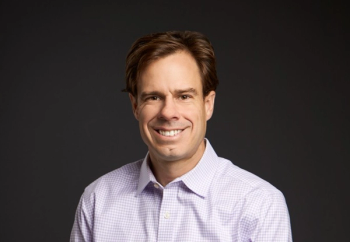
David Coman, CEO, BGBx, explains how the firm's rebranding reflects a broader shift in biopharma commercialization, where integrating consulting, communications, and a three-dimensional science framework is increasingly necessary for companies.
On June 2, 2026, BGB Group became BGBx, reflecting the company's evolution into a broader commercial solutions company serving pharmaceutical and life science organizations.
In a conversation with Pharmaceutical Executive, David Coman, CEO of BGBx, discussed how increasing complexity across access, evidence, stakeholder engagement, and commercialization is changing what clients need from their partners. In this conversation, Coman described BGBx as “built for breakthrough,” emphasizing a model that integrates consulting, communications, and science with data, technology, and innovation to help clients see markets differently and drive meaningful results.
Coman also outlined a “3D Science” framework - medical, behavioral, and data science - to counter blind spots that arise when companies over-rely on any single dimension of evidence or insight.Coman also explained the strategic value of bringing consulting and communications under one roof to maintain continuity from early strategy through execution, and detailed how AI-enabled tools, an internal AI operating system, and organization-wide AI training are being used to elevate the quality of strategic and scientific thinking.
A transcript of his conversation with Pharmaceutical Executive can be found below.
Pharmaceutical Executive: What gap in the commercialization landscape did the evolution from BGB to BGBx address, and how does that directly serve pharma and biotech clients navigating today's market?
David Coman: I would say that biotech and pharma companies are navigating a market that's increasingly more complex. Access and evidence expectations are super high, more stakeholders are influencing the brand success, the competitive environment is becoming tighter, and leadership teams are under greater pressure to make better decisions earlier and be more precise with them.
In that environment, clients need three things from their commercialization partners: perspective, problem-solving, and results. A perspective that helps them see the market differently. Problem-solving that helps them navigate complexity. And ultimately, results that move brands, move markets, and help the right therapies reach the patients who need them most. That's how we define BGBx.
We refer to BGBx as built for breakthrough, because we believe that breakthrough isn't just an idea or a creative ambition - it's really about the outcome. That’s an insight that has surfaced, it's a problem that's solved, it's a market that's moved, it's a brand that's positioned to reach more patients, and our evolution from BGB to BGBx reflects a commitment that we're going to deliver on all three of those things. We've built a broader commercial solutions company that brings together consulting, communications, science, data, technology, and innovation - all to help clients see the market differently and to solve their problems differently, ultimately achieving meaningful results.
The X in BGBx represents the force multiplier created when our expertise, breakthrough mindset, and approach to innovation come together. Every part of the company is built for breakthrough, but together we can create even greater impact for clients.
PE: How has the market's evolution shaped the way BGBx counsels clients on go-to-market strategy, and where are you seeing the biggest blind spots among pharma leadership teams today?
Coman: I think the biggest change is that the go to market strategy has become increasingly multi-variable, so there's more for biopharmaceutical execs to deal with. There's clinical differentiation, there's stakeholder behavior, there's evidence, there's access, there's positioning, there's communication - and all of those shape one another, so decisions really can't be made in isolation. That's why counseling clients and pressure testing these go to market strategies, require everyone to look at a more complete picture.
We recently announced a concept we call 3D Science, three-dimensional science. It's the integration of medical science, behavioral science, and data science. Medical science, which is going to show what is clinically true. Behavioral science, which is going to tell us how stakeholders think and make decisions. And then data science, which is going to tell us what patterns are emerging through the market.
The biggest blind spot that we see is when leadership teams come together, and over-rely on one of those dimensions. For instance, strong clinical data alone isn't going to guarantee that you get market adoption, and having a really compelling brand strategy isn't going to succeed if the evidence isn't really there. And, if you're not communicating to the right target audience, your data strategy is only as valuable as it translates to better outcomes. So, I think brands that really break through are the ones that are going to connect on all three of those event dimensions early and often.
PE: Consulting and communications have traditionally operated in separate lanes in this industry. What's the strategic logic behind integrating those disciplines under one roof?
Coman: Commercial success is a continuous process, not a series of disconnected handoffs. The decisions made early in a product's lifecycle continue to shape how it performs in the market, yet strategy and execution are often separated across different partners with different incentives, assumptions, and perspectives. That's where continuity breaks down. Bringing consulting and communications together helps clients maintain alignment from early strategy through market execution and ultimately achieve better outcomes.
Maintaining consulting and communication as distinct disciplines, enables us to deliver real value individually. But more importantly, together we can help clients set strategy early in the life cycle, stay on that strategy throughout the lifecycle, and when it gets to execution and terms of actual marketing and communications activity, we can deliver compounding breakthrough results. So, for clients, the value is really about continuity. It doesn't mean that every client needs every capability at all at once. It does mean that challenges are going to require certain levels of strategic depth, and we have the ability and the flexibility to be able to help address them along that life cycle.
PE: How is BGBx embedding AI as something that changes the quality of strategic and scientific communication for pharma clients?
Coman: For us, AI isn't a side experiment, or a productivity layer that sits on top of the business. It really has become part of how we think, how we work, and how we deliver for our clients. So every employee at BGBx has undergone rigorous AI training from a simple “how do you operate these tools?” to more complex data analytics and Codex for some. And we've been expanding what we do, including an operating system that sits underneath, which helps us to support how AI is used responsibly and effectively throughout the organization.
We're also further investing in bespoke AI products that are designed to mine for deeper insights, predict the future, and simulate audiences. The real opportunity is not just doing work faster, but it's improving the quality of thinking. AI can help us identify patterns early, pressure test some of our assumptions that we have, model stakeholder behavior, and explore scenarios that we may not have other thought about at a deeper scale than before.
So, if you combine that with the human expertise - and we think that we have some of the best people in the entire industry - combine that with scientific judgment, creativity, and strategy, and stronger communication, you get a better result. This also connects to our 3D Science concept, as AI strengthens our ability to think about the medical science, the behavioral science, and the data science all together at scale - really helping us to see more, test more, and make human decision making better, as well as create better outcomes and meaningful results for our clients.
Related to this article