Deborah Waterhouse is leaving ViiV Healthcare to become CEO and managing director of CSL.
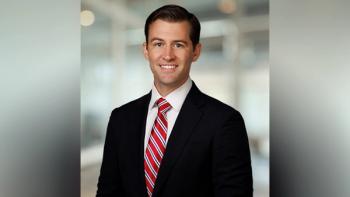
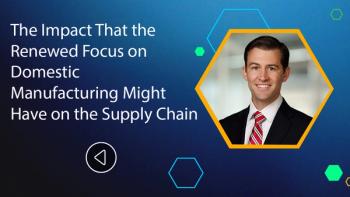
Gerren McHam, vice president of Government and External Affairs, API Innovation Center, discusses what is compounding U.S. pharmaceutical supply chain vulnerabilities.
In a conversation with Pharmaceutical Executive, Gerren McHam, vice president of Government and External Affairs, API Innovation Center, discussed how China's recently updated export control regulations, along with broader geopolitical pressures, are exposing vulnerabilities in the U.S. pharmaceutical supply chain.
McHam explained how China's new rules give Beijing a formal mechanism to investigate and respond to perceived foreign threats to its industrial base, with retaliatory risk extending even to routine procurement decisions made by U.S. companies. He noted that these dynamics can trigger licensing delays, restrictions on China operations, and other supply pressures, making clear escalation protocols and reduced single points of failure essential for manufacturers.
On reshoring, McHam pointed to bipartisan legislative efforts, including the Clear Labels Act and the Maps Act, as well as continued federal investment through Defense Production Act authorities across multiple administrations. He stressed that certainty of demand, with the federal government acting as a willing buyer, is as critical as upfront investment in building domestic API capacity.
McHam also discussed the API Innovation Center's development of a "national fragility index" to identify which medicines and starting materials are most vulnerable to geopolitical, weather, and economic disruptions, distinguishing this approach from existing drug shortage and essential medicines lists..
A transcript of McHam's conversation with Pharmaceutical Executive can be found below.
Pharmaceutical Executive: How exposed is the U.S. pharmaceutical supply chain to China’s recently updated export control regulations?
Gerren McHam: China released two new regulations. One of which rules that Beijing can have a formal mechanism to investigate and respond to when it believes a foreign actor has threatened its industrial base. Then the second one is if you were to adhere to the regulations from U.S., U.K., or E.U. there could be some retaliatory actions from the Chinese government.
So it can have several impacts on pharmaceutical companies, which also includes where you can have a routine procurement decision. The Chinese may see that as somehow interfering with their industrial supply base and hurting their economic supply chain, so that can include licensing delays, restrictions on China operations, import export restrictions, supply pressures.
It's not getting a lot of attention right now, but companies start to determine how they're going to adhere to these rules or how to kind of balance between one country to another, and they need to have really clear escalation protocols, so making sure no decision is made in a vacuum and you really understand the implications of an action, and also ensuring that you don't have one single point of failure in terms of your supply chain.
PE: The federal government has made reshoring a priority, but domestic API manufacturing capacity hasn't kept pace. What policy tools actually move the needle on API manufacturing capacity?
McHam: So, the good thing is there is a lot of bipartisan efforts and agreements around a couple of key principles. One is the U.S. needs better visibility into critical medicines. We need more secure domestic capacity for critical medicines, and then we need to, as I mentioned before, reduce our single points of failure.
You have the Clear Labels Act, you have the Maps Act, both from Senator Scott and Senator Gillibrand from Republican Democrat to the Maps Act with Senator Gary Peters as a Democrat. Then you go across the hill, and you have Representative Wesley Bell including NDA related language into the committee process on how the defense industries should consider U.S. made pharmaceuticals when they make their purchasing decisions.
What needs to happen though is continued first investment and domestic capacity. We saw this with the first Trump administration, then second the Biden administration, and then the second Trump administration using the industrial base management supply chain, Defense Production Act authorities to focused on filling that strategic stockpile and API reserve.
You also need to have certainty of demand. It makes no sense for the federal government to be investing in one side but not also purchasing on the back end. So that continued investment, demand signaling, meaning the federal government is going to be a willing buyer, are other levers that need to happen to kind of grow the assurance of manufacturers that investing in the U.S. is a good bet.
PE: How has the Strait of Hormuz situation shaped the API Innovation Center's thinking about geographic diversification?
McHam: There are a couple things to consider here, at least on the API front, there hasn't been a kind of direct ripple effect or impact in that industry. But if you look downstream to maintain shipping lanes, there are downstream implications that increase cost of other aspects that feed into the pharmaceutical industry. So as the API Innovation Center thinks about it, that's why we've been looking at a what we call a national fragility index.
What we don't have right now is really a clear way into determining what medicines or what products are most vulnerable. I mean, we have our drug shortage list, essential medicines list. Everyone has a list, but how do you pick one pharmaceutical over another? One could be in shortage and have no URS source, while one could be a URS source and not quite in shortage. But that second one, if it were to be cut off, the key starting materials could have life impacting ripple effects to the patient population.
What we're doing at API Innovation Center is looking at how do geopolitical dynamics impact the supply chain? How do weather events impact supply chain? How do economic and decision making impact supply chain? If one goes short on the key starting material, how does that feed into the pharmaceuticals that we actually take every day? That's what we're doing when we see situations like these, where we need to have robust understanding of where our products come from, but also be able to pick and choose which product is the most important that we need to really focus on reshoring first.
PE: How do you bridge the gap between industry and federal policy, and what’s the biggest friction point?
McHam: The biggest friction point will center around being able to appreciate and understand the generic industry having a return on investment that's really low, and that manufacturers need some certainty of demand before they're going to invest in anything.
We can invest in domestic manufacturing, but just because we do that doesn't mean there's going to be the pull through on the back end for manufacturers to look at the margin and say that is a good bet for me to invest in. So, what we've been doing is looking at how can we utilize new techniques and advanced manufacturing technology, so strategic investments can actually make the cost to produce the medicines cheaper.
So, at the API Investment Center, we're looking at Metoprolol, we're looking at Albuterol, or Lorazepam just to give you an example. We've been able to take what we call the route of synthesis steps and reducing them from as many as five steps to two steps using continuous flow technology. That means less solvents. That means less key start material product that you have to put into the process, and thereby we're looking to see how that ripple effect goes downstream to the actual production cycle as we start to chip away at the barriers to manufacturers to actually want to reassure these are the things that we're doing in API Innovation Center.