Teva acquires BioXcel’s BXCL501, under FDA review for at-home agitation use; Rumi Therapeutics gains an option on Enthorin’s Fragile X PDE2 inhibitor.
Incubate’s executive director discusses China’s rise in biotech and why the US’ best response may be to focus on its own issues.
Earlier this year,
Also this year, a bipartisan effort launched in Congress to pass a bill that would add biotech the Treasury’s outbound investment screening list. As part of this initiative, the Treasury would decide if agreements and investments with foreign companies, entities, or governments could pose a national security risk.
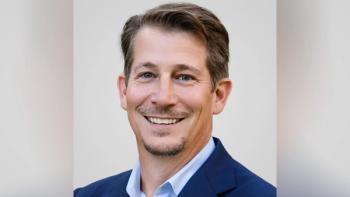
Pharmaceutical Executive spoke with John Standford, executive director of Incubate, about the rise of China as an R&D partner and the US government’s responses. According to him, years of investment in biotech innovation is starting to pay off for the country, and the US’ response is going to require a larger effort to solve our own issues first.
Pharmaceutical Executive: Why have Chinese biotech licensing deals become so attractive to US investors?
John Stanford: The surge of interest in Chinese licensing is the product of two decades of deliberate investment. China had a very stated objective—not just to be a cheap supplier, but to edge into innovative industries. That investment is now paying off. The same way the Bayh-Dole Act and sustained NIH funding gave the US four decades of biomedical success, China followed that playbook, invested consistently, and is now beginning to see the results.
So instead of the copycats, stolen IP, and other very real IP concerns of the last couple of decades, the reality today is that Chinese innovation is bringing genuinely new molecules and modalities to market, and global players are taking note. We have seen a significant step up in interest from not just US but global pharmaceutical companies in acquiring rights to those assets.
This is something the entire industry needs to reckon with. This is not the China of yesteryear. This is not merely an adequate competitor. This is a country seeking to dominate the industry, and the transformation will be significant over the next few decades, because we can only expect their innovation capabilities to continue improving.
PE: When does foreign investments in pharma and biotech become a national security concern?
Stanford: I like to think of China not as a single problem or opportunity with only one lever. The most impressive conversations I've had about how to tackle this moment share a common thread: it's nuanced, it's complex, and we have to pull several levers. Most of all, we have to pull the lever that makes us more competitive. We have to stop inflicting wounds on our own ecosystem.
I think of China in three distinct buckets.
The first is supply chain, APIs and our ability to manufacture medicines. We learned this lesson all too well during COVID. I think there is wide consensus that for several decades we have let that capability slip, and it makes sense that we, as a country and as Western allies, should be able to produce the essential medicines our population needs. Making those chemicals domestically is complicated. There are real considerations around sourcing materials and siting chemical facilities in communities that will accept them, but those conversations are beginning to happen under this administration. The consensus in this bucket is clear: we need to be able to make these medicines either here or in countries that are not adversarial.
The second bucket is clinical trials. This isn't exclusively a China phenomenon, but we have seen a strong and growing desire to run trials outside the US, driven by time and cost realities. Australia has made moves in recent years that make it very attractive to anyone who needs to run trials quickly just to determine whether an asset works. The UK has also expressed significant interest in leading in this area. In the earliest days of an asset, whether you're the venture capitalist backing the company or the entrepreneur running it, you're simply trying to flip a card and find out whether there's anything there before moving on. The question is how we bring those trials back to the US. That is a long-term proposition requiring many levers. We're not particularly good at enrolling patients into clinical trials, and paradoxically, our high standard of care means that fewer Americans are eager to participate. In countries without that standard of care, clinical trials can actually be more attractive to patients.
The third bucket is licensing, how we feel about acquiring technologies out of China. This is where the conversation gets most complex. There is significant skepticism about whether the US can effectively wall off Chinese science, and doing so would create a real opportunity for Europe, Japan, and others to move in. There is also an ethical dimension that hasn't been fully reckoned with: if there are promising gene therapies being developed in China, and we say American patients have to wait until a US scientist can catch up, that is a genuine ethical quandary.
So we have three buckets (APIs, clinical trials, and licensing deals) each with different needs, different levers, and different implications for national security.
PE: What steps are US regulators taking to promote domestic investment?
Stanford: Last year's National Defense Authorization Act, or NDAA, marked an important moment: biotech is now formally part of the national security conversation. Among the steps being taken is the creation of biotech offices across the defense ecosystem, including the three-letter agencies and the Department of Defense. The NDAA also included a version of the BIOSECURE Act, which begins to address the onshoring of the pharmaceutical supply chain, though more work needs to be done there. The key questions are whether the right incentives are actually in place, and whether moving too quickly risks undermining our capacity for innovation. This is where the 1260H list becomes relevant. If a company appears on that Pentagon list, US entities cannot work with them, and we need to be thinking carefully about whether we have sufficient domestic capacity to fill that gap.
The biggest development, and I'll admit I buried the lead, is the BIOSECURE-related conversation around the COINS Act. The COINS Act was included in the defense bill and proposes to restrict outbound investment. For context, CFIUS has existed for 50 or 60 years and limits the ability of foreign investors to invest in US technology, and that has worked well. We don't want adversarial nations subsidizing sensitive technology development in the United States. The COINS Act is the mirror image of that: restricting US investors from investing in companies outside the US. It was initially applied to quantum, hypersonic, and AI technologies, with an explicit eye toward China—the concern being that the natural drive of US investors to maximize returns shouldn't override national security in those areas.
Biotech was notably not included. But the active debate right now is whether Treasury (which does have the authority) should add biotech to this list, and whether we should restrict the ability of US entities (pharmaceutical companies, investors, and biotechs) to license, invest in, or partner with Chinese companies. That question frankly merits more time and discussion than it's getting. There are clear cases where restrictions make sense. No one wants US investors subsidizing the development of biological weapons. But we also have to be realistic: some of the licensing deals making headlines are simply the acquisition of good molecules that make scientific and commercial sense to advance in the United States.
This is a nuanced and genuinely contested conversation, one where even our own membership holds very differing views. But anyone serious about this issue agrees it's not a simple or blanket solution. There are real questions about how you would even operationalize something like this. We expect the Treasury Department to propose a framework soon, but capital flows far more freely across borders than arms controls or technology export restrictions. If US capital is restricted from exposure to China, European capital, Japanese capital, and others will fill that void. Flipping the switch off risks ceding US leadership and cutting American investors and companies out of the conversation entirely.
We cannot deny that China has become genuinely good at biotech innovation. Some of these proposals feel like an attempt to return to a world that no longer exists. China is going to be a player in this industry whether we invest there or not.
PE: How can regulators and the industry work together to improve the US pharma ecosystem?
Stanford: This is the fundamental question, and it is within our power to answer it. We cannot slow down China. What we can do is speed up here at home, and there is a enormous opportunity to do exactly that. This moment has to be seized by Congress and the administration to modernize our own processes. We have had a period of real malaise in this country when it comes to FDA reform. Hopefully, this is the catalyst for action — and we are beginning to see it. Operation TrialBlazer coming out of the administration is a great first step. Congressman Auchincloss out of Boston has also put forward a number of bipartisan FDA reforms that are generating real conversation about what the FDA of the future should look like.
To be concrete about what that means: how do we get to single-arm Phase 3 trials? Why are we still defaulting to placebo controls in situations where we don't need to? I was with a group of patient advocates recently, and one described a neuro program where the placebo arm required patients to undergo a fake brain surgery, just to satisfy FDA protocols that haven't been updated in decades. That kind of requirement needs to go. If we have enough data, and if we can leverage AI to demonstrate that a drug works and we're simply optimizing the dose, we should be able to say so and move accordingly. The standards around adverse event reporting are also overdue for an update. These are wonky details, but if we can remove those barriers, development timelines get faster.
The last point is one that doesn't get enough attention: we are not ready as a country for the AI-driven revolution in drug development, and the primary reason is that our data is fragmented. Much of the data that would allow us to move faster sits with insurers and getting it into the hands of biotechs in a usable form is a bureaucratic and expensive process we have never solved. The reason the UK is so bullish on becoming a future center of drug development is precisely because they have that data centralized. They won't have to spend years and hundreds of millions of dollars extracting and reconciling data from hospitals and insurers before they can use it.
What we should be doing right now is building a centralized data repository, so that when the AI and quantum computing models are ready, we don't spend five years sorting out data ownership before we can compress a five-year trial into one. That is the head start that Australia, China, and the UK already have on us.
There is a lot of noise and energy right now focused on slowing down China and other competitors. Let's take that energy and redirect it toward speeding up here at home. It's less satisfying as a soundbite, but it is exactly what the biotech industry needs, and it is what biotech investors absolutely want to see.