
"I'm voting on something here, but I don't know what that something is. It's kind of like a black box to me."
News|Articles|July 24, 2026
FDA Panel Votes to Loosen Restrictions for Four Peptides
Author(s)Nicholas Jacobus
Listen
0:00 / 0:00
Key Takeaways
- Narrow votes supported compounding of BPC-157, KPV, and TB-500 (8-6; one abstention) and MOTS-c (7-5; two abstentions), without constituting FDA approval or demonstrated clinical benefit.
- Regulatory pathway remains multi-step: removal from Category 2, PCAC recommendation, then Category 1 placement via notice-and-comment rulemaking, commonly requiring 8–12 months for unambiguous legality.
An FDA advisory panel voted narrowly to recommend four unapproved peptides, BPC-157, KPV, TB-500, and MOTS-c.
Advertisement
An FDA advisory panel voted narrowly to recommend four unapproved peptides, Bpc-157, Kpv, Tb-500, and Mots-c, be allowed for compounding by pharmacies.
The decision advances a push championed by Health Secretary Robert F. Kennedy Jr. to bring widely used but legally ambiguous compounds into the regulated marketplace. The votes came over the objections of FDA career scientists, who said they lacked the evidence to assess the compounds' safety and effectiveness.
How did the vote break down?
The 14-member Pharmacy Compounding Advisory Committee voted 8-6 in favor of allowing Bpc-157, Kpv and Tb-500 to be compounded, with one abstention, while Mots-c, which is being evaluated for obesity and osteoporosis, passed on a 7-5 vote, with two abstentions.1 The votes do not make the peptides FDA-approved drugs, instead they represent a recommendation that the compounds will be added to a list of substances that compounding pharmacies are permitted to prepare for patients with a prescription.1
Despite the ruling, FDA is not bound by the panel's recommendations, and any change would require a formal rulemaking process.1The committee is currently scheduled to convene again on July 24, to vote on three additional peptides: emideltide, epitalon and semax.1
“What's important to understand is that there are three distinct legal events the market keeps treating as one, removal from Category 2, a PCAC recommendation, and actual placement on the Category 1 compoundable list following notice-and-comment rulemaking. The advisory committee's recommendation still triggers a formal rulemaking cycle that realistically runs eight to twelve months before 503A pharmacies have unambiguous legal authority to compound these substances. The direction here is right. But stakeholders should understand exactly where they are in that process and make informed decisions accordingly," said Dustin Robinson, Esq., CPA, founding partner of LumaLex Law.
Who sits on the panel?
Eight of the 14 panel members were recently appointed under Kennedy, and the composition has drawn pointed criticism.2 According to a report from Reuters, six of the new appointees operate or work for clinics that offer peptide treatments, while several could stand to benefit directly if the compounds are cleared for broader compounding.2 One committee member, Tennessee state Sen. Bobby Harshbarger, is the son of Rep. Diana Harshbarger, R-Tenn., who last year wrote to Kennedy asking that compounders be allowed to make certain peptides.1
Paul Knoepfler, a professor of cell biology at UC Davis, questioned the basic integrity of the panel composition, saying, "Many members who voted in favor could stand to gain from allowing Bpc-157 for compounding. How is that acceptable?"
The Department of Health and Human Services defended the process. "All committee members underwent the same ethics review and vetting process required of all FDA advisory committee members," said Emily Hilliard, a HHS spokesperson, adding that candidates who could not meet existing ethics requirements were removed from consideration.2
What did FDA scientists say?
According to reports, FDA staff repeatedly came back to a foundational problem: it is unclear, chemically, what these peptides even are. Unlike conventional drugs, there is no universally accepted chemical formula for each compound, making it extremely difficult to evaluate their use.1
"We've never faced a problem of, 'What is it?'" said Russell Wesdyk, an FDA official, addressing the panel Thursday morning.1
The agency reviewed the peptides for specific indications, Bpc-157 for ulcerative colitis, Kpv for wound healing and inflammatory conditions, Tb-500 for wound healing, and Mots-c for obesity and osteoporosis.1
How did committee members justify their votes?
Pannel voters who said yes frequently echoed Kennedy administration talking points that frame compounding access as a patient safety issue. Dr. Haleem Mohammed, chief medical officer at Gameday Men's Health, a Florida men's health clinic that offers peptides, voted yes for Bpc-157 on those grounds. "As a physician, I have to make sure that I'm keeping patients as safe as possible."
Dr. Gabriel Alizaidy, a clinical researcher at online clinic Maximus, which offers peptides, says he voted in favor of Bpc-157 despite being "frankly disappointed at how incomplete the data was." David Pope, chief pharmacy officer at Xifin Pharmacy Solutions in Georgia, says his yes vote was "to put this decision back into the hands of the patient, the physician and the pharmacist."¹
Panelist who voted no came primarily from physicians and patient advocates. Dr. Brian Lee, an associate professor of medicine at Keck School of Medicine of USC, voted against, arguing that panel support could be misread by the public as an FDA endorsement of efficacy. "For effectiveness, we know that 30% of patients on placebo will have a self-reported response or even objective response," Lee said.
Josh Mailman, president of the board of the Neuroendocrine Tumor Research Foundation, voted no on Kpv. "I'm voting on something here, but I don't know what that something is," he said. "It's kind of like a black box to me."¹
Sources
- FDA panel, with ties to the peptide industry, recommends easing restrictions on four of the compounds NBC News July 23, 2026
https://www.nbcnews.com/health/health-news/peptides-restrictions-ease-fda-panel-recommend-bpc-157-scientists-rcna588879 - FDA advisers back first four of seven unapproved peptides under review for looser rules Reuters July 23, 2026
https://www.reuters.com/legal/litigation/us-fda-advisers-weigh-restrictions-seven-peptides-industry-presses-expansion-2026-07-23/
Advertisement
Related to this article

FDA is launching the Rare Disease Framework Initiative, aiming to tailor drug development and review requirements to the realities of small patient populations.

The FDA approved Tecentriq plus chemotherapy for stage III dMMR colon cancer, Roche’s 12th US indication for the immunotherapy.

Ultragenyx is selling it's Rare Pediatric Disease Priority Review Voucher earned for Genglycos’s approval for $210 million.

A passing FDA inspection tells pharma senior leadership very little about whether the next significant revenue vulnerability is already taking shape. But continuous, AI-enabled quality management maturity (QMM) has the potential to do so months before the issue reaches the realm of P&L.
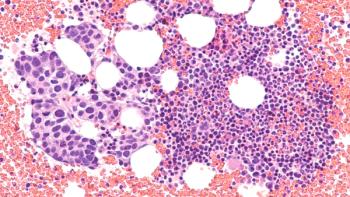
Tukysa adds a chemotherapy-free maintenance option for HER2-positive metastatic breast cancer; liver toxicity monitoring remains a key consideration.
Fox Rothschild's Marc Wagner on why domestic manufacturing reduces drug shortage risk — and why FDA inspection efficiency is as important as supply chain resilience.
Fox Rothschild's Marc Wagner on how 503A pharmacies and 503B outsourcing facilities fill drug supply gaps — from COVID injectables to GLP-1s.

Roche licenses Rona Therapeutics’ ALK7-targeting RNAi candidate for obesity, while Pfizer partners with Enodia Therapeutics on Sec61 inhibitor discovery.
Advertisement
Advertisement
Trending on PharmExec
1
The Impact That the Renewed Focus on Domestic Manufacturing Might Have on the Supply Chain
2
FDA Launches Rare Disease Framework Initiative
3
Pharmaceutical Executive Daily: Gilead Enters $1.87 Billion Collaboration and License Agreement with Vir Biotechnology
4
AstraZeneca Taps insitro AI for MASH in Deal Worth Up to $1.5 Billion
5