In today’s Pharmaceutical Executive Daily, Gilead and Vir Biotechnology enter a collaboration worth up to $1.87 billion to discover three PRO-XTEN dual-masked T-cell engagers for solid tumors, Fox Rothschild’s Marc Wagner breaks down the bottlenecks slowing manufacturers’ response to rising drug demand, and Wagner returns to explain the role 503B outsourcing facilities and compounding pharmacies play in filling supply gaps.
Vir Biotechnology enters a collaboration and license agreement with Gilead Sciences to discover and engineer three PRO-XTEN dual-masked T-cell engager candidates targeting solid tumor antigens. Gilead gains an exclusive license to develop and commercialize the resulting therapies, with Vir eligible for up to $1.87 billion in combined near-term and milestone payments, including $90 million upfront. Vir chief executive officer Marianne De Backer says the deal adds external validation to the company’s discovery engine while it continues to advance its own oncology pipeline.
Fox Rothschild FDA and life sciences attorney Marc Wagner discusses the bottlenecks that slow manufacturers’ response when demand for a drug increases. Wagner says heavy reliance on overseas active pharmaceutical ingredient sourcing, mostly from India and China, adds shipping and supplier-qualification delays, and that FDA approval for a new or modified manufacturing site can take three to four years.
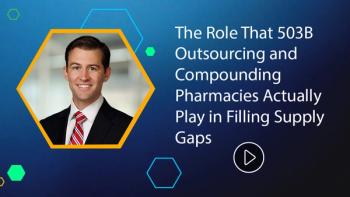
Finally, Wagner returns to explain how 503A compounding pharmacies and 503B outsourcing facilities help fill gaps when a drug lands on the FDA’s shortage list. He says neither is a silver bullet, but both step in during major shortage events, from sterile injectables during the COVID-19 pandemic to GLP-1 products around 2022 and 2023.
Thanks for listening to Pharmaceutical Executive Daily. For more updates and in-depth analysis, visit PharmExec.com.