
Feature|Videos|January 2, 2025
Final Thoughts
The future of CAR T-cell therapies will continue to improve as they expand to other patients in need.
Advertisement
Episodes in this series
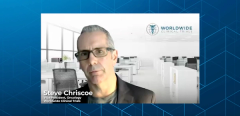
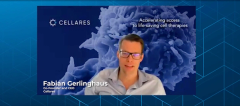

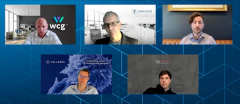

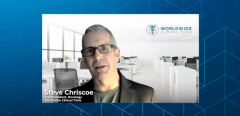
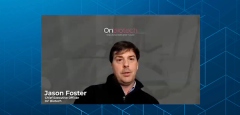
The panelists provide their closing thoughts on CAR T-cell therapies and what they look forward to as these therapies become popular beyond cancer, extending to autoimmune diseases as well. There is hope to remove manufacturing bottleneck so patient demand and access can improve.
Advertisement
Related to this article
FDA approves Bayer’s asundexian as the first Factor XIa inhibitor for secondary stroke prevention, the FDA requires a new safety label warning across all GLP-1 receptor agonists for a potential NAION risk, and AstraZeneca acquires Omniose to add a bioconjugation platform to its vaccine pipeline.

AstraZeneca acquires Omniose, to bolster it's preclinical infectious disease programs.
FDA is requiring manufacturers of all GLP-1 receptor agonists to add a warning for a potential increased risk of NAION.

FDA approves Bayer’s asundexian (Sunharbo), the first Factor XIa inhibitor, for secondary stroke prevention.
AI can make clinical trials smarter and faster, but lived patient experience remains irreplaceable in guiding research toward optimal results.

Ignite Proteomics’ senior clinical research scientist discusses how flaws in testing tumors may lead to some patients not receiving the correct treatment.
argenx acquires Unnatural Products for up to $1.15 billion to expand its immunology capabilities, GiftHealth’s Chip Parkinson on how single-partner platforms can transform the prescription journey, and Partha Anbil on why competing on net value matters more than cutting list prices as US drug pricing resets.

Single-partner platforms can unify manufacturers, prescribers, and patients to eliminate gaps, cut costs, and boost treatment adherence.
Advertisement
Advertisement
Trending on PharmExec
1
FDA Requests Updated Safety Label Warning Across All GLP-1 Receptor Agonist for Potential Risk of NAION
2
AstraZeneca Acquires Omniose, Adding Bioconjugation Platform to Vaccine Pipeline
3
FDA Approves asundexian for Secondary Stroke Risk Reduction
4
Where AI Can Strengthen Clinical Research, and Where Patient Input is More Important
5