Pharma logistics are overqualified by design — and how agentic AI can now optimize across thousands of lanes in days, not months.
Pharma's chain of custody model is migrating into food and consumer goods — and becoming a cross-industry differentiator.
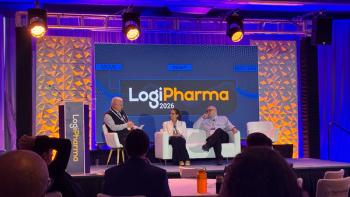
Pharmaceutical Executive spoke with Mark Talens, CCO of PAXAFE at LogiPharma 2026 in Boston. During the conversation., the executive discussed a variety of issues and updates on modern supply chains and the most important issues impacting them in today’s world.
Talens discussed how many companies haven’t properly organized their data in order to work best with modern technology. He also discussed broader organizational gaps in supply chains, citing many companies’ lack of cross-functional generalists as a significant issue.
Talens also detailed another major issue: the balancing of business-minded SOPs with real-world operations. While many companies think ahead to build in redundancies, they aren’t as prepared as they should be for certain real-world situations.
Pharmaceutical Executive: What are the most important lessons learned from building CGT supply chains?
Mark Talens: If you look at the most complex pharmaceutical-type supply chains, what you're seeing is that conditional chain of custody is no longer the exclusive domain of pharma. The adjacencies are expanding — probiotics, perishable food and beverage products, high-value supply chains that require provenance tracking and serialized product verification. The question of where a product comes from and how its integrity was maintained throughout the supply chain is becoming universal.
The world is starting to recognize that full end-to-end control and chain of custody is no longer a pharma-specific requirement — it is becoming a competitive differentiator across industries. We are seeing that in our own prospect conversations, which are no longer exclusively with pharmaceutical companies. We are hearing from consumer goods companies whose products have regulatory adjacencies — food products, cleaning products — that still carry rule sets and require conditional checks throughout the supply chain.
The difference is that it all has to work in real time. It has to be dynamic. It has to be capable of ingesting horizontal data from across the supply chain and contextualizing that data into actionable insight. That is where the real differentiation will be made.
Pharma is the obvious bridgehead for this evolution — it has the most demanding requirements and the longest track record of managing complex, regulated supply chains. But the model pharma has developed is now migrating outward into adjacent industries. It is no longer pharma's exclusive domain; it is pharma's gift to the broader supply chain world.